Trump's OPM director: "Stability" is a "terrible way to attract" federal workers

Add Axios as your preferred source to
see more of our stories on Google.
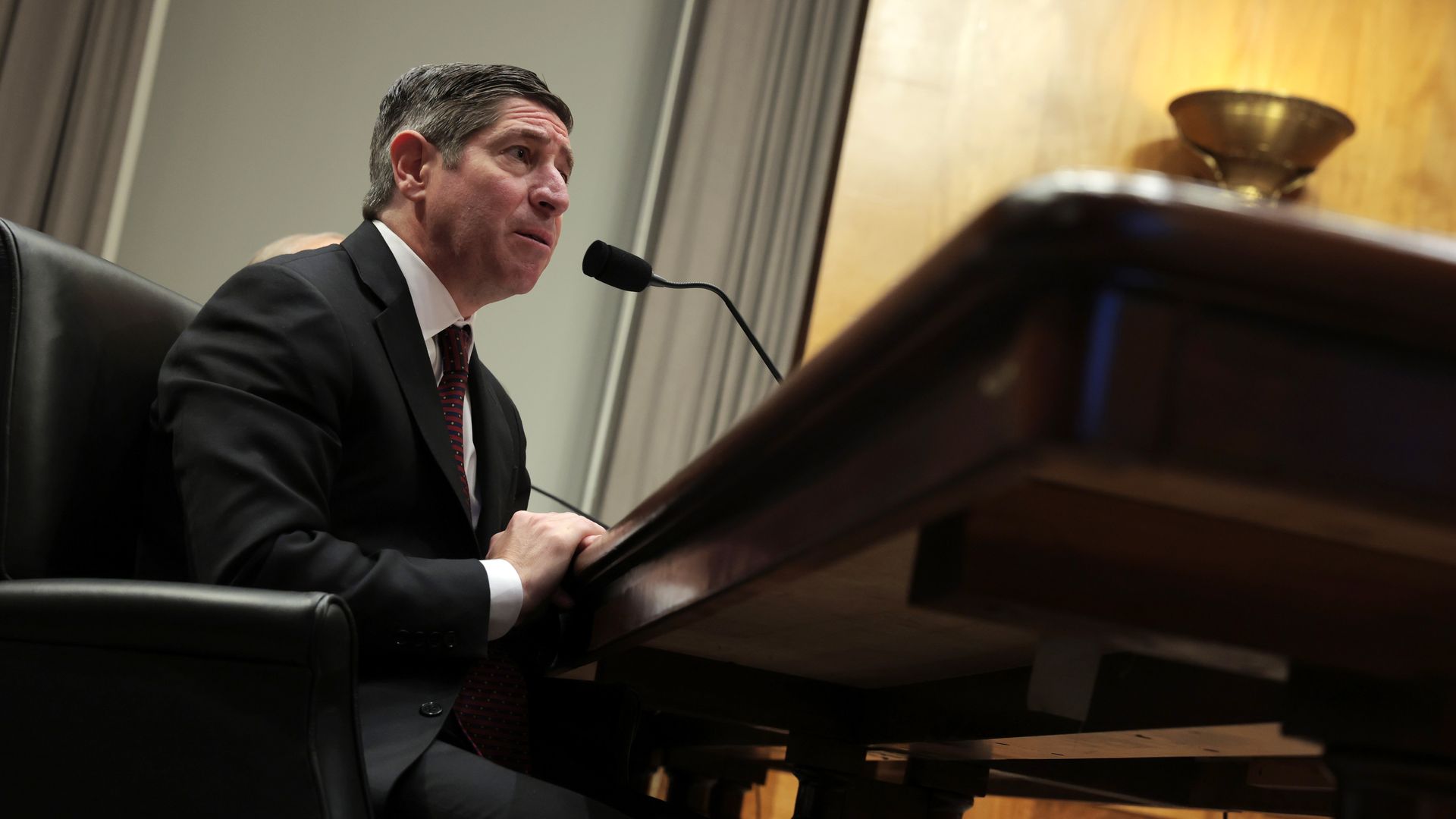
Scott Kupor testifying during his Senate confirmation hearing. Photo: Anna Moneymaker via Getty Images
Scott Kupor was the first employee at Andreessen Horowitz, hired back when it was just a couple tech vets hoping to raise a few hundred million dollars and never take board seats.
- He'd spend the next 16 years as managing partner, even taking portfolio board seats of his own, and serving as chair of the National Venture Capital Association.
Kupor now is in a very different role, director of the U.S. Office of Personnel Management (OPM), which is something akin to the federal government's HR department.
- He spoke via phone with Axios about how he ended up in the Trump administration, his thoughts on DOGE, and if AI is replacing government workers.
What follows is edited for clarity and length:
Axios: How do you end up in D.C.?
Kupor: "In the summer of 2024, Marc [Andreessen] and Ben [Horowitz] were getting more involved in politics, and I dropped a Slack to say that if Trump happened to win and an interesting opportunity arose, I'd be happy to throw my hat in the ring.
- "I had assumed the Slack disappeared, but Marc called me after the Trump team did a general call for people in the tech community. He offered to give my name to Howard Lutnick, who was running the pre-election transition team ... I went to New York and saw Howard, who pulled out this thing with several jobs, and then I spent a bunch of time in West Palm Beach post-election, culminating in a meeting with the President in December."
What other jobs, and why OPM?
"Other stuff we talked about was maybe the SEC job, which was interesting but less directionally focused on what I was passionate about. OPM felt like it would be at the red-hot center of Trump's talk about reforming the cost side and federal workforce. But, to be blunt, I didn't really know much about OPM beforehand."
You're nominated in December but not confirmed until July. In the meantime, Elon Musk and DOGE make lots of major personnel decisions via OPM. Were you just sitting on your hands?
"The short answer is yes. That's the rules. I wasn't even allowed to go into the building, so I was just trying to interpret what was happening. The only time I got more insight was when I started prepping for the Senate confirmation hearing, because I got briefed so I wouldn't look like a complete idiot."
A16Z has invested with Elon. You didn't talk with him?
"Marc and Ben have a personal relationship with him but I don't. I talked to him one time.
- "But I wasn't worried. I thought Elon would come in with lots of energy and excitement ... With the benefit of hindsight, he maybe could have used some different tactics or messaging, but generally need someone with his personality when you're trying to turn around an oil tanker."
You've said that OPM needs to "recognize and respect the humanity of the workforce." Did Elon or DOGE?
"I'm not going to answer that question ... It's not an excuse, but a challenge that Elon and his team was federal employment laws that make it very difficult to do targeted reductions in workforce, which is why they had to come up with this [Deferred Resignation Program] program."
You've also talked about establishing more of a merit-based system for federal workers. But DOGE often fired probationary workers, not because of merit but because of where they were on the totem poll.
"It was only around 5,800 probationary employees out of 2.4 million across the entire government. Yes, I'm sure many of those were under 30, and the government has a real problem getting younger workers — only 7% under 30 compared to 24% in the normal workforce — but you still need to view it in context."
Of that 2.4 million, how many do you want still working for the government at year-end?
"Around 2.1 million, which is where we were when the first Trump admistration took office ... That doesn't include the military, which OPM isn't responsible for."
For those remaining, how do you maintain morale given all that's happened?
"It starts with being transparent, and acknowledging that this has been a challenging six months for them. People have fewer heads and need to reprioritize. Something I learned from Ben when we had to lay off a lot of people from Loudcloud was recognizing that we'd broken trust with people, both those who were gone and those who were staying."
A16z originally had everyone working from a Sand Hill Road office, but later changed course and now has a more distributed workforce. Why is the federal government moving in the opposite direction on remote work?
"At a16z we decided we needed to be where the entrepreneurs are, although one thing we did do was that we opened other offices so people would be in proximity to them and we asked them to show up unless they were traveling or doing other things."
That "other things" exception isn't currently available to some federal workers.
"The president was starting from a position where fewer than 10% of the federal workforce was showing up to an office. If you're trying to make a 180-degree turn, you sometimes start with something extremely onerous ... My guidance to my team has been if you have to do something like take care of family, go do it. But, otherwise, be in the office."
How will you recruit?
"Same as in the private sector — we need a compelling reason for why they should come work for the government.
- "In one of my first meetings, someone said we messed everything up because people take federal jobs because of stability. To me, that's a terrible way to attract people. We need to tell them they'll be surrounded by smart people working on hard problems and, if they're public-service minded, a real chance to help."
Marc has often insisted that tech doesn't replace jobs, it just changes what jobs are — harkening back to tractors. Will AI lead to fewer federal workers?
"I think it's too early to know. But I do think federal workers need to learn this technology and then decide when to and not to adopt it.
- "There are definitely some basic use cases where it would be an efficiency enhancer. For example, we do a ton of rulemaking but manually read 40,000 public comments. That's a total waste of time since one thing AI does very well is summarization. That could be our starting point and then have humans engage.
- "Again, though, we're nowhere near it today. We're still crawling, just getting ChatGPT on government laptops. "
