Trump says "we can reform" SNAP

Add Axios as your preferred source to
see more of our stories on Google.
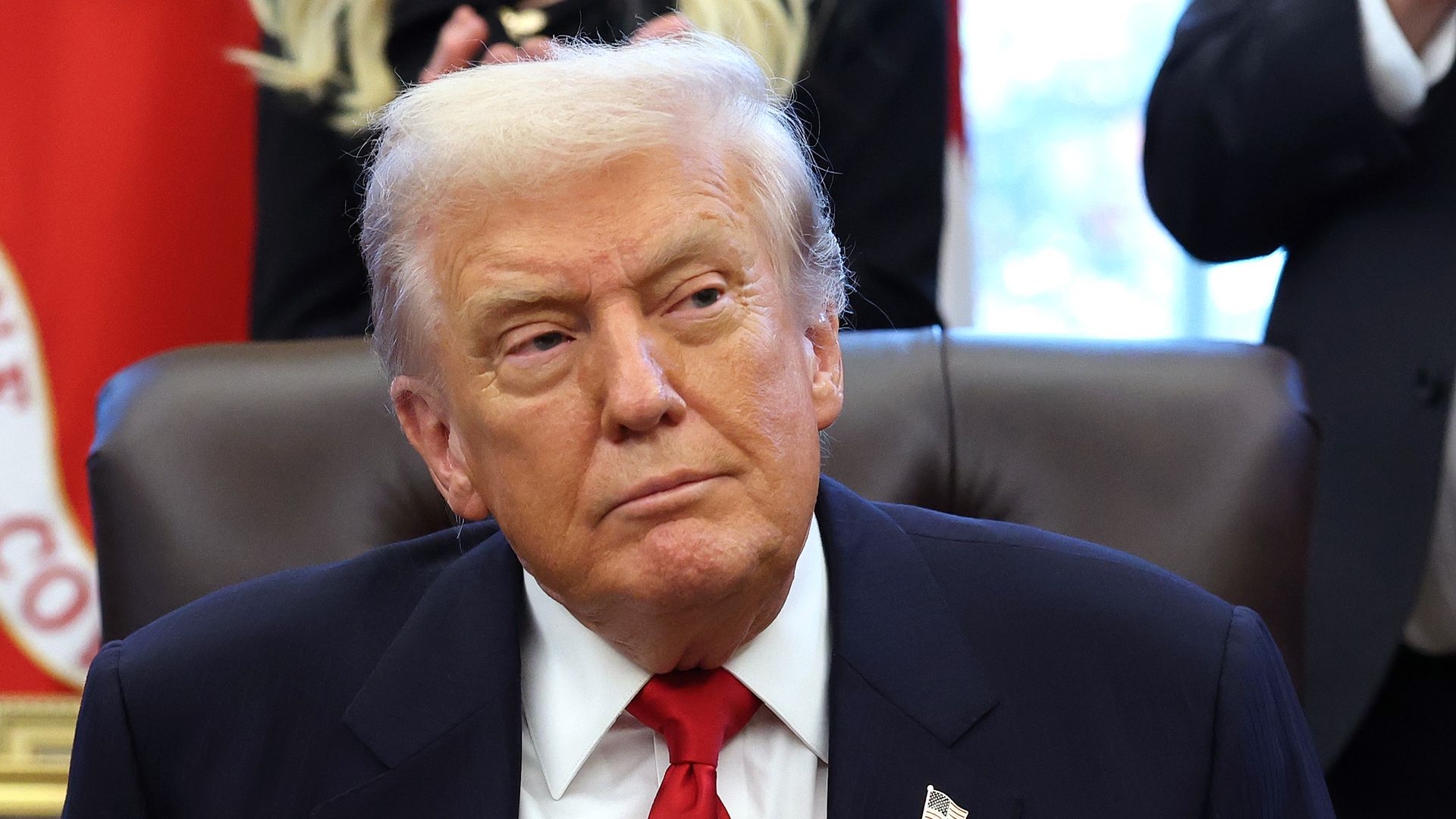
President Trump, in the Oval Office of the White House on Monday. Photo: Anna Moneymaker/Getty Images
President Trump criticized the Supplemental Nutrition Assistance Program known as SNAP in an interview with Fox News' Laura Ingraham Monday night.
Why it matters: SNAP, a decades old anti-poverty program, is in the spotlight as the White House fights in court to avoid paying full benefits during the government shutdown.
Zoom in: "People keep talking about SNAP, but SNAP is supposed to be if you are down and out," he said on "The Ingraham Angle."
- "That's what the purpose of it [is]. People are getting it, they walk in and they get it automatically now. So the number is many times what it should be, it's disgraceful."
- The president said funding for the program has increased significantly, though he didn't specify over what time period: "Snap has gone from like 7 billion to many times 7 billion," he said.
Reality check: There are fairly strict requirements to get food benefits, contrary to Trump's claim.
- SNAP is for people with very low incomes — with a household's gross monthly income at or below 130% of the poverty line (about $34,000 a year) — and almost no financial assets.
- Adults who don't live with children are limited to just three months of benefits every three years or subject to other strict work requirements.
- Nearly 80% of those on SNAP are in households with children, an elderly adult or someone who is disabled, notes the Center on Budget and Policy Priorities.
- A White House spokesperson referred Axios to the OMB for comment on Trump's claims and whether a reform plan was in the works.
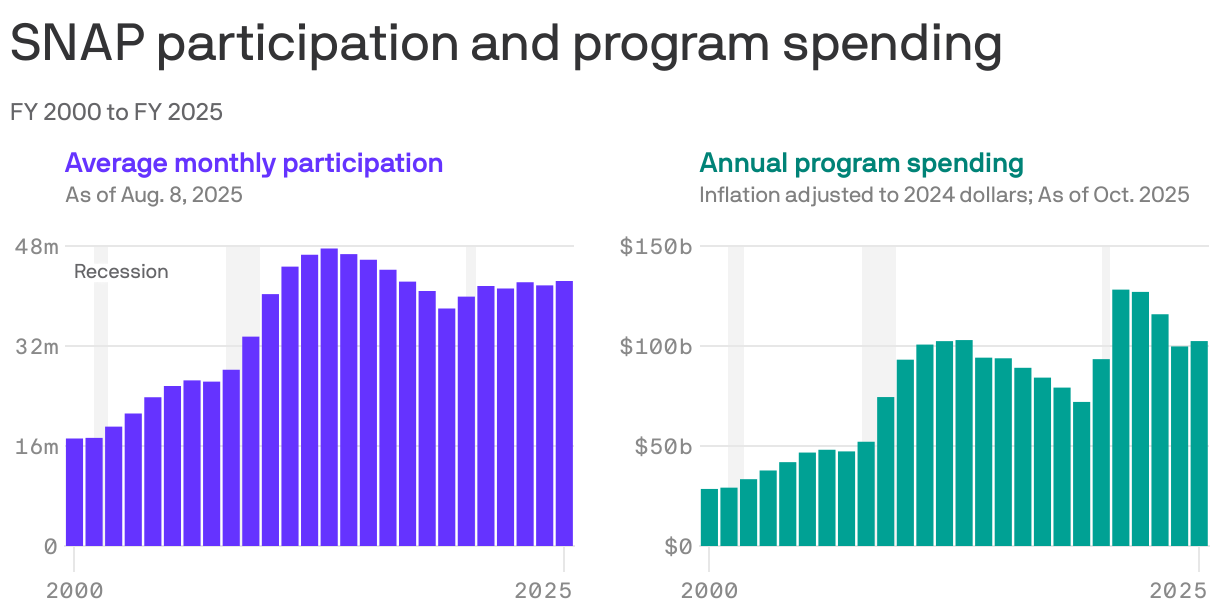
By the numbers: Spending on SNAP is actually down quite a bit from its peak at $128 billion in 2021, when pandemic supports were in place.
- Spending fell to just $100 billion in 2024 and has ticked up slightly so far this year, according to a tally of USDA data from Brookings. Participation also fell off but has been relatively flat for the past several years. (See chart below.)
Flashback: SNAP usage fell during the first few years of Trump's first term, as the economy strengthened. The numbers turned up again when the pandemic struck.
- COVID-era supports — a temporary increase in benefits, and additional emergency allotments — boosted funding to the program, and economic distress also increased participation.
- Spending on SNAP also increased after 2021 after updates to the system were implemented by the Biden administration. Those changes have been criticized by conservatives.
Go deeper: USDA Secretary slams "corrupt" SNAP benefits one day before funding ends
Editor's note: This story was corrected to show SNAP is for households with gross monthly income at or below 130% (not 30%) of the poverty line.
