Scoop: Palestinian VP writes to Rubio rejecting visa ban rationale

Add Axios as your preferred source to
see more of our stories on Google.
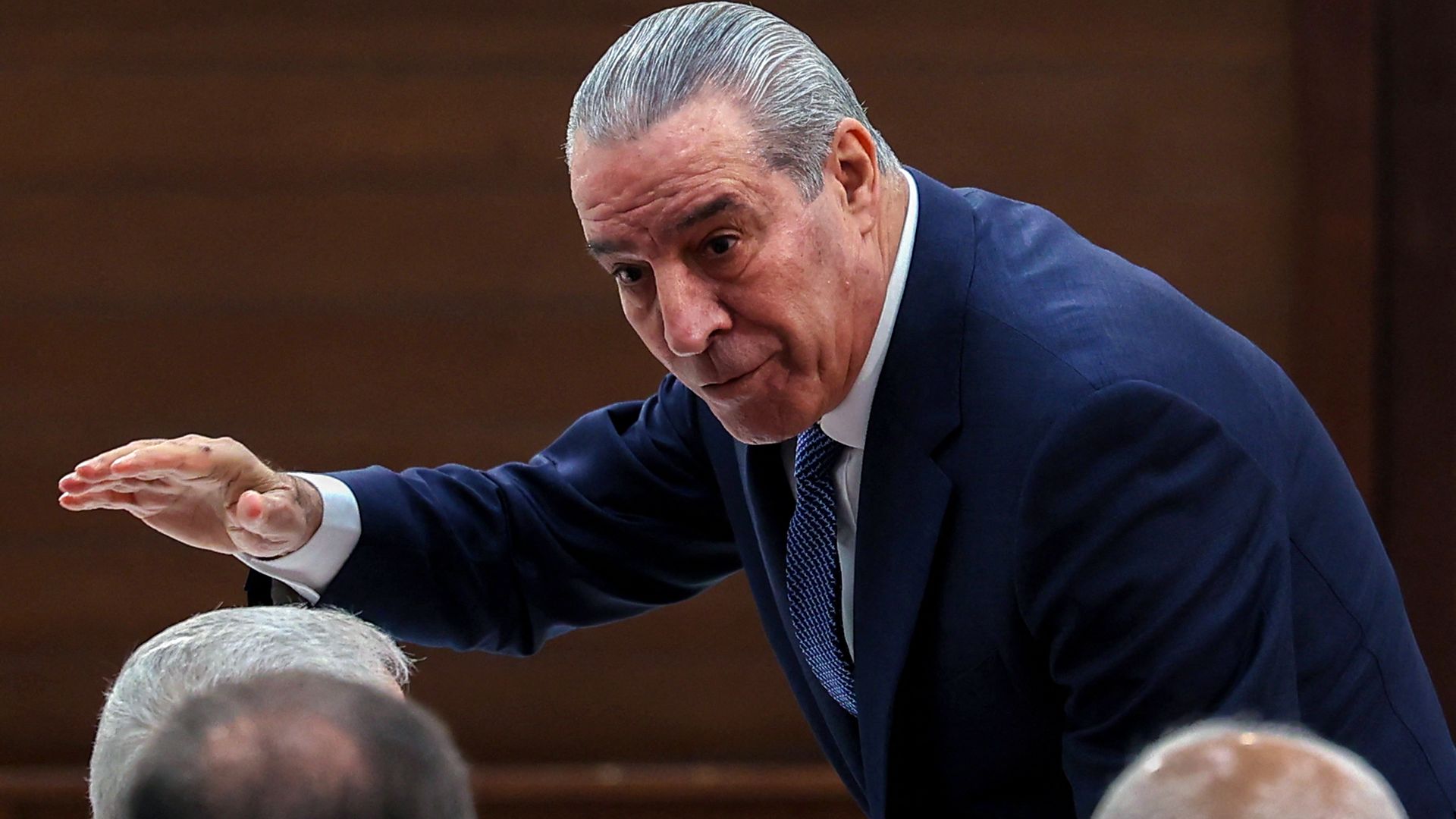
Palestinian VP Hussein al-Sheikh at a meeting in Ramallah. Photo: Zain Jaafar/AFP via Getty
Palestinian Vice President Hussein al-Sheikh wrote to Secretary of State Marco Rubio urging him to reconsider the decision to bar Palestinian President Mahmoud Abbas from the UN General Assembly, arguing it was made on false pretenses, according to a copy of the letter seen by Axios.
Why it matters: The Trump administration's decision sets up a major diplomatic showdown at the UN, where several western countries will announce they're recognizing a Palestinian state at a gathering Palestinian leaders won't even be allowed to attend.
- The ban constitutes the biggest rupture between the U.S. and the PA since President Trump recognized Jerusalem as the capital of Israel in 2017. It's part of a series of moves from the State Department in recent months, that undermine the Palestinian Authority (PA).
- But this time, unlike in 2017, the PA is trying to contain the crisis and solve it through diplomatic channels — both directly and through Arab countries with close ties to Washington.
- The is putting its hopes in particular on the possibility that Saudi Crown Prince Mohammed bin Salman, who met with al-Sheikh on Monday, can convince Trump to reverse course, Palestinian officials say.
Catch up quick: On Friday, the State Department said it would deny or revoke visas for around 80 Palestinian officials to visit the UN's annual gathering in late September, among them Palestinian President Mahmoud Abbas.
- The reasons stated were that the PA had failed to condemn the Oct. 7 attacks, allowed incitement to terrorism in its education system, and continued to lobby for international recognition.
- Belgium on Monday joined the list of western countries that plan to recognize Palestine during the conference.
In his letter to Rubio, dated August 30, the Palestinian VP pushed back on the State Department's rationale.
- Al-Sheikh said Abbas had "categorically condemned violence and terrorism, including the attacks of October 7" in a June 8 letter to President Trump.
- Details of that letter have not previously been revealed. According to al-Sheikh, Abbas wrote that the Palestinian Authority was "committed to peace, non-violence, and the principle of one authority, one government, one law, and one legitimate security force, and confirmed PA commitment for a demilitarized State."
- In his letter to Rubio, al-Sheikh wrote that the PA is ready to conclude legislative and presidential elections within a year of the end of the Gaza war, to govern Gaza with help from Arab partners, and to participate in peace negotiations. He also reminded Rubio of other reforms the PA had undertaken, including around payments for Palestinians held in Israeli jails.
What they're saying: "The decision to revoke the visas of the Palestinian delegation — despite these clear commitments, reforms, and assurances — sends the wrong signal at a time when the entire region looks to the United States for leadership and fairness. It risks silencing the Palestinian voice at the UN, precisely when constructive engagement is most needed to build momentum for peace," al-Sheikh wrote.
- Reached for comment, a State Department spokesperson told Axios the PA must "end their glorification and support of terrorism before we can take them seriously as potential partners in peace."
- "Our duty is to protect our country's national interests and the safety of our citizens. We will not reward anyone who puts those objectives at risk," the spokesperson added.
What to watch: Al-Sheikh and the Saudi crown prince discussed the visa ban during a meeting Monday in Riyadh.
- They also discussed the planned conference to be held on the sidelines of the General Assembly on September 22, organized by Saudi Arabia and France, at which several countries are expected to announce the recognition of Palestine.
Go deeper: Israel weighs West Bank annexations in response to Palestine recognition push
