European powers trigger "snapback" sanctions against Iran

Add Axios as your preferred source to
see more of our stories on Google.
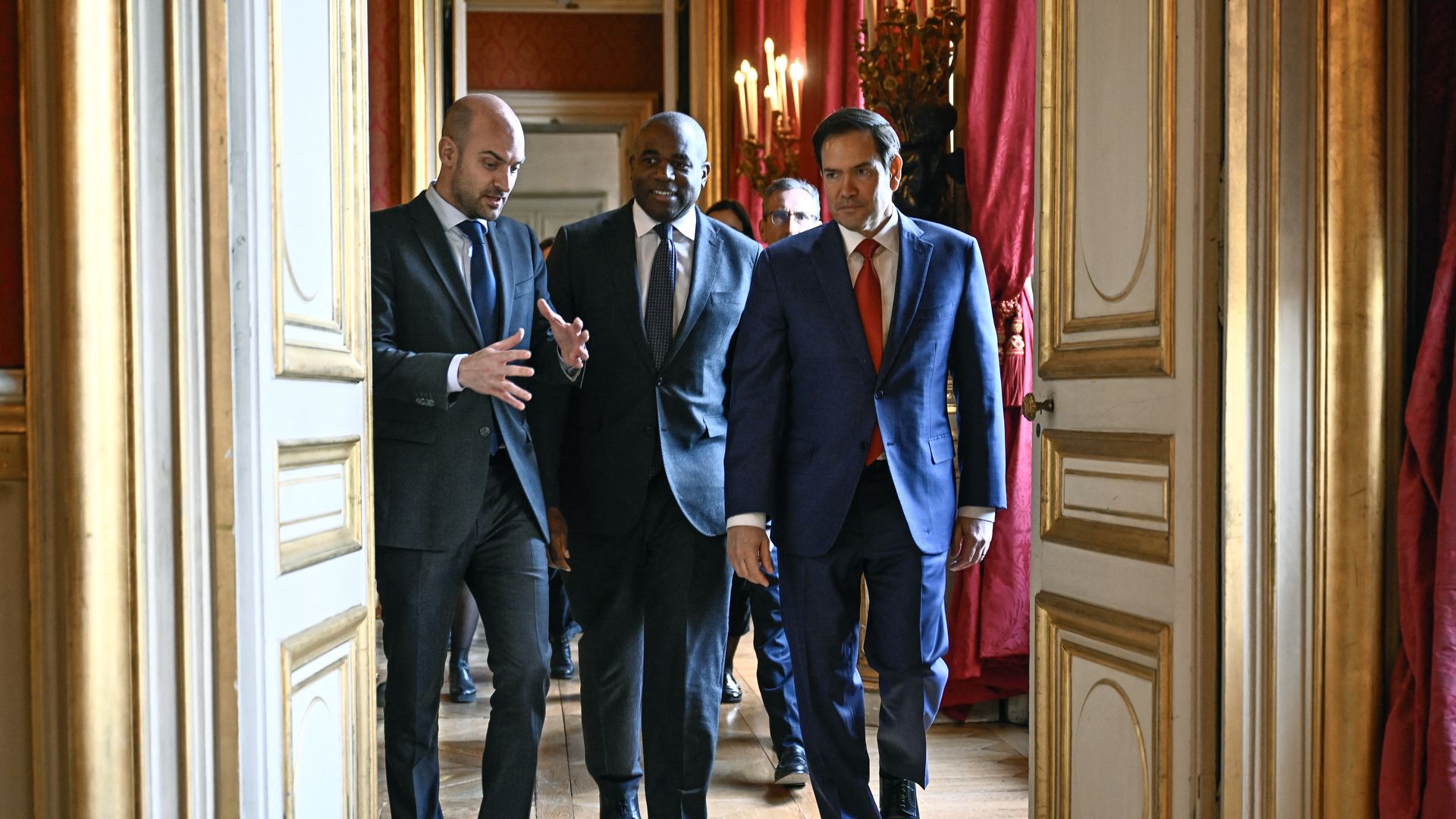
France's Minister for Europe and Foreign Affairs Jean-Noël Barrot, Britain's Foreign Secretary David Lammy and Secretary of State Marco Rubio in Paris in April. Photo: Julien De Rosa/Pool/AFP via Getty Images
France, Germany, and the U.K. sent a letter Thursday morning to members of the UN Security Council announcing they are triggering the "snapback" mechanism to reimpose UN sanctions on Iran, which had been suspended under the 2015 nuclear deal.
Why it matters: In the letter, the three European powers emphasized that during the next 30 days — before the sanctions take effect — they are open to negotiations with Iran on a nuclear agreement that could halt the process.
Driving the news: Secretary of State Marco Rubio applauded the move, but said the U.S. "remains available for direct engagement with Iran — in furtherance of a peaceful, enduring resolution to the Iran nuclear issue."
- Snapback sanctions will further damage Iran's economy and likely lead to Iranian retaliation. A senior Iranian official told Reuters that Iran will continue discussions with the Europeans but "will not concede under pressure."
- Iranian officials have threatened in the past that triggering the "snapback" mechanism would lead Iran to withdraw from the nuclear non-proliferation treaty (NPT).
Between the lines: The ability of signatories to the 2015 deal to impose "snapback" for Iranian noncompliance was about to expire, and the European powers say Iran refused to extend the deadline to allow for further diplomacy.
- Tehran has long challenged the legitimacy of imposing punishments for noncompliance with a deal the U.S. abandoned seven years ago, and for not negotiating with the U.S. when it bombed them during the last round of negotiations.
Catch up quick: The "snapback" mechanism automatically reimposes all UN Security Council sanctions that were lifted under the 2015 Iran nuclear deal.
- France, Germany and the U.K. gave Iran until the end of August to take steps to avoid snapback.
- The European powers wanted Iran to resume negotiations with the U.S. over a nuclear deal, and give UN inspectors full access to its nuclear sites and any 60% highly enriched uranium that survived U.S. and Israeli strikes.
- A meeting in Geneva on Tuesday between senior diplomats from Iran and the European powers ended with no results. A source with knowledge of the Geneva meeting said the Iranians "haven't put tangible detailed deliverables on the table" and ruled out extending the deadline.
What they're saying: The European foreign ministers wrote Thursday that they were still open to discussing "our extension proposal, or on any serious diplomatic steps aimed at bringing Iran back into compliance" with the deal.
- "The E3 leaders think that Iran has been for years in clear violation of its obligations under the 2015 nuclear deal, with no concrete steps taken to remedy that situation," a European diplomat said explaining to decision to trigger the "snapback."
- Iranian Foreign Minister Abbas Araghchi told his European counterparts in a call on Thursday that Iran "will respond appropriately to this illegal and unjustified action," according to Tehran's readout.
- Iran's deputy foreign minister Kazem Gharibabadi told state TV that Iran's response would include suspending cooperation with the International Atomic Energy Agency.
What to watch: The process of activating "snapback" takes 30 days, and the Europeans want to conclude the process before Russia assumes the UN Security Council presidency in October.
- "Triggering the snapback process would not mean the end of diplomacy. The E3 remain open to engaging with Iran in the weeks until the UN sanctions will come into effect," a European diplomat said.
