Flesh-eating screwworm case detected in person in U.S. for 1st time in years

Add Axios as your preferred source to
see more of our stories on Google.
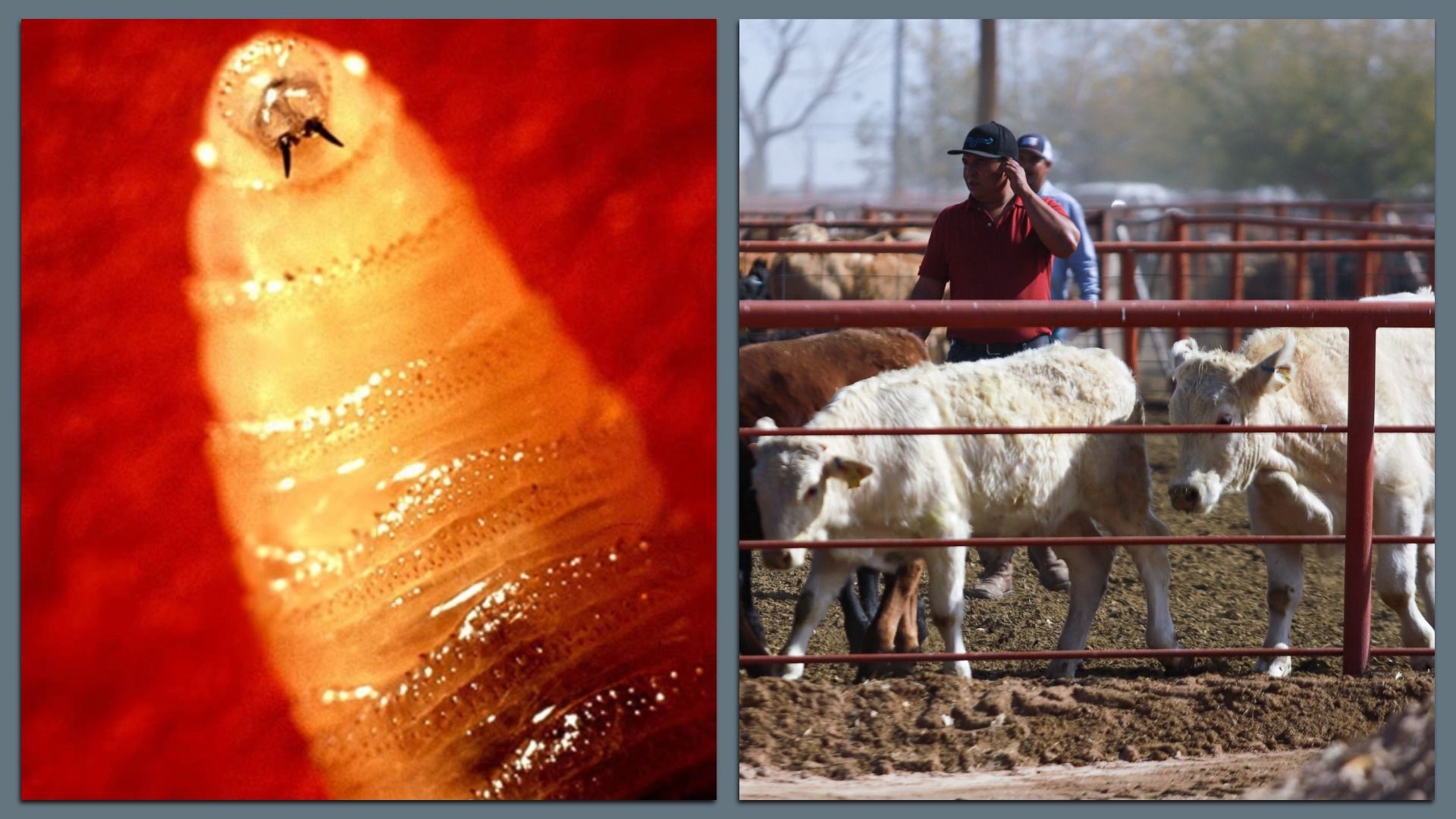
Left: A New World screwworm; Right: Cattle are detained at the Jeronimo-Santa Teresa border crossing in Ciudad Juarez, Mexico, in November as the U.S. suspended imports of Mexican cattle due to threats from the presence of screwworm. Photos: John Kucharski/USDA; Christian Torres/Anadolu via Getty Images
A case of the flesh-eating New World screwworm parasite was detected in a person in Maryland who returned to the U.S. after traveling to El Salvador, the Department of Health and Human Services said Sunday evening.
Why it matters: "This is the first human case of travel-associated New World screwworm myiasis (parasitic infestation of fly larvae) from an outbreak-affected country identified in the United States," said HHS spokesperson Andrew Nixon in an emailed statement that noted the risk to public health in the U.S. from this case "is very low."

- The U.S. Department of Agriculture noted in a May statement announcing the suspension of animal imports at the southern border that these maggots "burrow into the flesh of a living animal, they cause serious, often deadly damage to the animal" that can, "in rare cases," include people.
Context: "Myiasis is a parasitic infestation of fly larvae (maggots) in human tissue," per an online CDC post. "New World screwworm (NWS) is a species of parasitic flies that can cause myiasis and feed on live tissue," primarily affecting livestock.
The latest: "The Maryland resident has recovered from the infection, and the investigation confirmed there is no indication of transmission to any other individuals or animals," said Maryland Department of Health spokesperson David McCallister in an emailed statement.
- "The detection serves as a timely reminder for health care providers, livestock owners and others to maintain vigilance through routine monitoring, as prevention is paramount."
Driving the news: NWS is "typically found in South America and the Caribbean," according to the CDC.
- However, cases in cattle and ranchers in Mexico have prompted the Trump administration in recent months to step up efforts to prevent it from reaching the U.S.
- Despite efforts that included a project to breed and sterilize billions of flies for airdrop over Mexico and southern Texas, Nixon said the CDC, "in coordination with the Maryland Department of Health, investigated a confirmed case of travel-associated New World screwworm in a patient who returned from travel to El Salvador."
Zoom in: The CDC confirmed the case "through telediagnosis (i.e., expert review of submitted larvae images)" on Aug. 4, according to Nixon.
- Reuters first reported on the U.S. case, though it said the traveler had returned from Guatemala, citing beef industry sources.
By the numbers: The USDA estimates that if a screwworm outbreak were to impact Texas, it would cause $1.8 billion in economic damage to the largest cattle-producing state.
What they're saying: National Cattlemen's Beef Association CEO Colin Woodall said in an emailed statement Monday the trade association appreciated the "diligence of human health authorities."
- He added: "This case was quickly addressed thanks to existing protocols, and we are thankful for the ongoing coordination between the CDC, state departments of health, state animal health officials, and USDA."
Flashback: Officials used "a biological control technique (sterilized insects) to eradicate NWS fly populations" in the U.S. in 1966 and "eliminated a small outbreak from the Florida Keys in 2017," per a USDA online post.
Go deeper: U.S. to breed billions of flies in fight against flesh-eating maggots
Editor's note: This article has been updated with comment from Maryland Department of Health spokesperson David McCallister and National Cattlemen's Beef Association CEO Colin Woodall.
