Trump's proposed public broadcasting cuts build on decades of GOP threats

Add Axios as your preferred source to
see more of our stories on Google.
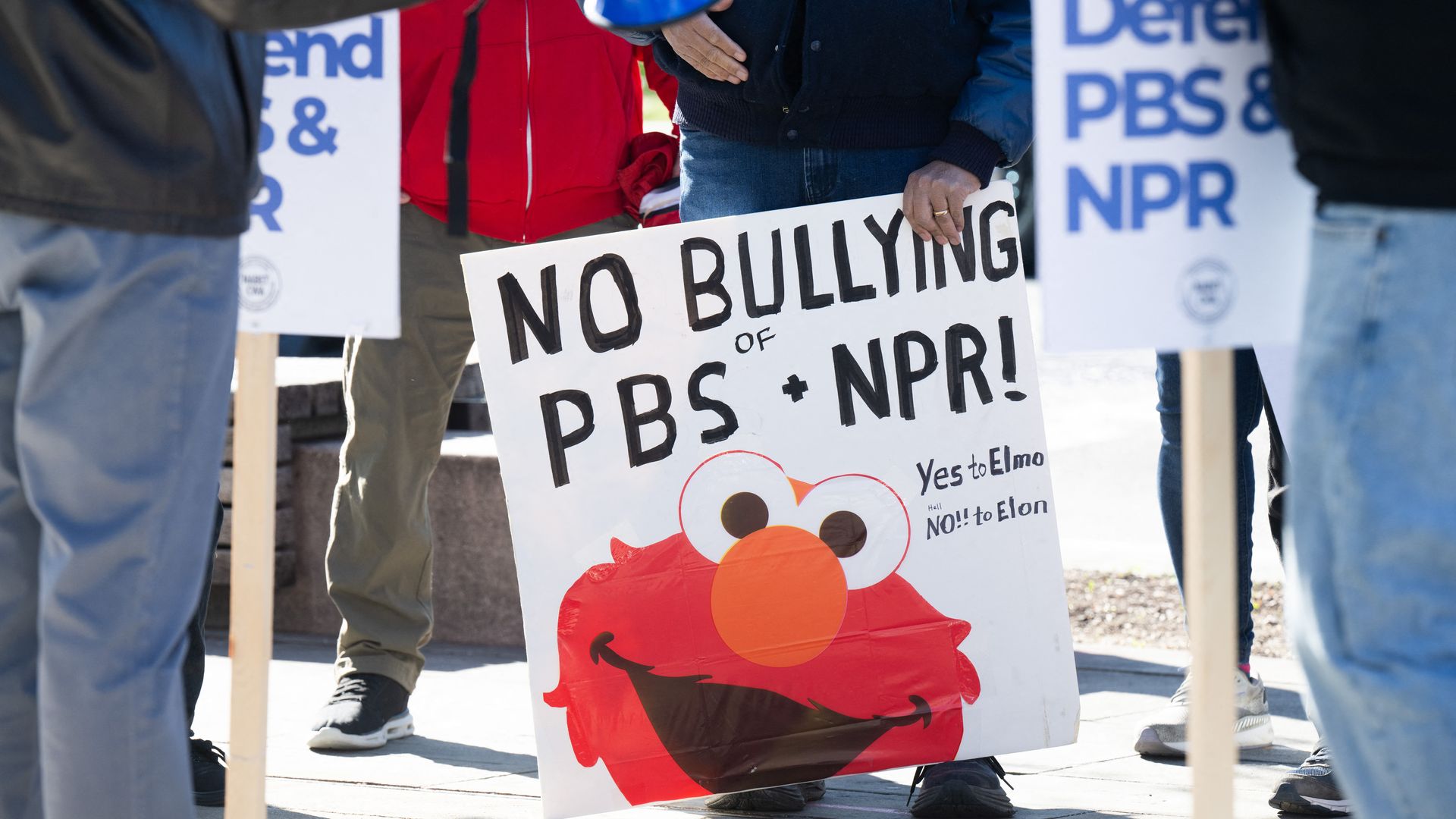
People participate in a rally to call on Congress to protect funding for public broadcasters outside the NPR headquarters in Washington, DC, on March 26. Photo: Saul Loeb/AFP via Getty Images
Republican lawmakers this week could approve deep cuts to the the Corporation for Public Broadcasting (CPB) — but the threat is far from fresh, building on decades of attempts to strip support from public broadcasting.
The big picture: The Senate is expected to vote on a rescissions package ahead of a Friday deadline that would yank $1.1 billion in funds allocated to CPB, putting a years-long conservative push on the brink of reality.
- While the package already passed the House, some GOP senators are wary of the impact the cuts will have on local stations, which are expected to feel the sharpest pain.
- According to the CPB, more than 70% of its federal funding goes directly to more than 1,500 locally owned public radio and television stations.
- But Trump earlier this month said it's "very important" for Republicans to adhere to his bill, writing on social media, "[a]ny Republican that votes to allow this monstrosity to continue broadcasting will not have my support or Endorsement."
Context: To many prominent Republicans, it's been a "very important" initiative to strip NPR and PBS stations of taxpayer funding for decades, though Congress has historically stood in the way.
- Trump acknowledged the GOP was on the cusp of changing that trend, writing on Truth Social last month, "For decades, Republicans have promised to cut NPR, but have never done it, until now."
- Former presidents Richard Nixon, Ronald Reagan and George W. Bush sought cuts. In 1969, with Nixon in the White House, "Mister Rogers' Neighborhood" host Fred Rogers famously advocated for funding on Capitol Hill.
- During his first term, Trump also repeatedly suggested slashing funds for public broadcasting — but this time, he may have more fuel to succeed in pushing the DOGE-driven cuts through Capitol Hill.
Yes, but: Despite decades of attacks, the rescission proposal "is the most serious threat ever faced by public broadcasting," NPR CEO Katherine Maher said in a statement, emphasizing the clawback could result in the cancellation of local and national programming and a reduction in local news service.
- PBS President and CEO Paula Kerger said the proposed rescissions would have a "devastating impact" on PBS member stations, without which "Americans will lose unique local programming and emergency services in times of crisis."
The other side: Proponents of slashing public broadcasting funds also see a tipping point in the decades-old debate since former President Lyndon B. Johnson signed the Public Broadcasting Act into law.
- Heritage Foundation senior fellow Mike Gonzalez wrote that after decades of Republican presidents falling short of their efforts to strip the CPB of funding, "[t]hings are different now for many reasons," such as the massive cuts to the federal bureaucracy and the fallout from a former NPR editor who accused the network of liberal bias.
- Michael Chapman, a senior editor at the libertarian CATO Institute, wrote earlier this year that "[w]ith enough political momentum behind them, perhaps Congress can get it done this time."
