NPR sues Trump administration over funding cuts


Add Axios as your preferred source to
see more of our stories on Google.
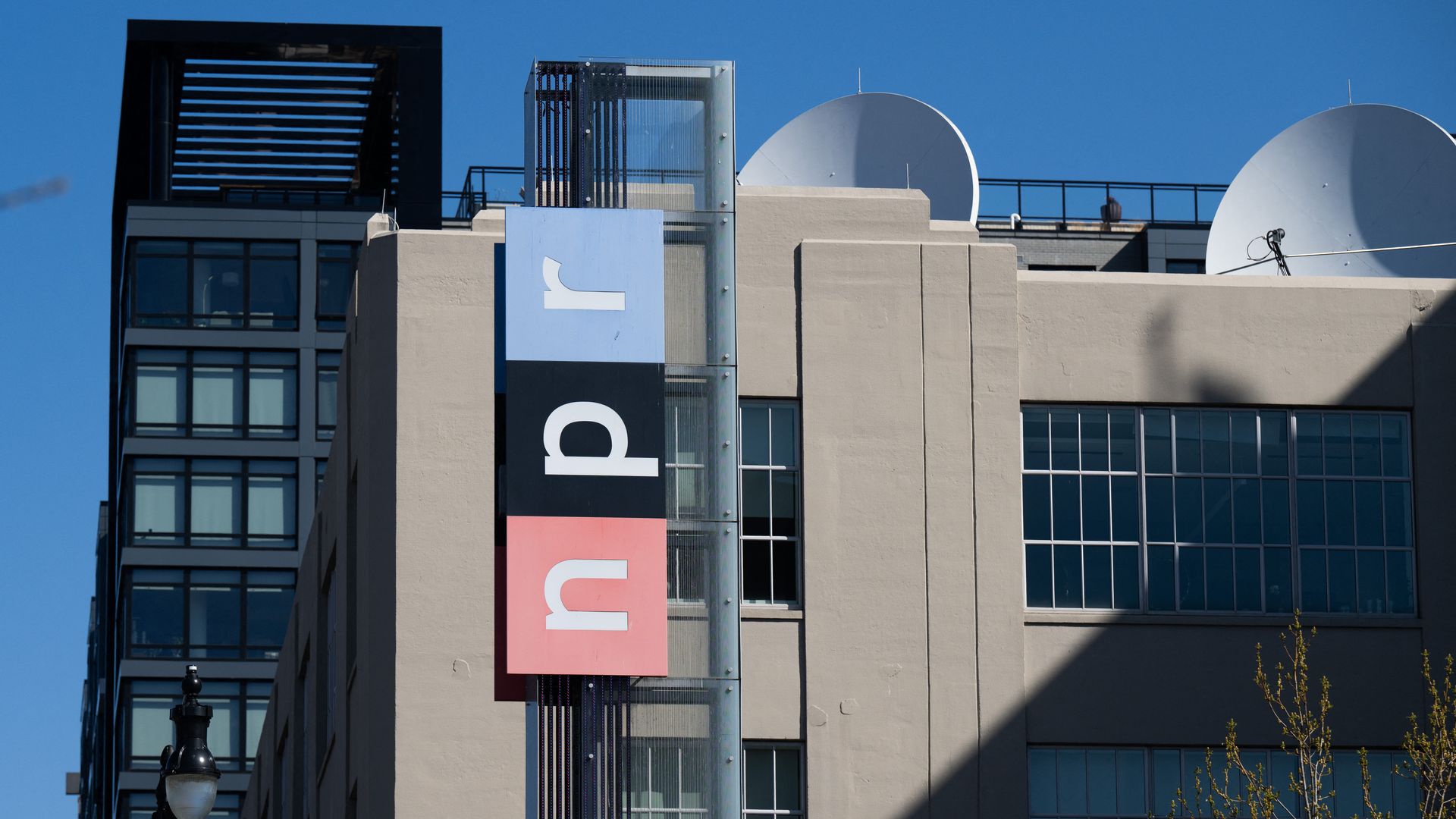
The headquarters for National Public Radio (NPR) in Washington, DC. Photo: Saul Loeb/AFP via Getty Images
NPR with several of its local affiliates on Tuesday said it sued the Trump administration, challenging President Trump's executive order seeking to cease all federal funding to NPR and PBS.
Why it matters: Republicans have recently been targeting the portion of NPR's and PBS's funding that is Congressionally-appropriated.
Zoom in: NPR and three Colorado stations — Aspen Public Radio, Colorado Public Radio and KSUT Public Radio — allege in the lawsuit that the executive order violates the Constitution and the First Amendment.
- Filed in federal court in Washington, D.C., the lawsuit said the executive order "targets NPR and PBS expressly because, in the President's view, their news and other content is not 'fair, accurate, or unbiased.'"
- "The President's Executive Order is directly counter to Congress's long standing intent, as expressed in the Public Broadcasting Act, to foster vibrant institutions that achieve that mission, serving all Americans independent of political influence," NPR President and CEO Katherine Maher said in a statement.
- Defendants listed in the lawsuit include President Trump, White House budget director Russell Vought, Treasury Secretary Scott Bessent and National Endowment for the Arts chair Maria Rosario Jackson.
The other side: "The Corporation for Public Broadcasting (CPB) is creating media to support a particular political party on the taxpayers' dime. Therefore, the President is exercising his lawful authority to limit funding to NPR and PBS," White House spokesperson Harrison Fields told Axios.
- "The President was elected with a mandate to ensure efficient use of taxpayer dollars, and he will continue to use his lawful authority to achieve that objective," Fields said.
How it works: Trump's executive order directed the board of the Corporation for Public Broadcasting to freeze funding to NPR and PBS, which would be detrimental to local stations.
- NPR receives only about 1% of its annual revenue from the CPB. But each public radio station relies heavily on CPB funding, averaging 8% to 10% of its annual revenue, per NPR.
Zoom out: Last month, the CPB sued Trump and several administration officials for attempting to fire three out of the five members of its board and asked a judge for a temporary restraining order.
- "The Corporation for Public Broadcasting is not a government entity, and its board members are not government officers," CPB said in statement.
Reality check: PBS is not involved in NPR's lawsuit. PBS CEO Paula Kerger previously said in an interview with Axios that she would "vigorously" defend PBS' board from any political interference.
- "PBS is considering every option, including taking legal action, to allow our organization to continue to provide essential programming and services to member stations and all Americans," a PBS spokesperson told Axios on Tuesday.
The big picture: Trump's move is part of a broader effort to target the media industry and defund news organizations.
- The Trump administration has tried to gut the Voice of America and its parent, the U.S. Agency for Global Media. A federal judge ruled last month that VOA workers who were placed on leave or fired should return to work and the administration must restore funding.
- Also on Tuesday, two Democratic senators penned letters to Secretary of State Marco Rubio and Homeland Security Secretary Kristi Noem urging them to protect and prioritize the safety of journalists affiliated with U.S. government-funded international broadcasters.
