Israel's mission hinges on destroying Iran's hardest nuclear target

Add Axios as your preferred source to
see more of our stories on Google.
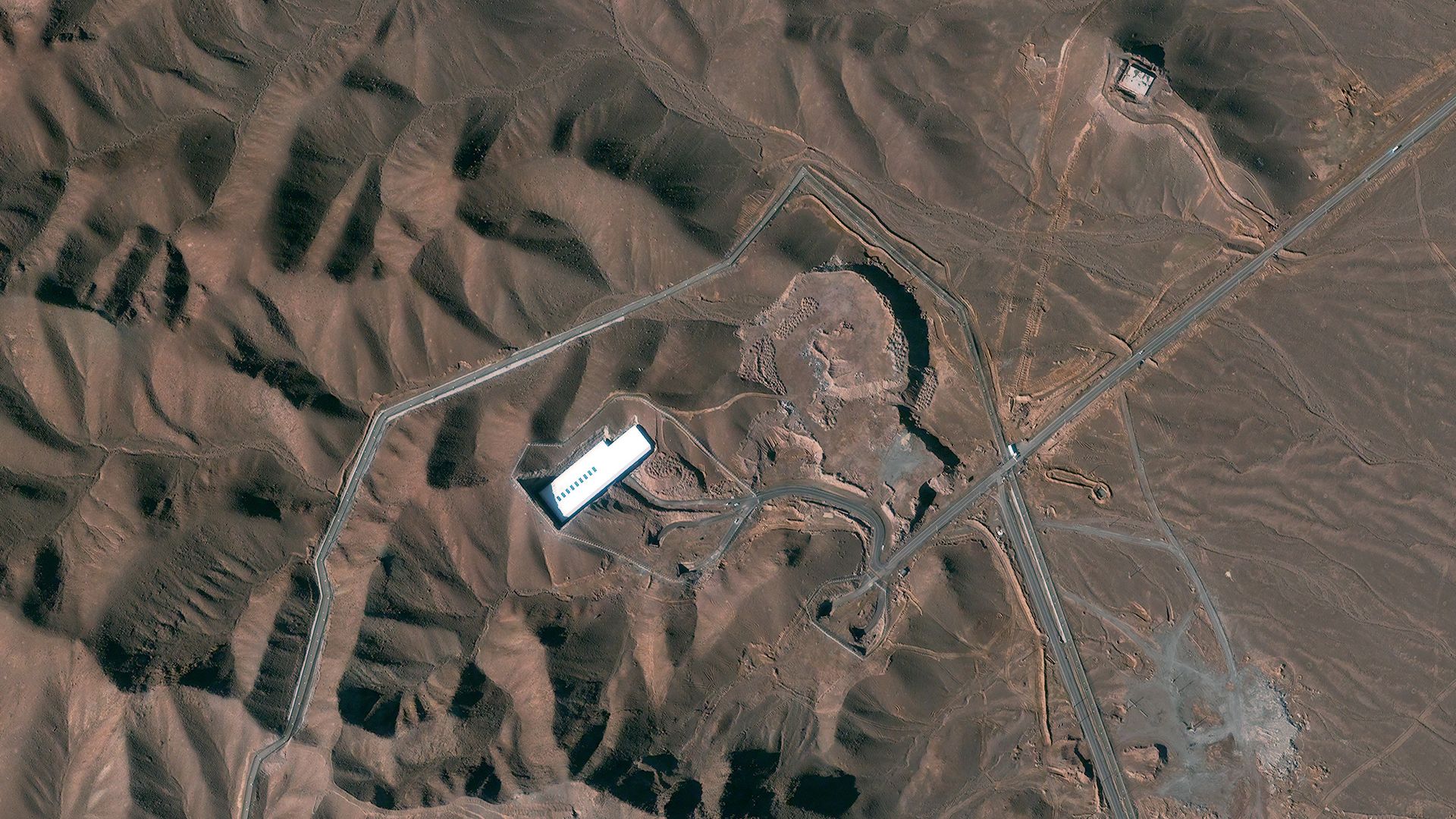
A 2013 satellite photo of Iran's Fordow enrichment facility. Photo: DigitalGlobe via Getty Images
One factor that could determine whether Israel's audacious attack on Iran proves a daring success or a dangerous mistake is the fate of Iran's Fordow uranium enrichment site.
The big picture: Israel will require unforeseen tactical ingenuity or U.S. assistance to destroy Fordow, which is built into a mountain and deep underground. But if the facility remains intact and accessible, a nuclear program Israel is determined to "eliminate" could actually accelerate.
- "The entire operation... really has to be completed with the elimination of Fordow," Israeli Ambassador to the U.S. Yechiel Leiter told Fox News on Friday.
- That's why the Israeli government hopes the Trump administration ultimately decides to join Israel's operation.
Breaking it down: Israel lacks the huge bunker busters needed to destroy this facility and the strategic bombers to carry them. The U.S. has both within flying distance of Iran.
- An Israeli official claimed to Axios that the U.S. could still join the operation, and that President Trump even suggested he'd do so if necessary in a conversation with Prime Minister Benjamin Netanyahu in the days leading up to launch.
- But a White House official denied that, telling Axios Trump said exactly the opposite. The U.S. currently has no intention of getting directly involved, the official said.
Yes, but: Some experts think Israel could try to replicate the effect of a massive bunker buster by repeatedly bombing the same location.
- A much riskier approach would be sending special forces to raid the facility.
- Israeli special forces conducted such a raid last September, albeit on a smaller scale, when they destroyed an underground missile factory in Syria by planting and detonating explosives. The entire operation took two hours.
Driving the news: Netanyahu argued Israel was compelled to act because of Iran's growing stockpile of highly enriched uranium, and because intelligence suggested Iran was resuming R&D on nuclear weaponization.
- Israel targeted nuclear enrichment facilities, centrifuge production lines and nuclear scientists in hopes of decimating the program.
- Iran has long denied any intention of building a bomb, but has enriched uranium far beyond what is required for civilian use.
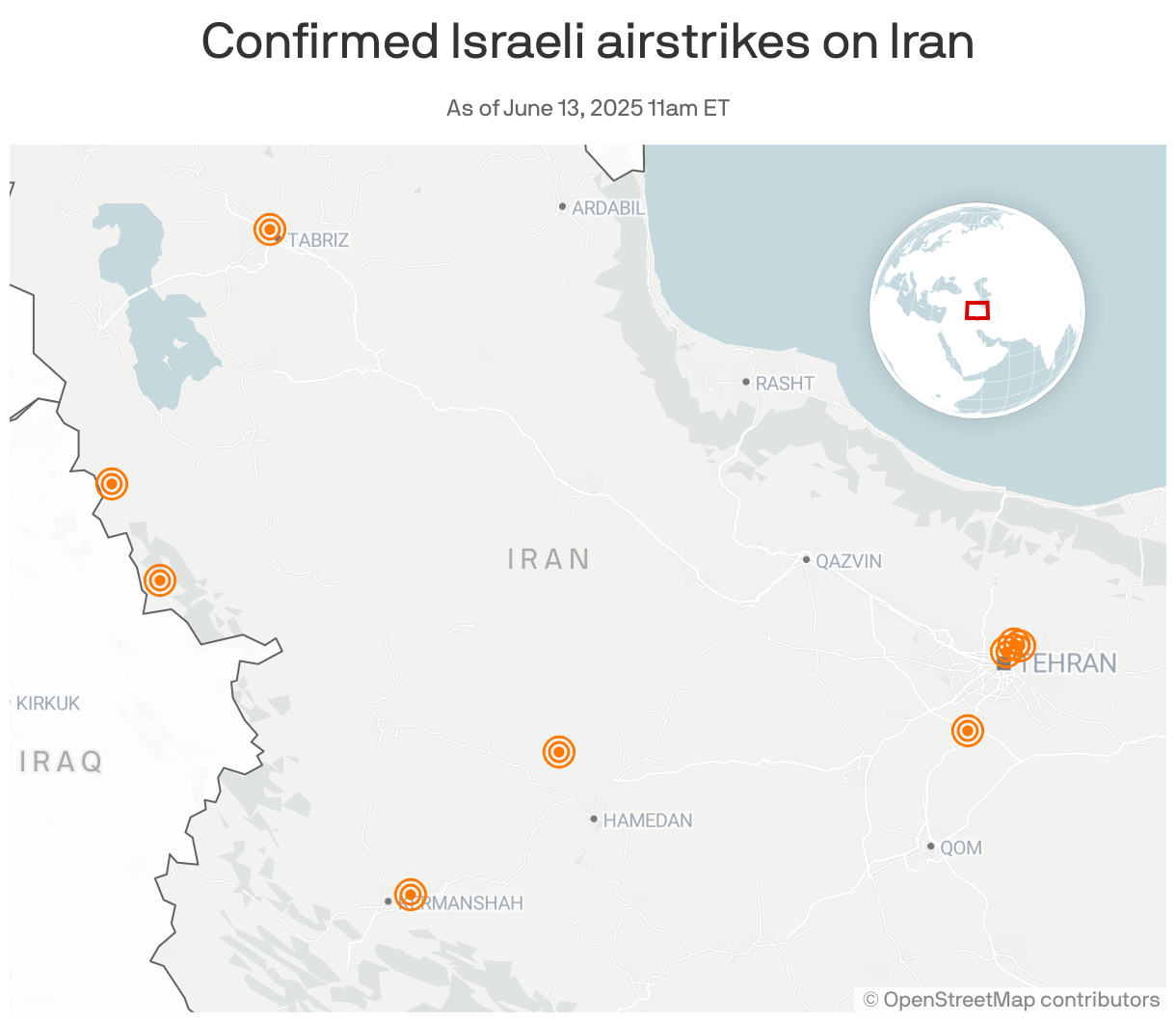
State of play: International Atomic Energy Agency Director-General Rafael Grossi told the UN Security Council on Friday that Iran's above-ground enrichment facility in Natanz had been destroyed by Israeli strikes.
- Iran has other uranium enrichment facilities, but that's a big setback to the program.
- The underground portion of the Natanz facility had not been hit by a physical attack, but the loss of power to the compound as a result of the strikes could have damaged the centrifuges, Grossi said.
- Israel destroyed other nuclear sites on Friday in Esfahan.
Zoom in: Grossi also said the Iranian government informed him that Israel had attacked Fordow, though he couldn't personally confirm that.
- The IDF has not announced strikes on Fordow, and there are no indications thus far that it has sustained any significant damage.
What to watch: While the U.S. side continues to say that Israel is acting alone, Netanyahu has left open the possibility that could change.
- "I leave the U.S. position to the U.S.," he said Friday. "What are they going to do now? I leave it to President Trump. He made clear that Iran must not have a nuclear weapon."
