U.S. air quality hit as 205 wildfires burn across Canada

Add Axios as your preferred source to
see more of our stories on Google.
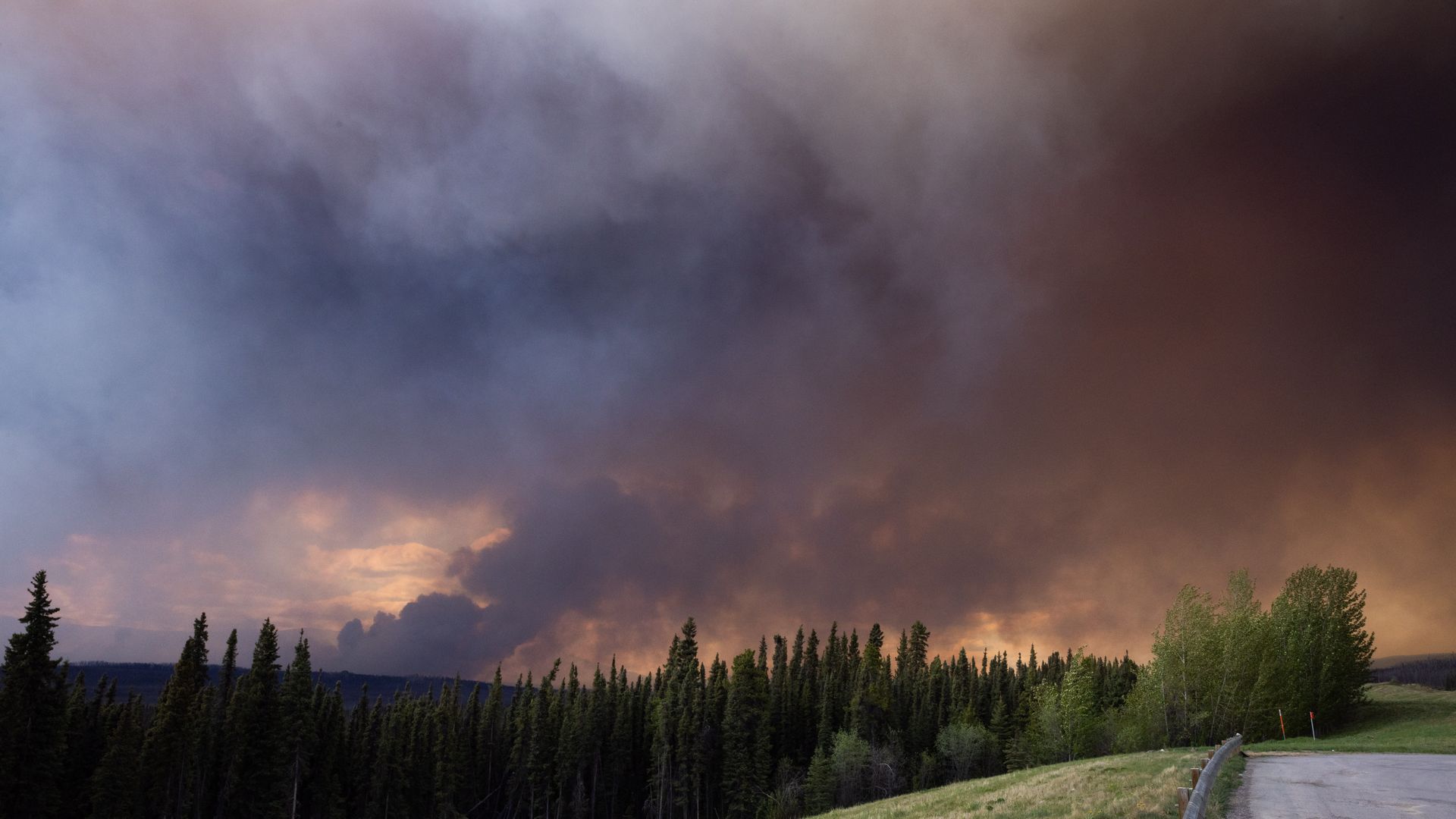
Wildfire smoke above Highway 97, north of the Buckinghorse River near Trutch, British Columbia, Canada, on Friday. Photo: Nasuna Stuart-Ulin/Bloomberg via Getty Images
Wildfires in Canada have forced thousands of residents to evacuate in three provinces, impacting air quality in the U.S. — and smoke from the deadly fires has even blown across the Atlantic and reached parts of Europe.
The big picture: The fires that killed two people in Manitoba have been hitting air quality across the country and into the U.S. for days, with the latest alerts affecting Iowa, Minnesota, Wisconsin and parts of Michigan on Tuesday.
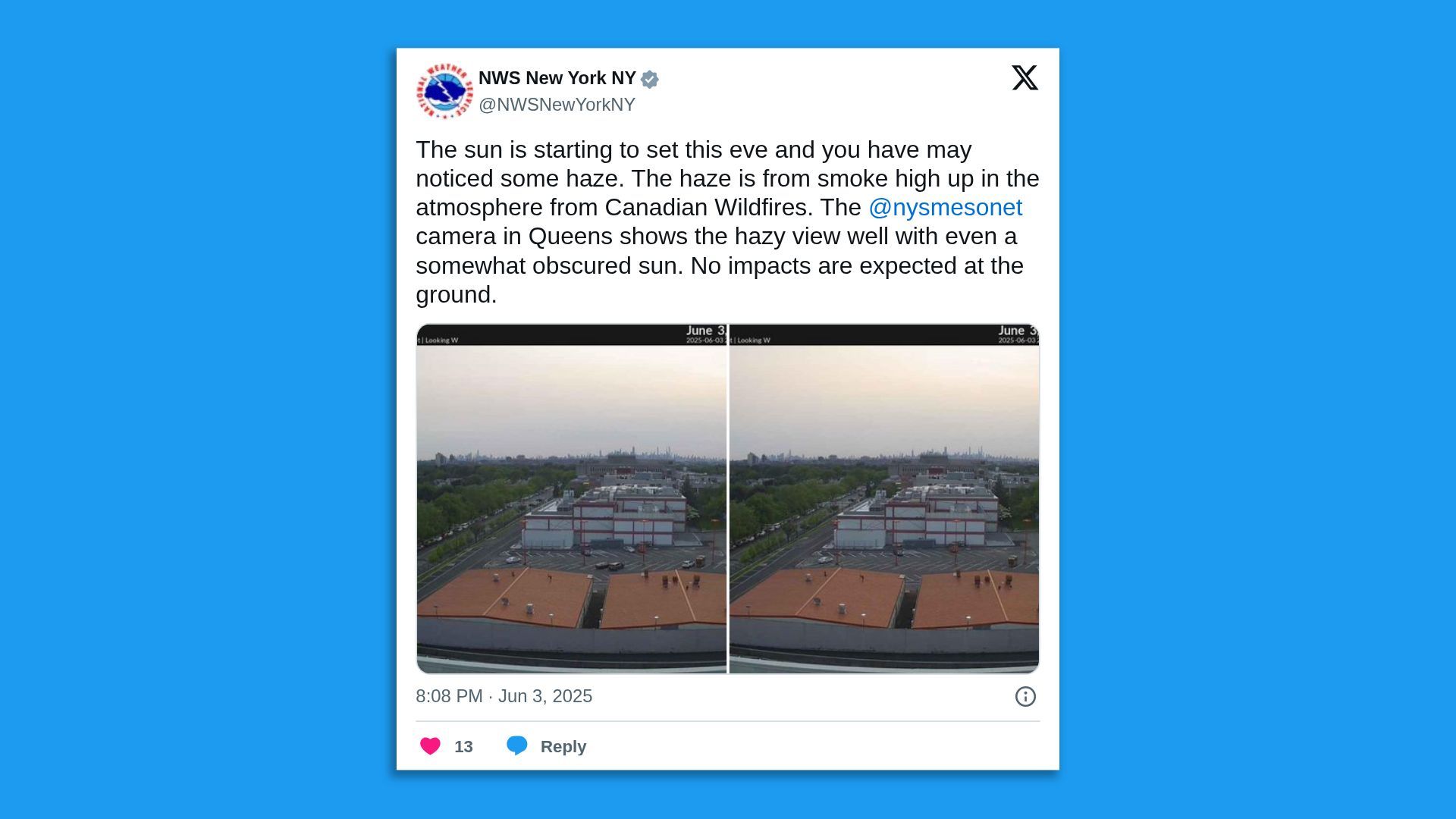
- Parts of New York, New Jersey and Connecticut will also be under alerts Wednesday because of "unhealthy" air quality levels, per the National Weather Service.
- The U.S. announced Monday the deployment of 150 federal firefighting personnel to Canada to help tackle the escalating threat of the fires that researchers and officials say are being fueled by climate change.
Threat level: Mandatory evacuation orders have been enacted in the western provinces of Manitoba, Saskatchewan and Alberta — as Canadian Interagency Forest Fire Centre data showed the number of fires across Canada grew to 205 by Tuesday evening, with 103 burning out of control.
- The premiers of Manitoba and Saskatchewan ordered 30-day provincial states of emergency declarations last week.
Between the lines: Mike Flannigan, a wildfire expert at Thompson Rivers University, noted on Bluesky that an estimated 1 million hectares (nearly 2.5 million acres) in Canada had burned as of Friday.
- In "terms of area burned for this time of year," that's second only to the record 2023 wildfire season, when a report showed Canada's fires emitted enough carbon to equal India's annual emissions, per Flannigan.
Context: The wildfires "intensified" as heat, drought, and atmospheric conditions collided during the last week of May, per a Climate Central report that found climate change had made high temperatures in parts of central Canada "at least five times more likely than they would be in a world without climate change."
- The Canadian Climate Institute noted in a Bluesky post that climate change is "making wildfires bigger, hotter and more frequent in Canada, which is warming twice as fast as the global average."
What they're saying: "This is the largest evacuation Manitoba will have seen in most people's living memory," Manitoba Premier Wab Kinew told reporters after over 17,000 residents were evacuated Thursday.
- "For the first time, it's not a fire in one region, we have fires in every region. That is a sign of a changing climate that we are going to have to adapt to."
Go deeper: The hidden health harms of wildfire smoke
Editor's note: This story has been updated with new details throughout.
