What to know about Trump's efforts to replace federal workers under Schedule F

Add Axios as your preferred source to
see more of our stories on Google.
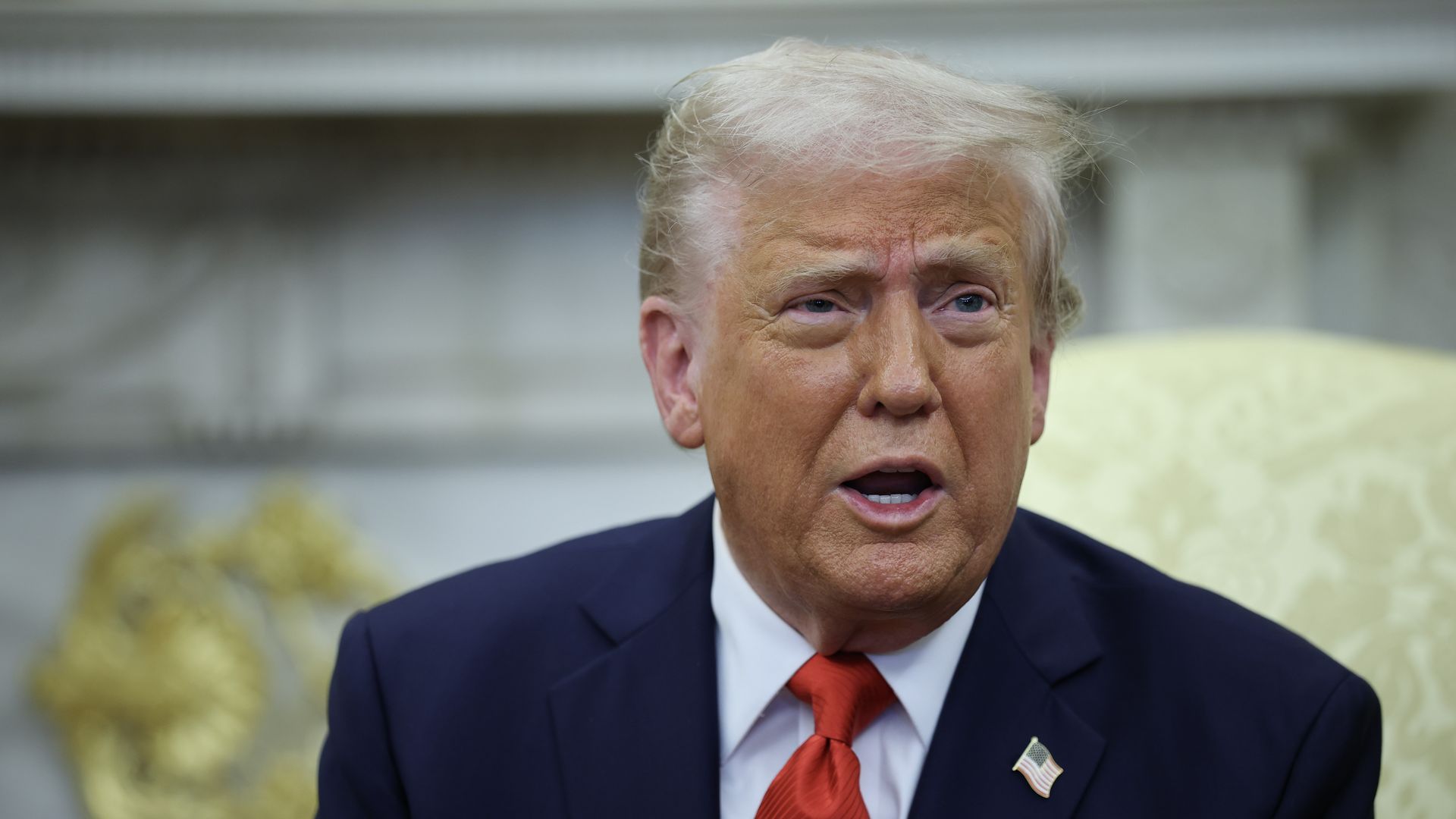
Donald Trump in the Oval Office of the White House on April 14. Photo: Win McNamee/Getty Images
The Trump administration is expected to announce Friday that it would move forward with mass firings of more federal workers under the auspices of a new rule, previously known as "Schedule F."
Why it matters: The plan will allow Trump to gut civil service protections from a large swath of federal workers, paving the way to replace them with loyalists.
The big picture: Beneath the layer of political appointees every president can nominate, the federal government is staffed by large numbers of civil servants in nonpartisan roles that come with protections that shield them from politically-motivated firings.
- During his first term, President Trump issued an executive order known as "Schedule F," which took aim at these protections.
- Even before Trump officially launched his second presidential run, reports abounded that he planned to resurrect Schedule F during his second term.
- During his campaign, Trump vowed to slash the size of the "deep state" federal government and fire "rogue bureaucrats and career politicians."
What is the new rule?
The new rule, dubbed "Schedule Policy/Career," will reclassify many career civil servants as "at will" employees, making them easier to remove from their posts.
- This new rule will impact workers involved in policymaking, two White House officials familiar with the plan told Axios.
Flashback: Weeks ahead of the 2020 election, Trump issued an executive order known as "Schedule F" that would have reclassified tens of thousands of federal workers whose roles involved policy-making functions.
- That new category made it easier to fire federal employees in civil servant positions and career posts who were considered disloyal to the president.
- Former President Biden rescinded the executive order after he took office.
Reinstating Schedule F
Plans for reinstating Schedule F to fire federal workers have been percolating for months.
- On his first day back in office, the Trump issued an executive order essentially reinstating Schedule F.
- In the order, Trump talked about the need to bring accountability to the federal workforce, arguing it is too difficult to fire underperforming workers with their current job protections.
- The Office of Personnel and Management (OPM) issued a memo in January that set deadlines for agencies to determine which workers might be subject to Schedule F reclassification.
Zoom in: Reinstating Schedule F was also a facet of Heritage Foundation's Project 2025, which Trump's allies touted as the administration's agenda.
Who could be impacted?
As many as 50,000 federal workers — about 2% of the federal workforce — could be affected by Schedule F reclassification.
- Reclassified employees would become at-will employees that are significantly easier to terminate.
- The OPM memo gave agencies until April 20 to submit recommendations for which career positions could be subject to reclassification.
