The Supreme Court made Trump's birthright citizenship attacks easier. What to know


Add Axios as your preferred source to
see more of our stories on Google.
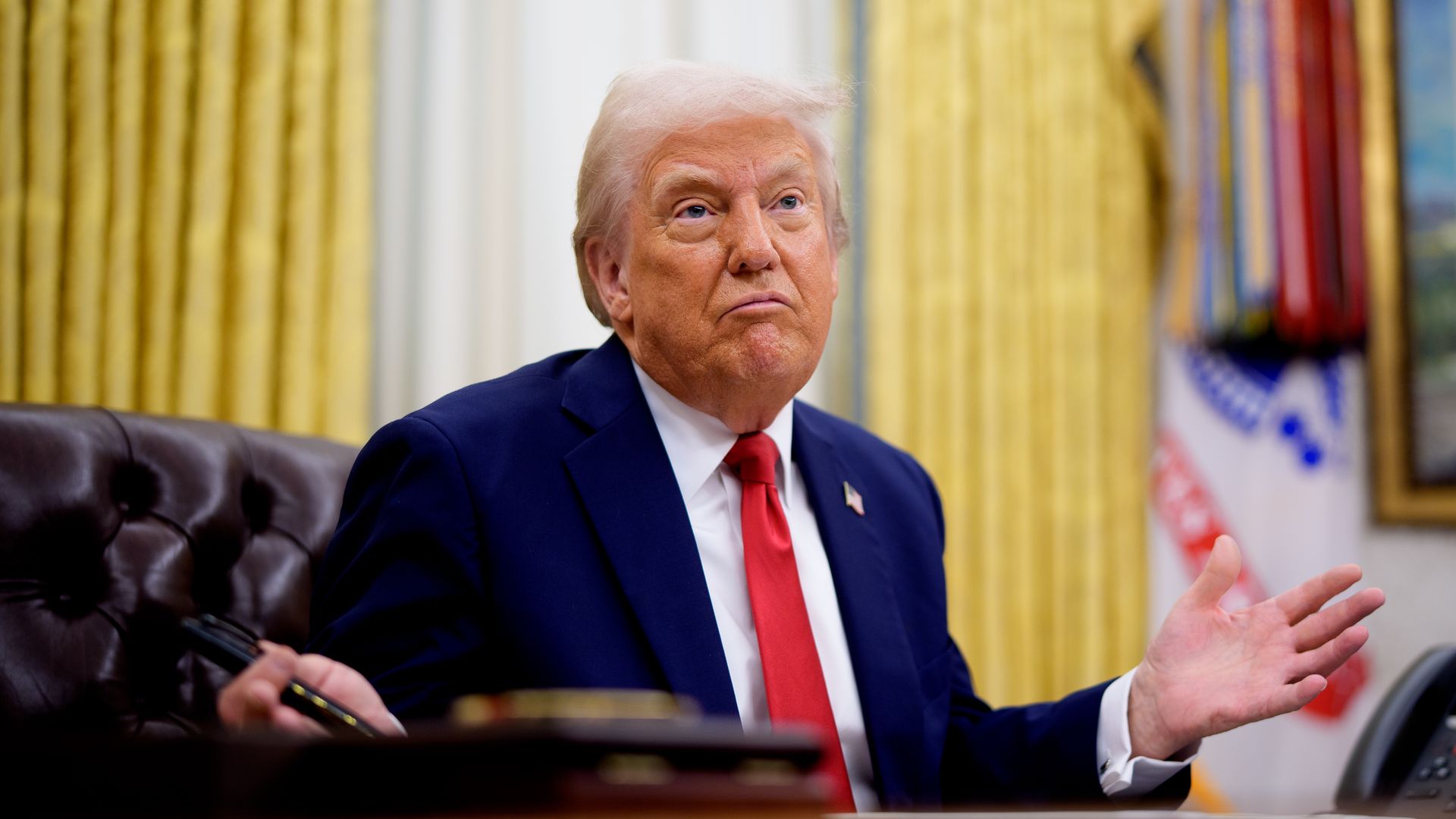
President Trump's bid to end birthright citizenship is part of his sweeping immigration crackdown. Photo by Andrew Harnik/Getty Images
The Supreme Court on Friday imposed limits on lower courts' power to freeze federal policies — specifically, President Trump's effort to eliminate birthright citizenship in the U.S.
Why it matters: Trump's bid to eliminate the constitutionally guaranteed right for some is the centerpiece of his administration's sweeping immigration crackdown, in which he's previously defied the Supreme Court.
The Court's 6-3 ruling, written by Justice Amy Coney Barrett, fell along ideological lines.
State of play: Every district court to consider Trump's executive order aiming to eliminate birthright citizenship has said it's likely unconstitutional.
- Their decisions have been applied universally, freezing the policy in its entirety.
- But district courts don't have the power to do that, the Supreme Court said.
- "When a court concludes that the Executive Branch has acted unlawfully, the answer is not for the court to exceed its power, too," Barrett wrote.
The Court's ruling did not address whether Trump's policy is constitutional.
Here's what to know:
What is birthright citizenship?
Birthright citizenship, as outlined by the Constitution's 14th Amendment, automatically confers citizenship to people born on U.S. soil – regardless of their parents' citizenship status.
- There are two types in the U.S.: jus sanguinis, ancestry-based citizenship, and jus soli, birthplace-based citizenship.
- In the former, which means "right of blood," children born abroad to at least one U.S. citizen parent may be entitled to U.S. citizenship, if they meet certain requirements.
- Jus soli, on the other hand, is "the right of the soil" guaranteeing citizenship to almost everyone born in the U.S.
Zoom out: Birthright citizenship was added to the Constitution in the 14th Amendment after the Civil War to guarantee citizenship for formerly enslaved people who were newly freed.
- The right was affirmed by the Supreme Court in the 1890s, cementing birthright citizenship for children born in the U.S. to parents who are not citizens.
What is Trump trying to change?
Trump signed an executive order on his first day in office this year, which seeks to end birthright citizenship for children born in the U.S. to noncitizen parents and undocumented immigrants.
Has anyone fought these efforts?
Trump's executive order was quickly met with legal challenges, which resulted in temporary blocks on the order's enforcement nationwide.
- Trump's DOJ asked the Supreme Court to limit the scope of those orders.
How many people would be affected by the order?
In 2018, there were 4.4 million U.S.-born children with at least one parent who is an "unauthorized immigrant," per a Migration Policy Institute analysis.
- Congress in 2022 defined unauthorized immigrants as "noncitizens who generally have entered the United States without inspection, overstayed a period of lawful admission, or violated the terms of their admission."
- That figure represents most children living with parents who are unauthorized immigrants, 85%.
Has the number of children born to immigrants changed over the years?
- In 2021, 21% of U.S. births were attributed to immigrant parents, the same share as in 2000, per child advocacy group Annie E. Casey Foundation. This percentage has fluctuated slightly over the years – rising to 25% in 2006 – but has since dropped back down to its previous level.
Could Trump erase birthright citizenship?
Michael LeRoy, an immigration law expert and professor of labor and employment relations at the University of Illinois at Urbana-Champaign, told Axios' Avery Lotz last year that a Supreme Court ruling in Trump's favor would have far-reaching legal repercussions.
- While LeRoy says he can't predict how the Supreme Court would rule, striking down a "clear provision in an amendment based on an executive order" could have implications for other parts of the Constitution.
- "The day might come when a president of a different political party issues an executive order to limit or repeal the Second Amendment," he said. "To be clear, that cannot happen."
- He added, "You cannot have an executive order that repeals the right to bear arms, nor can you have an executive order that repeals the birthright citizenship clause."
Go deeper: Supreme Court weighs judges' power over Trump
Editor's note: This story has been updated with the latest Supreme Court decision.
