Tariff twitches causing wild stock market swings

Add Axios as your preferred source to
see more of our stories on Google.
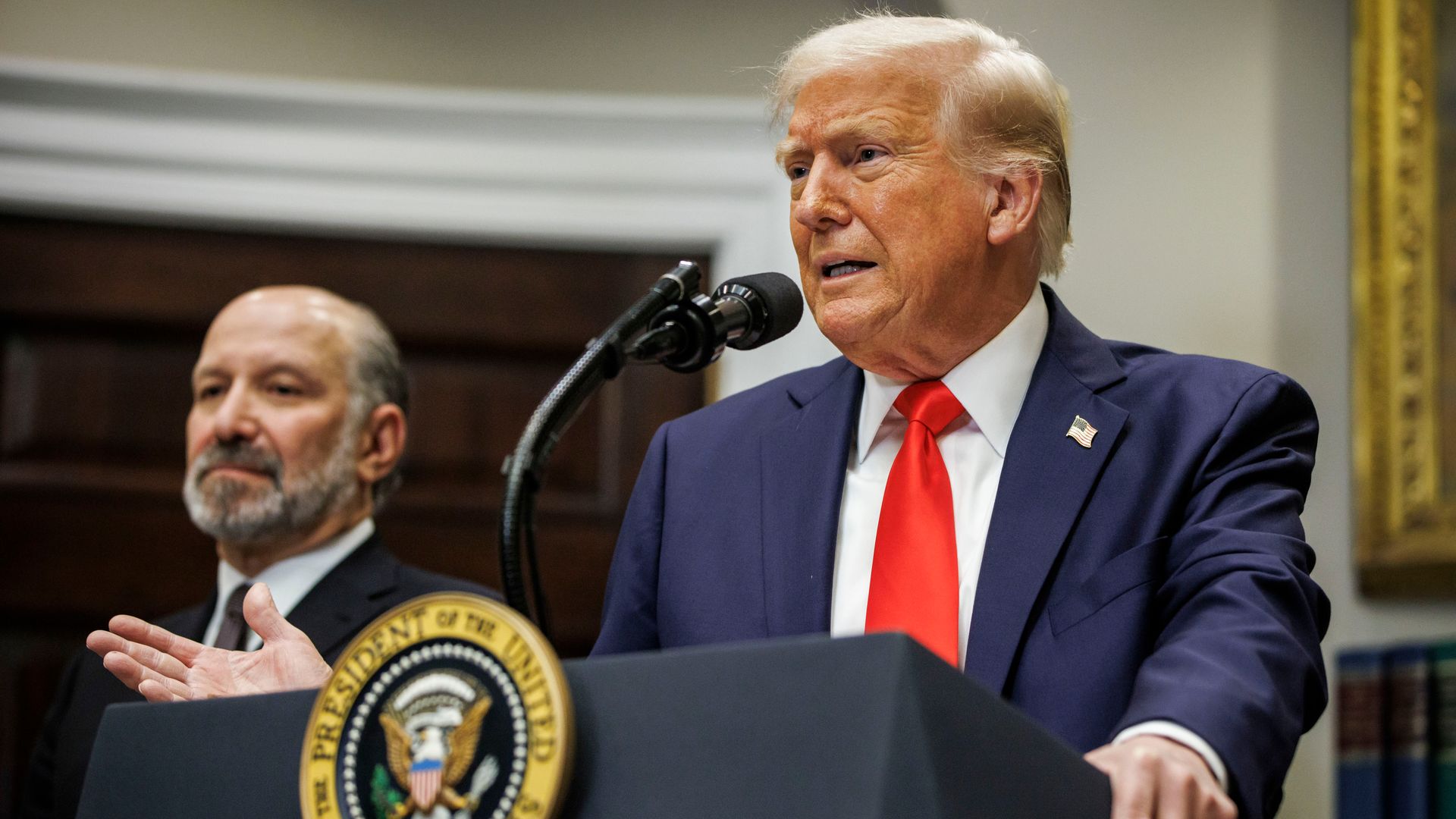
President Trump addresses reporters at the White House, flanked by Commerce Secretary Howard Lutnick. Photo: Samuel Corum/Sipa/Bloomberg via Getty Images
The market's nerves were on full display Wednesday, as stocks whipsawed with every change in the narrative on the Trump administration's tariffs on Mexico and Canada.
Why it matters: Businesses, investors and consumers are all yearning for some clarity — instead they're being forced to endure a daily, if not hourly, drip of shifting information and conflicting priorities.
Catch up quick: It all started Monday, when President Trump promised tariffs were coming on Canada, Mexico and China. Stocks dropped.
- On Tuesday morning he imposed the tariffs, and stocks fell further.
- Late Tuesday, Commerce secretary Howard Lutnick suggested on the Fox Business Network that a tariff rollback could arrive on Wednesday. Stocks rallied.
- Wednesday morning, Lutnick told Bloomberg TV any rollback might target certain sectors, in a limited way and for a limited time. Stocks sold off again, as investors stood by for the actual news to come out.
- Wednesday afternoon, Bloomberg reported a possible one-month pause on the tariffs for automakers, who are heavily at risk from the new levies. Stocks quickly popped back into positive territory.
The big picture: Fears of a global trade war have weighed heavily on financial markets, after the U.S. imposed 25% tariffs against its two largest trading partners.
- The "Trump bump" that boosted stocks following his election has now been erased, with the S&P 500 lower at Tuesday's close than when he won last year.
What they're saying: "There are going to be tariffs, let's be clear, but what he's thinking about is which sections of the market that can maybe — maybe — he'll consider giving them relief until we get to, of course, April 2," Lutnick told Bloomberg TV.
- On April 2, the U.S. is expected to impose reciprocal tariffs on most countries. The size of those levies is still unclear.
- Trump and Lutnick have both said those tariffs will stack on top of any others imposed or coming.
Zoom in: The 25% tariffs on Canada and Mexico (and increased 20% tariffs on China) are expected to significantly impact prices, and potentially stoke a resurgence of inflation.
- The Yale Budget Lab, after factoring in potential foreign retaliation and consumers switching to cheaper goods, still estimates the tariffs will cost the typical household $1,100 this year alone.
- Trump acknowledged in his address to Congress Tuesday that tariffs would cause "a little disturbance," a change in his long-stated position that tariffs don't cause prices to rise.
💭 Thought bubble, from Axios' Nathan Bomey: A tariff extension would give auto companies more time to move production to avoid or minimize the impact to their business.
- But meaningful changes in manufacturing plans would likely take much longer, meaning automakers and their suppliers remain deeply exposed to the increased duties.
- In the meantime, while the companies themselves sweat the tariffs, their workers seem to be all for them.
Editor's Note: This story has been updated throughout with the latest market reactions.
