Trump doubles down on tariffs, sees "a little disturbance"

Add Axios as your preferred source to
see more of our stories on Google.
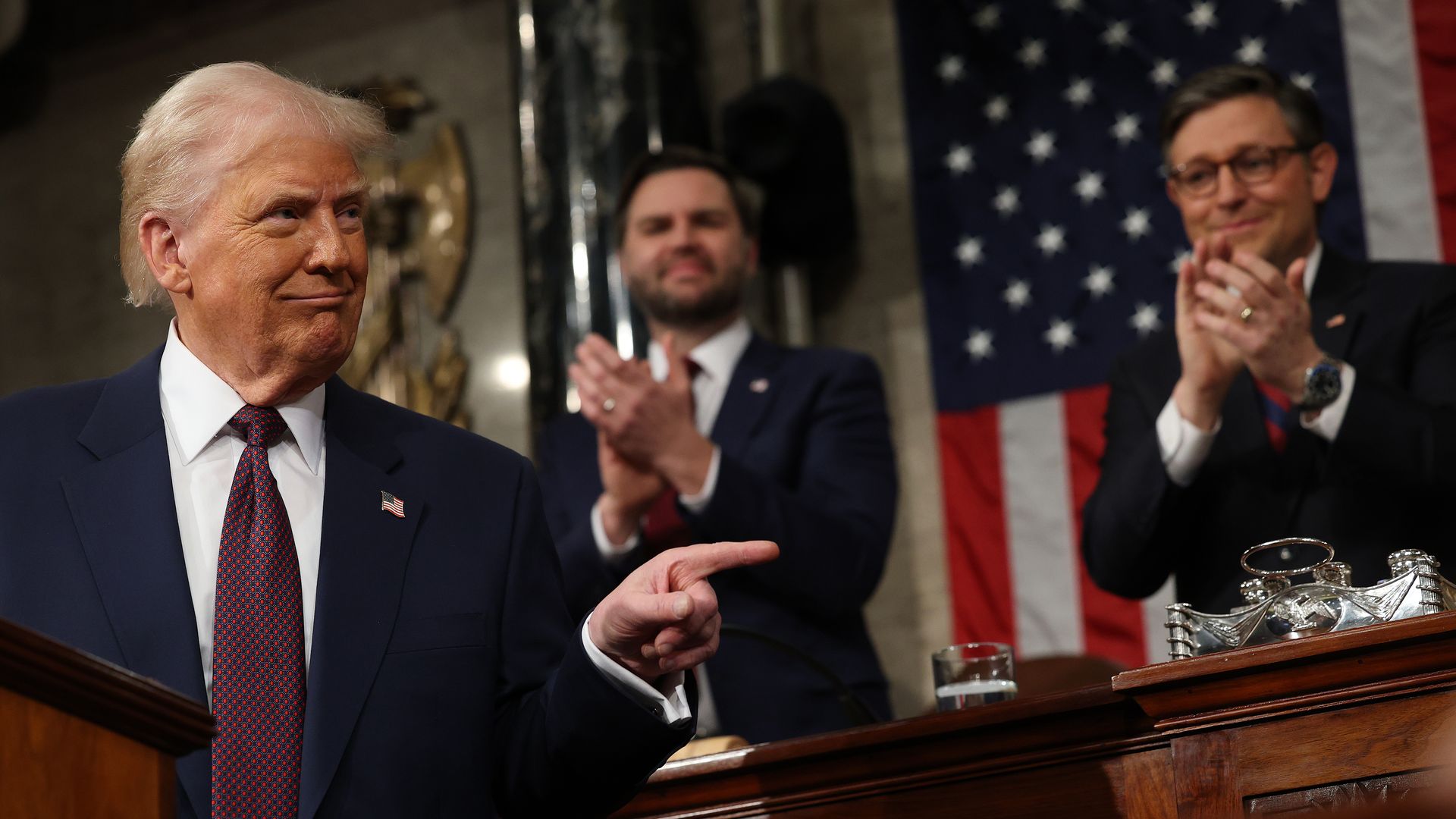
Photo: Win McNamee/Getty Images
President Trump used a joint address to Congress to double down on his commitment to being Tariff-Man-in-Chief — even as he acknowledged these taxes on imports would create a "little disturbance."
Why it matters: Trump's speech was long on promises — tariffs, reviving industry, expanding mining, egg prices — but short on detailed solutions for rising consumer costs and falling financial markets.
The intrigue: The President acknowledged tariffs would cause some pain but downplayed it. "There'll be a little disturbance, but we're okay with that. It won't be much," he said.
- There'll be "a little bit of an adjustment period," when tariffs on agricultural products kick in on April 2, he said, noting that the same thing happened the last time he was in office.
- In fact, soybean farmers have yet to recover the market share in China lost during Trump's first term during the last trade war.
- "Tariffs are about making America rich again and making America great again. And it's happening, and it will happen rather quickly," he said.
Between the lines: Trump campaigned on a promise to bring down prices — which has yet to occur. It's something voters want him to prioritize, but feel he hasn't, according to recent polling.
- Instead, Trump spent more time on other matters in the speech — including immigration policy and transgender issues.
- The Yale Budget Lab estimates that this week's tariffs could cost the typical household at least $1,100 this year, due to rising inflation.
Zoom in: At times during the lengthy address, Trump returned to economic talking points of the last century.
- He pledged to resurrect the shipbuilding industry, long ago overshadowed by China, and again declared his intention to "reclaim" the Panama Canal.
He also talked about planting "the American flag on Mars" and expanding the production of critical minerals and rare earths. (Those are critical to producing electric vehicles, a priority of the previous administration this White House is trying to undo.)
What they're saying: At least one investor said the pain of tariffs could be worth it if they lead to a manufacturing revival and better balance of trade.
- "Trump may be willing to allow the economy to suffer over the short-term in order to achieve these longer-term structural economic goals," writes Jim Elios, founder and chief investment officer at Ohio-based Elios Financial Group.
The bottom line: Despite the president's claims about inheriting an "economic catastrophe," the U.S. economy was the world's strongest when he took office.
- With tariffs now in place and markets sinking, it's unclear what happens next.
