Alabama teachers seek to halt law limiting lessons on Black history

Add Axios as your preferred source to
see more of our stories on Google.
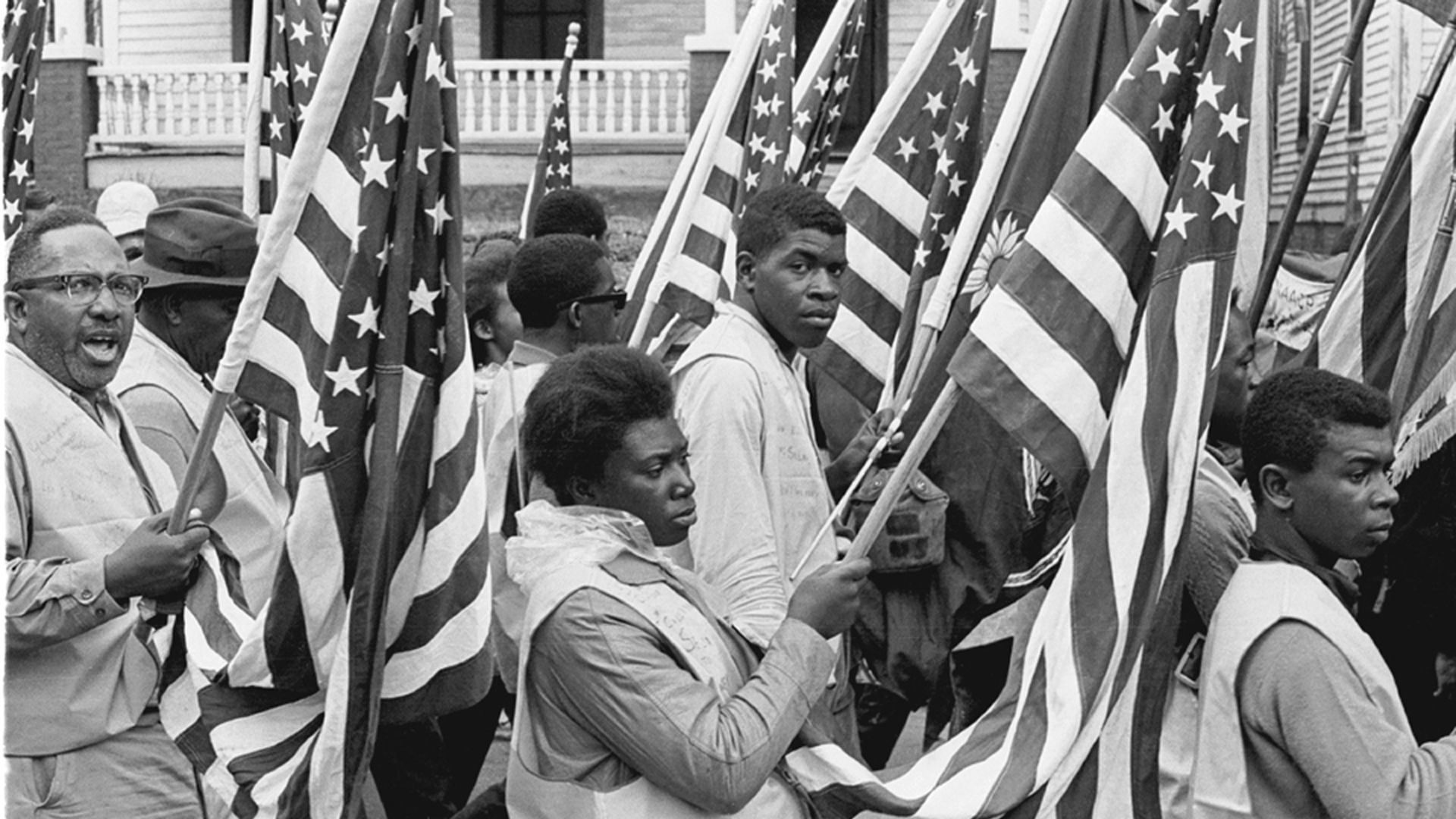
Demonstrators and marchers carry American flags on the Selma to Montgomery March held in support of voter rights, late March 1965, Alabama. Photo: Robert Abbott Sengstacke/Getty Images
Alabama educators and advocates want a preliminary injunction against a state law that limits specific classroom discussions about race and gender inequalities.
Why it matters: The legal challenge comes just days before the beginning of Black History Month in a state that was the center of the Civil Rights Movement.
The big picture: The Trump administration is working to erase diversity initiatives from the federal government and in schools as President Trump blames DEI for many ills of the nation, from the deadly plane collision outside D.C. to falling student test scores.
- Trump on Wednesday issued an executive order that threatens to cut federal funding for K-12 schools that it claims "indoctrinate" students with teachings related to race and gender.
Zoom in: The Legal Defense Fund and ACLU of Alabama filed a preliminary injunction Thursday in U.S. District Court in Alabama that seeks to halt Alabama Senate Bill 129.
- The law, signed last year, severely restricts the viewpoints of professors and students at public Alabama universities regarding "divisive concepts" and "DEI."
- Those topics include discussions of race, racism, sexism, homophobia, structural inequality and social justice.
- Groups say the law amounts to censorship and discriminates against Black and LGBTQ+ students.
- The injunction was filed on behalf of a group of Alabama educators, students and the Alabama State Conference of the NAACP.
A spokesperson for Alabama Attorney General Steve Marshall did not immediately return phone calls seeking comment.
Zoom out: The Alabama law is one of many passed in GOP-controlled states that seek to limit discussions around race, enslavement, Native American expulsion or LGBTQ issues in K-12 public schools and colleges.
- The laws are passed under the guise of banning the graduate-school level critical race theory — something rarely taught in grade school.
- That's led to confusion, book bans, heated school board elections and threats against educators.
What they're saying: "Students and professors in our state have dealt with this unconstitutional law for several months and deserve to learn in a classroom that is free of censorship and racial discrimination," Alison Mollman, ACLU of Alabama legal director, said in a statement.
- Antonio Ingram, LDF senior counsel, said, "We urge the Court to immediately halt the enforcement of this discriminatory law and prevent any further harms to students of color and LGBTQIA students."
The intrigue: The legal fight in Alabama comes as the state is set to mark the 60th anniversary of Bloody Sunday, the Selma to Montgomery March, and the signing of the Voting Rights Act of 1965.
- Those events are so central to Alabama's history from the Civil Rights Movement that the state's tourism department is promoting the commemorations on its website.
Yes, but: It's unclear if the new Alabama law allows teachers to mention or go into details about these events in the classroom.
