Chief Justice Roberts rails against "illegitimate" attacks on judges

Add Axios as your preferred source to
see more of our stories on Google.
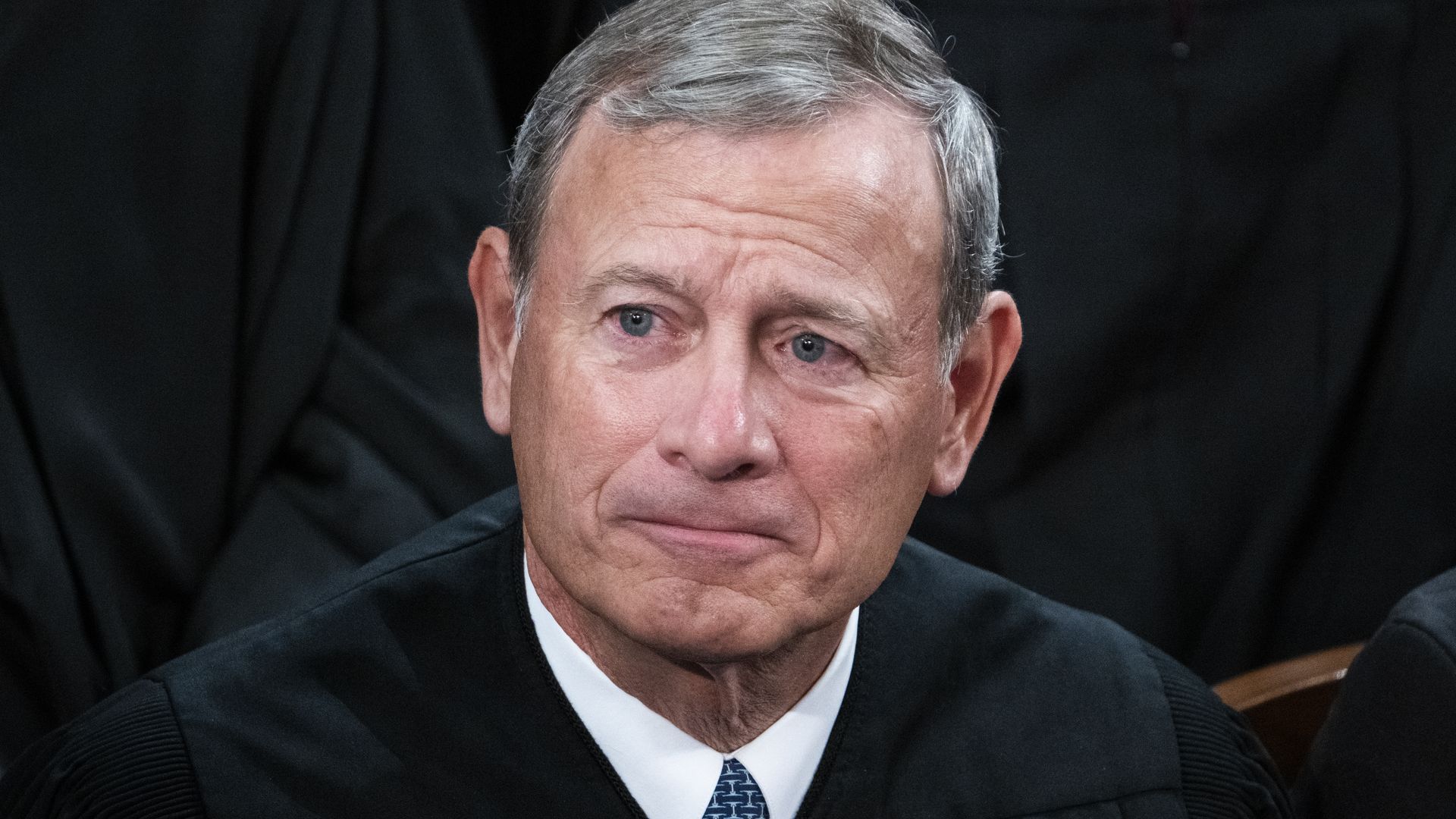
U.S. Supreme Court Chief Justice John Roberts at the U.S. Capitol in 2023. Photo: Tom Williams/CQ-Roll Call, Inc via Getty Images
U.S. Supreme Court Chief Justice John Roberts warned Tuesday of "illegitimate activity" that he said threatened the independence of judges.
The big picture: Roberts outlined in his annual year-end report areas of concern including violence, intimidation, disinformation and "threats to defy lawfully entered judgments."
- The chief justice wrote that within the past few years "elected officials from across the political spectrum have raised the specter of open disregard" for federal court rulings.
- "These dangerous suggestions, however sporadic, must be soundly rejected. Judicial independence is worth preserving," he added.
The intrigue: Roberts did not name anyone as an example.
- However, the Reagan-appointed U.S. District Judge Royce Lamberth spoke out against public figures who've tried to "rewrite history" by describing imprisoned Jan. 6 rioters as "hostages" after President-elect Trump and some of his allies described them as such.
- Meanwhile, President Biden criticized a Supreme Court majority decision that Roberts wrote, which ruled in Trump's Jan. 6 case that presidents have immunity for "official acts." The case was dismissed after the Republican leader won November's election.
State of play: Roberts in his report raised concern about violence against judges across the U.S., noting that in 2005 and 2020, "close relatives of federal judges were shot to death by assailants intent on harming the judges who had handled their cases."
- He noted that in 2022 and 2023, state judges in Wisconsin and Maryland were murdered at their homes.
- "These tragic events highlight the vulnerability of judges who sign their names to the decisions they render each day and return home each night to communities, where they remain involved as neighbors, volunteers, and concerned citizens," Roberts wrote.
Zoom in: "Public officials, too, regrettably have engaged in recent attempts to intimidate judges — for example, suggesting political bias in the judge's adverse rulings without a credible basis for such allegations," Roberts said
- "Within the past year we also have seen the need for state and federal bar associations to come to the defense of a federal district judge whose decisions in a high-profile case prompted an elected official to call for her impeachment," he wrote.
- "Attempts to intimidate judges for their rulings in cases are inappropriate and should be vigorously opposed," Roberts added.
- "Public officials certainly have a right to criticize the work of the judiciary, but they should be mindful that intemperance in their statements when it comes to judges may prompt dangerous reactions by others."
Read the 2024 Year End Report on the Federal Judiciary in full, via DocumentCloud:
Flashback: Chief Justice John Roberts urges "humility" on AI
