Hawai'i's Kīlauea volcano erupts, spewing "lava bombs"

Add Axios as your preferred source to
see more of our stories on Google.
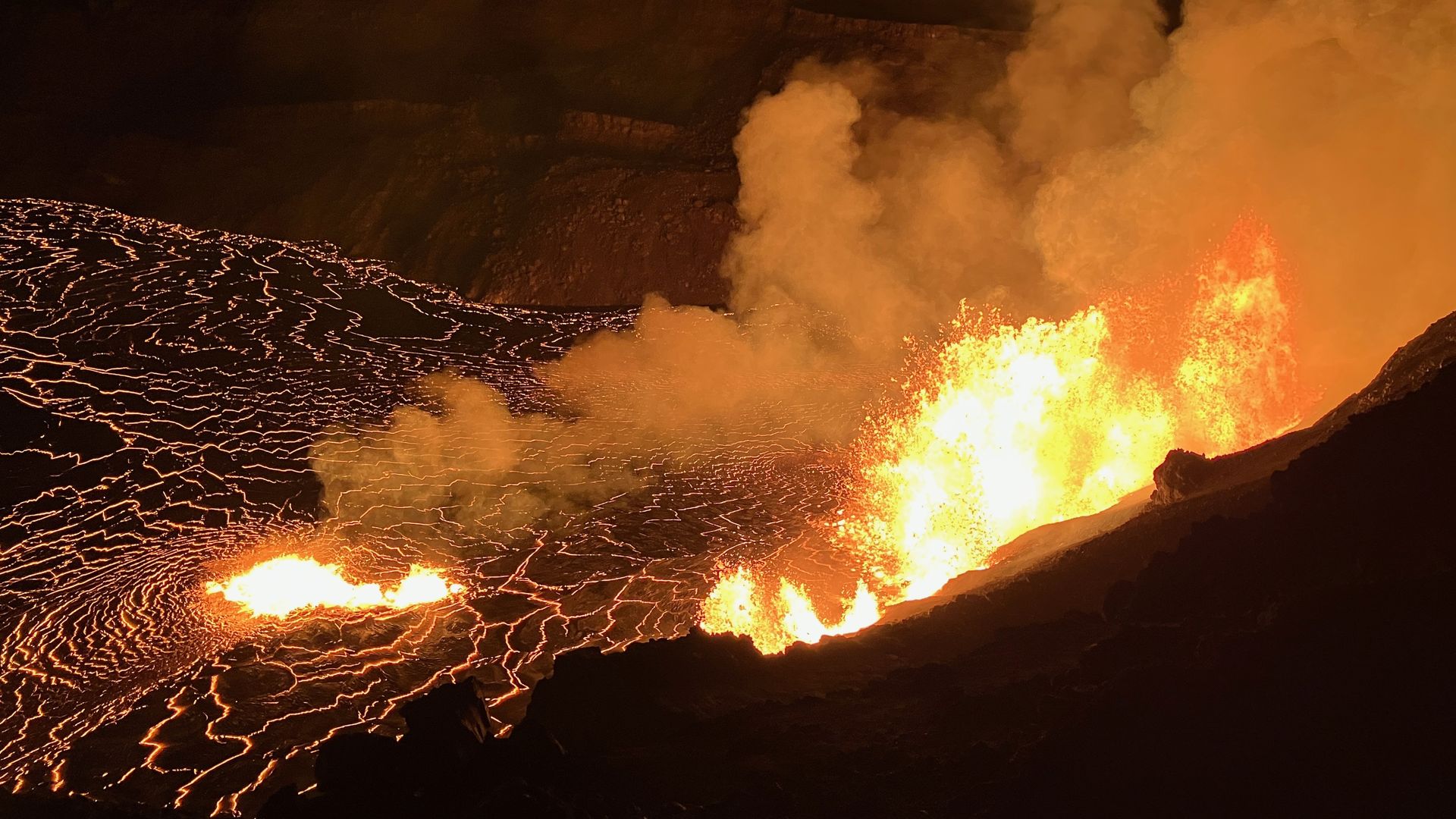
The Kīlauea volcano erupting at the summit caldera on Hawai'i's Big Island on Monday. Photo: N. Deligne/USGS/Anadolu via Getty Images
Hawai'i's Kīlauea volcano erupted again on Tuesday, prompting National Park Service officials to warn visitors of potential air quality threats.
The latest: The Big Island volcano, one of the most active in the world, reactivated at several vents along the crater floor after an overnight pause, per a Tuesday statement from the U.S. Geological Survey (USGS) that noted volcanic activity was confined to this area and the downdropped block within the caldera.
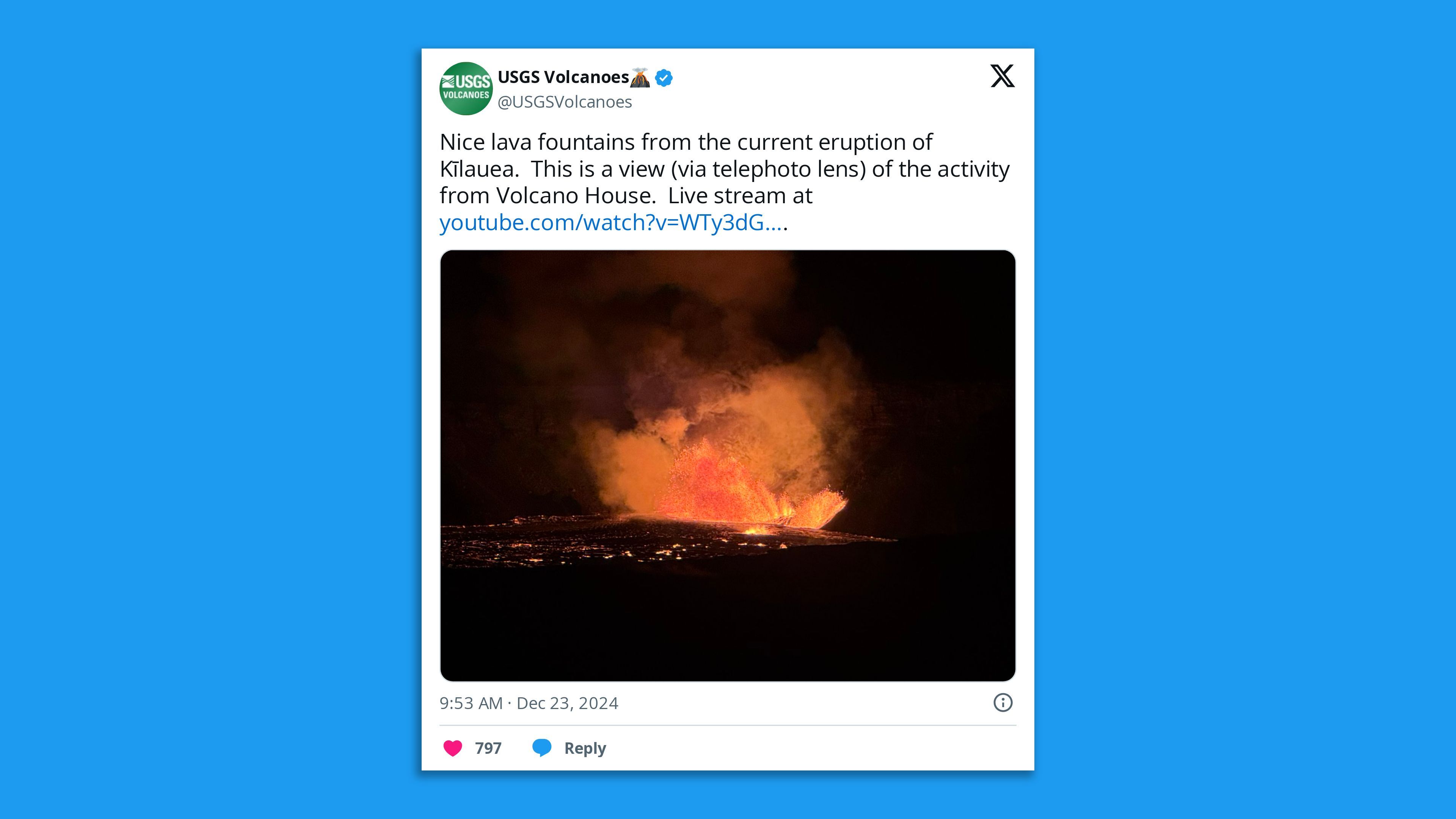
State of play: Researchers have been monitoring air quality since Kīlauea's latest eruption began about 2:20am on Monday local time and vents continued to erupt on the floor of the southwest part of the summit caldera later Monday, per a USGS statement.
- "The plume of volcanic gas and fine volcanic particles is reaching elevations of 6,000-8,000 feet above sea level ... and winds are transporting it to the southwest, within the closed area of Hawaiʻi Volcanoes National Park," the USGS said in an earlier statement.
- "Molten material, including lava bombs, is being ejected from the vents on the caldera floor up onto the west caldera rim, within the closed area of Hawaiʻi Volcanoes National Park. The volcanic gas and ejecta hazards west of the erupting vents stress the hazardous nature of this closed area of Kīlauea's summit."
- The state NPS warned on X Tuesday that visitors to Hawaiʻi Volcanoes National Park should expect "heavy congestion and long delays" at the entrance station during daylight hours due to the lava flows, which the USGS said "may fluctuate in vigor over the coming days."
The big picture: Kīlauea has been erupting regularly since 1983, with the last eruption before this one occurring in September.
- The latest eruption is the sixth within the caldera since 2020, per the USGS.
- A major eruption in 2018 razed over 700 homes and displaced thousands of people in the Puna district on the Big Island.
- The Monday eruption of the Big Island volcano prompted the U.S. Geological Survey to issue a warning as lava fountains reached heights of up to 262 feet.
Go deeper: Lava from Kilauea eruption has added a mile to Hawaii's coastline
Editor's note: This article has been updated with new details throughout.
