Memphis police discriminate against Black people, DOJ report finds

Add Axios as your preferred source to
see more of our stories on Google.
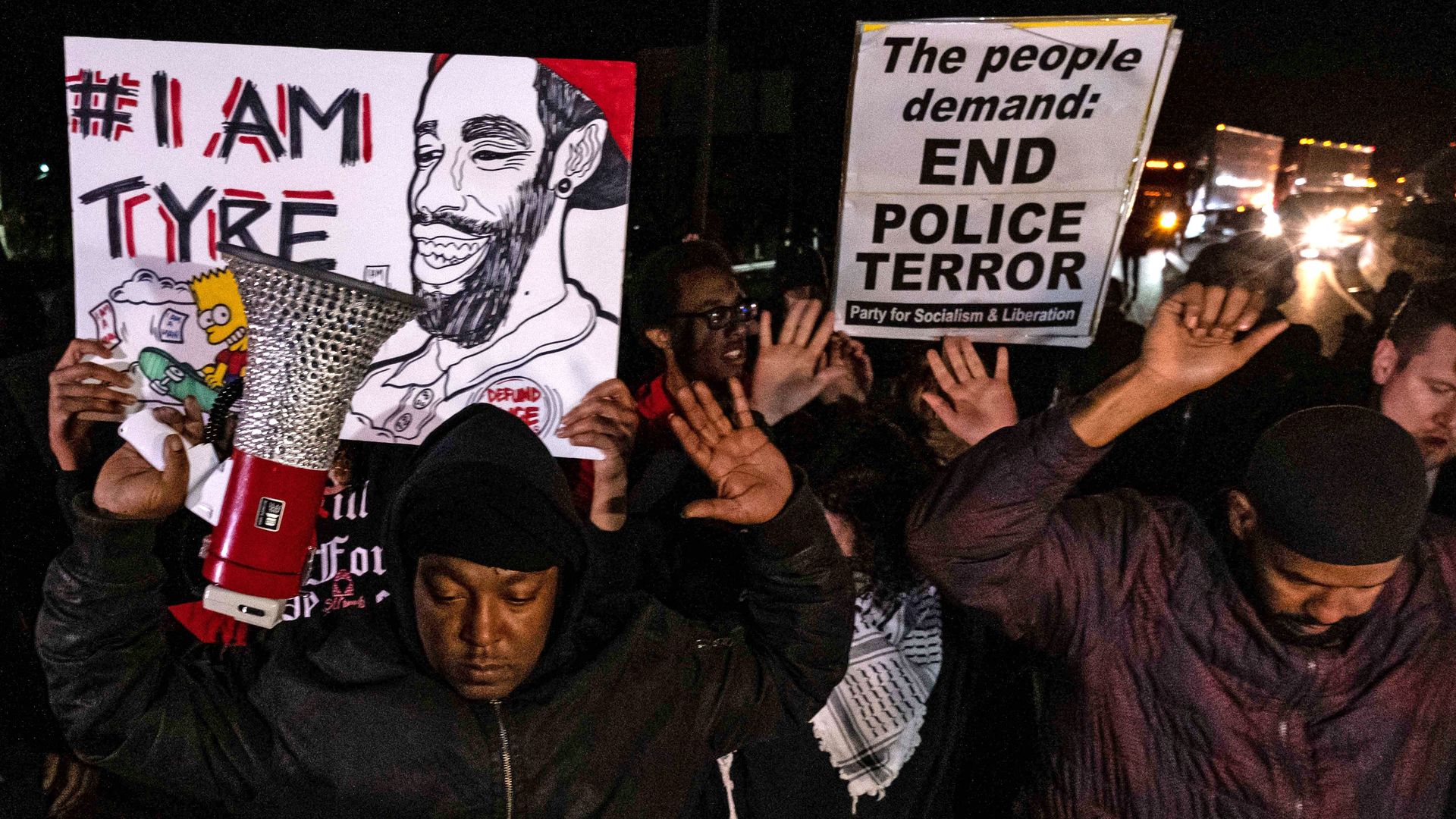
Protesters rally in 2023 against the death of Tyre Nichols, who was fatally beaten by police officers in Memphis, Tennessee. Photo: Seth Herald/AFP via Getty Images
The Department of Justice announced Wednesday its civil rights investigation into the Memphis Police Department found the MPD used excessive force, conducted illegal stops, searches and arrests and unlawfully discriminated against Black people.
The big picture: The DOJ launched the probe in July 2023 after the death of Tyre Nichols, a 29-year-old Black man who was fatally beaten by then-MPD officers.
- The DOJ said the city of Memphis and MPD cooperated fully with the Justice Department's investigation. However, the city of Memphis said in a letter Wednesday it would reject a preliminary agreement on a legally binding consent decree for federal oversight of its police department.
What they found: "Memphis police officers regularly violate the rights of the people they are sworn to serve," the report states.
- "Our investigation found that officers use force to punish and retaliate against people who do not immediately do as they say," it added.
- "They rapidly escalate encounters, including traffic stops, and use excessive force even when people are already handcuffed or restrained. They resort to intimidation and threats."
Zoom in: The DOJ report also found the MPD unlawfully discriminates in its response to people with behavioral health disabilities and identified serious concerns about the police department's treatment of children.
- And the Justice Department identified deficiencies in policy, training, supervision and accountability that it said contributed to the unlawful conduct.
What they're saying: In the letter to DOJ officials, City Attorney Tannera George Gibson said "the investigation and unreleased findings only took 17 months to complete, compared to an average of 2-3 years in almost every other instance, implying a rush to judgment."
- Gibson said "a legal finding supporting the contention that the City's patterns and practices violate the Constitution requires a legal process," adding: "That entails, among other things, the ability to challenge your methods of evaluating information, the credibility of witnesses, and the facts you used to arrive at your conclusions."
- Gibson said the city had already made several changes to policing.
- "Until the City has had the opportunity to review, analyze, and challenge the specific allegations that support your forthcoming findings report, the City cannot — and will not — agree to work toward or enter into a consent decree that will likely be in place for years to come and will cost the residents of Memphis hundreds of millions of dollars," Gibson added.
Zoom out: The DOJ under the Biden administration has launched 12 investigations into police misconduct but so far none has resulted in consent decrees or court-ordered reforms.
- Last month, a Justice Department report from a yearlong federal civil rights probe into police in Trenton, New Jersey, found officers routinely used excessive force and violated residents' civil rights during arrests and traffic stops.
Go deeper: 3 ex-officers convicted of witness tampering in Tyre Nichols' death
Editor's note: This article has been updated with more context. Axios' Russell Contreras contributed reporting.
