How RFK Jr. could use levers of HHS to shape vaccine and drug outcomes


Add Axios as your preferred source to
see more of our stories on Google.
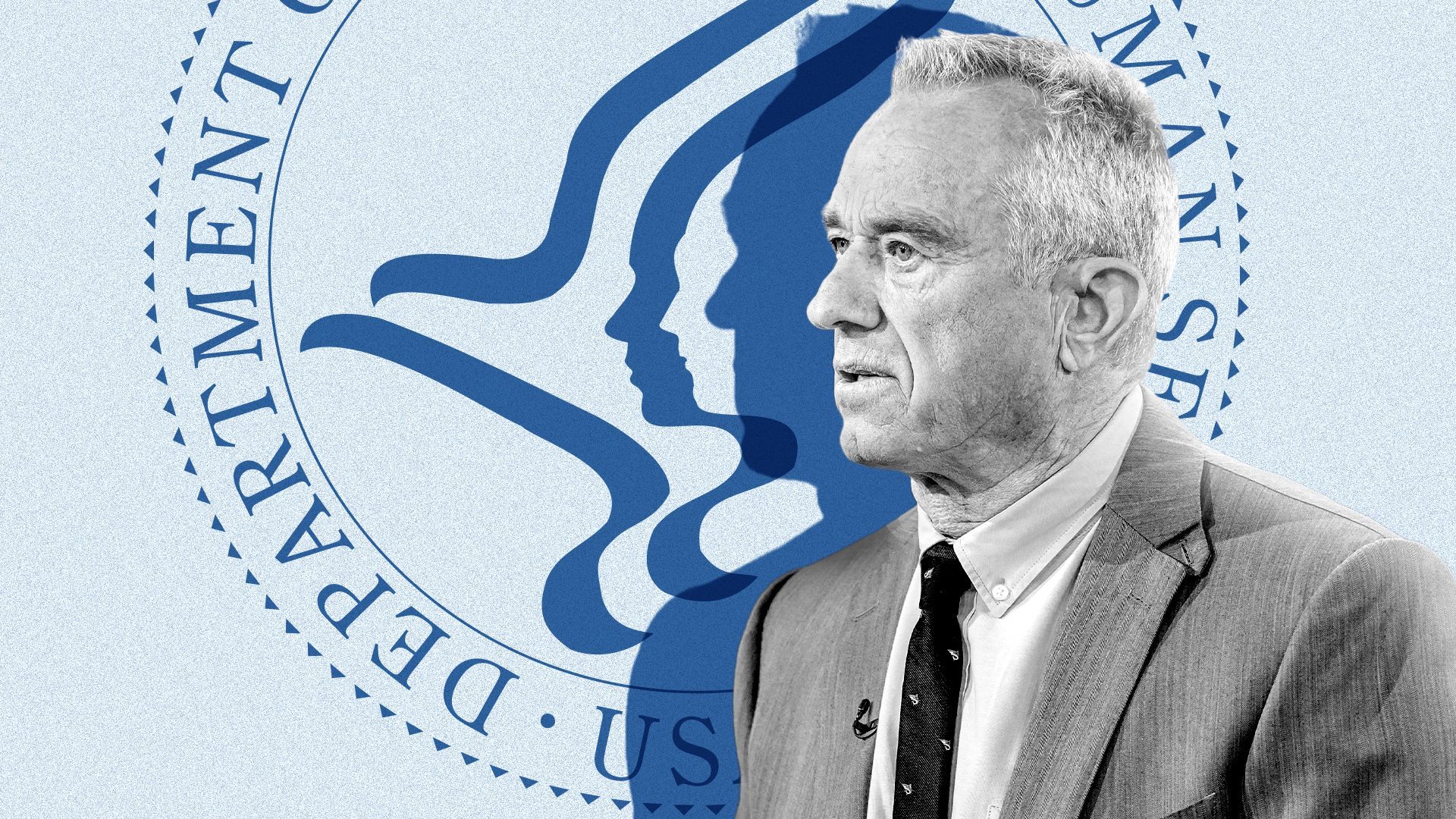
Photo illustration: Aïda Amer/Axios. Photo: Roy Rochlin/Getty Images
Robert F. Kennedy Jr. could use Health and Human Services' vast bureaucracy to put a distinct stamp on vaccine policy, drug approvals and food regulation if he's confirmed. But with so many legal requirements and bureaucratic layers baked into the process, it's hardly a foregone conclusion he will.
Why it matters: Experts say RFK Jr.'s public calls for more transparency and vows to shore up the trustworthiness of federal health agencies may translate into more requests for vaccine safety data and into appointing like-minded individuals to advisory panels that could influence coverage of drugs, services and devices.
- They also say it could result in shifting public health funding to chronic disease or environmental health and away from infectious disease, or a diversion of federal investment to study unproven health issues instead of known risks.
- And they're expecting attempts to remove job protections from career federal employees who work in policymaking roles and reduce the ranks of officials who don't align with RFK Jr.'s goals.
Between the lines: In the near term, he's likely to focus on how much influence he might exert on negotiations between the Food and Drug Administration and the health industries it regulates over user fees for companies, which fund a significant portion of the FDA's operations.
- Talks to reauthorize programs for prescription drugs, medical devices and generics are due to start next year and could provide a crucible for Trump appointees to take aim at what they describe as regulators' coziness with industries they police.
- The spotlight could fall especially hard on vaccines, based on Kennedy's criticisms of the federal pandemic response, his calls to revoke emergency use authorizations for COVID shots and his advocacy of hydroxychloroquine and ivermectin, both of which were found ineffective for treating the virus.
The general thinking is RFK Jr. could have more openings to exert his influence through the Centers for Disease Control and Prevention than the FDA, which is tightly bound by the Food, Drug and Cosmetic Act.
- He also stack outside advisory panels like the CDC's Advisory Committee on Immunization Practices, or ACIP, with fellow vaccine skeptics.
- ACIP recommendations influence whether Medicare covers a vaccine at no cost to patients. State Medicaid programs have to cover recommended adult vaccines.
- "They have the ability to change the bylaws or the charters under which those committees run, and essentially have the ability to ignore the committees or disband it entirely if they felt like they needed to," Joshua Michaud, associate director of global health and HIV policy at KFF.
Zoom in: RFK Jr., with the help of Congress, could also seek to make changes to the National Vaccine Injury Compensation Program, which dates to the 1980s and gives vaccine makers legal immunity for any injuries caused by their products, in exchange for a 75-cent tax on each dose sold.
- The program drew criticism from the right during the pandemic, when makers of COVID-19 vaccines were not required to pay the tax because the shots were designated as "countermeasures."
- "We've never had an HHS secretary who wants to blow up the nation's immunization system. So there are questions here that haven't come up before," said Sara Rosenbaum, who served on ACIP between 2009 and 2013.
Zoom out: The HHS secretary still has a great deal of authority at the FDA.
- "The Secretary's role doesn't have to be just routinely sign off on things," said Richard Besser, former acting director for the CDC from January to June 2009 and current CEO of the Robert Wood Johnson Foundation.
Flashback: In the Obama administration, HHS Secretary Kathleen Sebelius made an unprecedented decision to override an FDA decision that would have made emergency contraceptives available over the counter, Besser pointed out. (The decision was later reversed in 2013.)
- "And Mr. Kennedy as the secretary has some strong feelings about what drugs are effective and which ones are not, and what things should be used to promote health," Besser said.
Reality check: HHS's budget and legal mandates are determined by Congress and have limits. Any major regulatory changes must go through public comment periods and comprehensive legal review.
- They would also certainly be subject to lawsuits, particularly after the fall of the Chevron doctrine.
What to watch: There's a question about whether HHS could usurp school vaccine requirements using section 361 of the Public Health Service Act of 1944, which gives it the authority to "control communicable diseases."
- "The answer is not entirely straightforward and would set off legal challenges," Richard Hughes of Epstein Becker Green wrote.
Regardless, experts say some of the most significant effects of an RFK-led HHS may be how health guidance and evidence-based information, including about vaccines, are communicated.
- "If the CDC and the HHS secretary are out there saying we have doubts about the safety of this vaccine ... that might have some downstream effects at the state and local level, which is where those vaccine requirement decisions are actually made," Michaud said.
