Netanyahu tells White House he isn't planning wider security chief purge

Add Axios as your preferred source to
see more of our stories on Google.
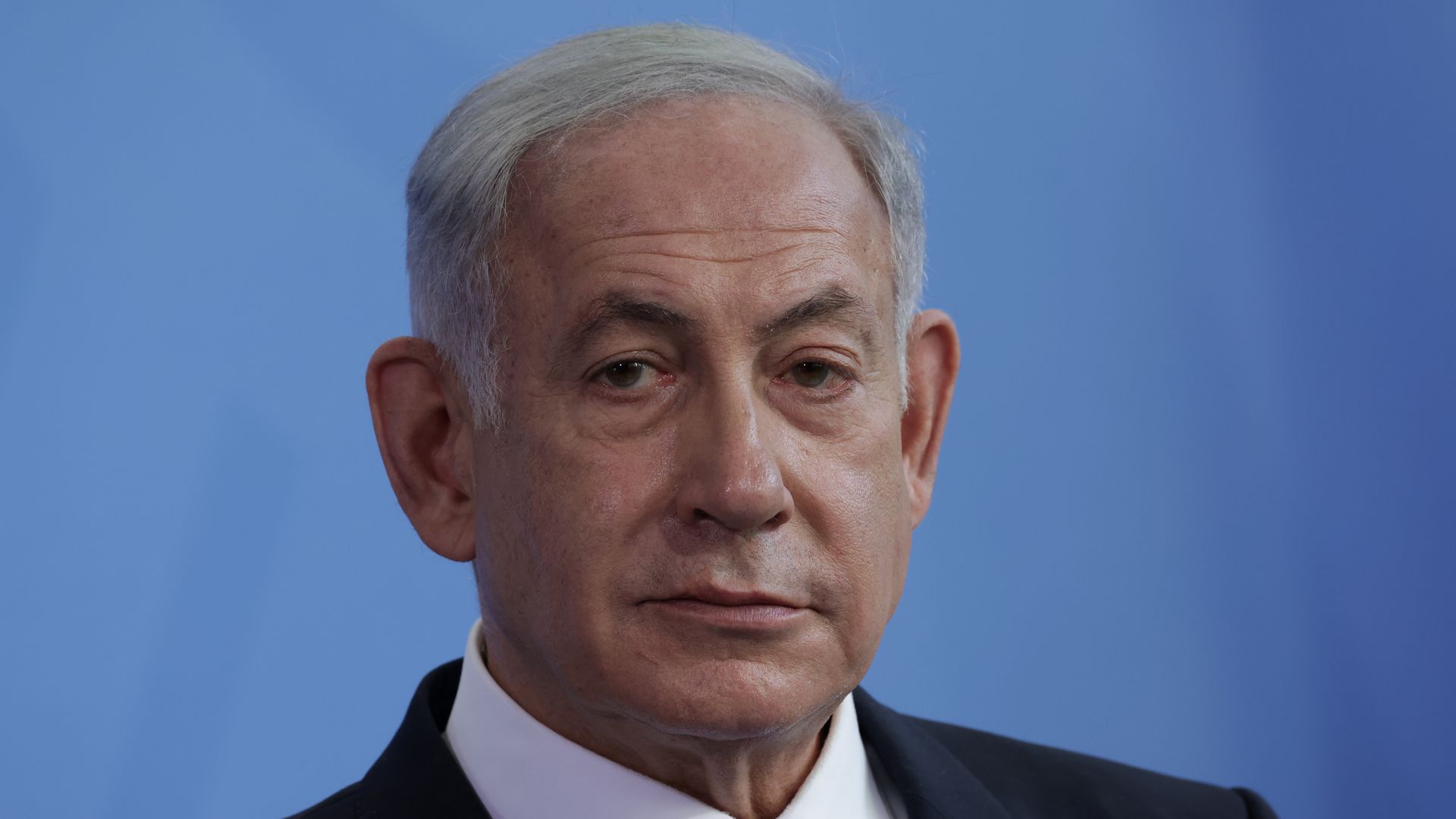
Israeli Prime Minister Benjamin Netanyahu. Photo: Gallup/Getty Images
Shortly after firing Israel's defense minister, Prime Minister Benjamin Netanyahu told the Biden administration on Tuesday that he's not planning a wider purge of military, security and intelligence leaders, two U.S. officials told Axios.
Why it matters: Yoav Gallant was the Biden administration's key partner in Israel as it fights a multifront war in the Middle East. His firing shocked the White House, and the Pentagon and raised questions about the reasons for Netanyahu's national security decisions.
- Biden administration officials admit that they're not sure if they believe Netanyahu's assurances.
- The Israeli Prime Minister's Office declined to comment.
- On Tuesday, Netanyahu denied reports in the Israeli press that he is planning to fire the chief of staff of the Israel Defense Forces and the director of the Shin Bet domestic security agency.
Catch up quick: Netanyahu claimed he fired Gallant because of a lack of trust needed to work together.
- While relations between the two were very bad, the timing of the move was driven largely by domestic political pressure, including from members of his coalition government who are pressing him to pass laws that would exempt ultra-Orthodox Jewish men from serving in the military.
- The Israeli Knesset is expected to approve on Thursday the appointment of Israel Katz as Gallant's successor.
Between the lines: Netanyahu's reshuffle at the Ministry of Defense took place as the U.S. and Israel prepare for a potential Iranian attack against Israel.
- It also happened as the deadline for a U.S. ultimatum to Israel to improve the humanitarian situation in Gaza expires in less than a week.
- If Israel fails to implement the U.S. demands, it could lead to a suspension of military assistance.
- U.S. officials said the reshuffle in Israel's Defense Ministry would likely lead to an extension of the U.S. deadline by one to two weeks.
- The Biden administration also wants a ceasefire deal between Lebanon and Israel. Gallant played a key role in the negotiations.
What's next: Biden administration officials say they're concerned about Gallant's firing because he was a trustworthy partner on the wars in Gaza and Lebanon, and on the escalating tensions with Iran.
- Gallant used to speak frequently with U.S. Secretary of Defense Lloyd Austin, with White House national security adviser Jake Sullivan, and with Biden's advisers Brett McGurk and Amos Hochstein.
- "We still have a lot of things to do in the next two months. We don't have a relationship with Katz, and we are concerned it is going to be much more difficult now," a Biden administration official said.
