U.S. "deeply concerned" new Israeli laws will worsen Gaza crisis

Add Axios as your preferred source to
see more of our stories on Google.
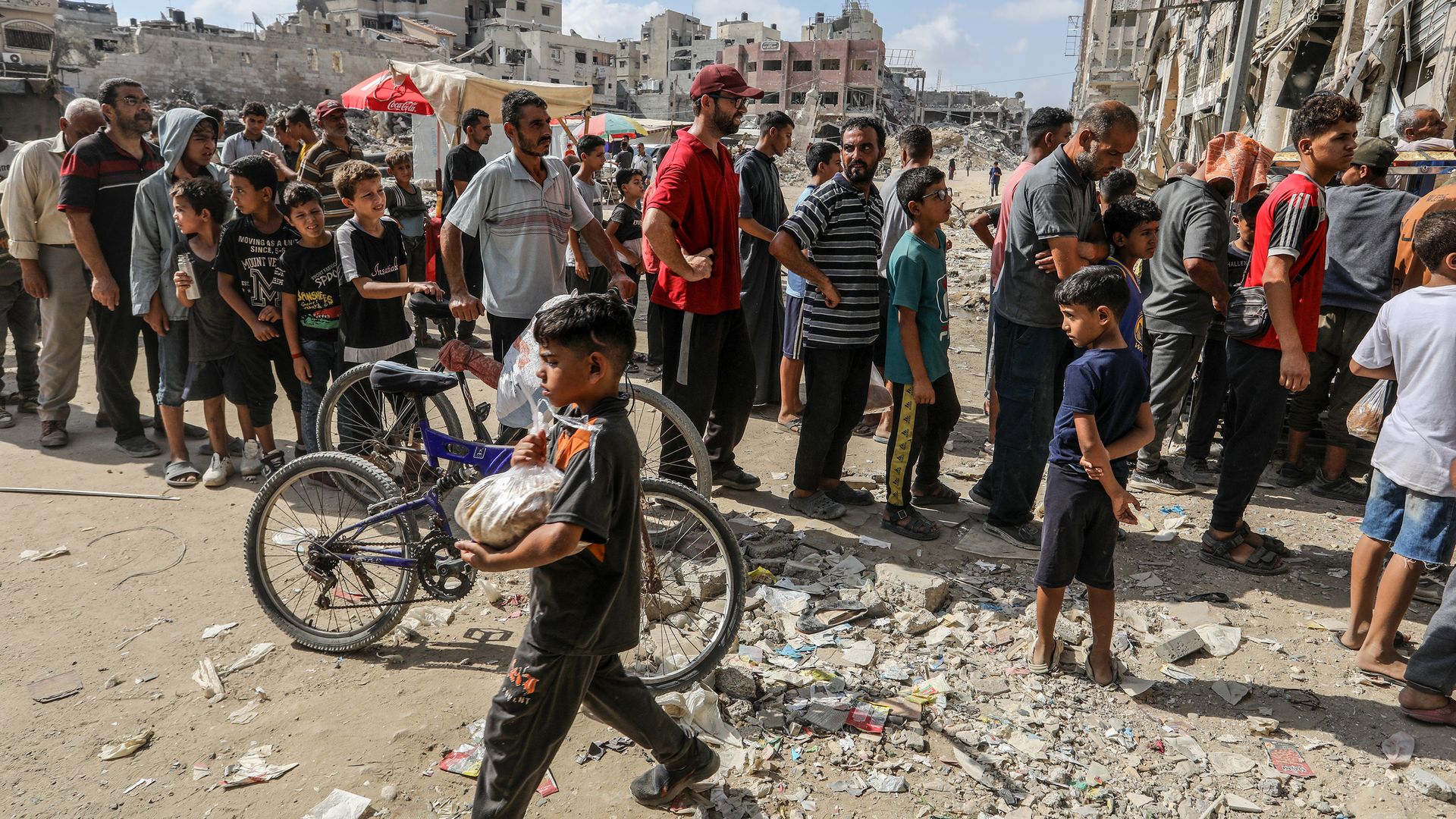
Palestinians in front of a bakery supported by the World Food Programme (WFP) and the UN Relief and Works Agency for Palestine Refugees in the Near East (UNRWA) in Khan Yunis, Gaza on Sept. 8, 2024. Photo: Abed Rahim Khatib/Anadolu via Getty Images
The Biden administration is "deeply concerned" that two bills passed by the Israeli Knesset on Monday will exacerbate the already dire humanitarian crisis in Gaza and harm Palestinians in East Jerusalem and the West Bank, a State Department spokesman told reporters.
Why it matters: The U.S. and other Western countries pressed Israel not to move forward with the bills against the UN Relief and Works Agency (UNRWA). Their passage will likely increase pressure on the Biden administration to suspend military assistance to Israel.
- UNRWA has for decades provided humanitarian aid and health and education services to Palestinians in East Jerusalem, the West Bank and Gaza. The bills will significantly limit its ability to continue that work at a time when than 1.8 million people across Gaza are experiencing high levels of acute food insecurity, according to the agency.
- Israel has long opposed UNRWA and since the war began in Gaza has claimed some of the agency's staff took part in the Oct. 7 attack on Israel. UNRWA has repeatedly denied allegations of the agency having widespread links to Hamas and a UN-appointed independent commission in April said Israel "had yet to provide supporting evidence" of its claims.
- Congress passed a law in March that prevents bans the U.S. from funding the relief agency until at least 2025.
Catch up quick: Two weeks ago Secretary of State Antony Blinken and Secretary of Defense Lloyd Austin sent a letter to Israeli leaders demanding Israel take steps within 30 days to improve humanitarian conditions in Gaza or risk the supply of U.S. weapons to Israel being affected.
- In the letter, Blinken and Austin expressed concern about the UNRWA bills and stressed the passage of such a law would be devastating for the humanitarian effort in Gaza at a critical time and would prevent education and welfare services for tens of thousands of Palestinians in Jerusalem.
- They emphasized this too could constitute a violation of U.S. laws and have implications for U.S. policy towards Israel.
Behind the scenes: During Blinken's visit to Israel last week, he raised the UNRWA bills in his four eyes meeting with Israeli Prime Minister Benjamin Netanyahu and urged him to stop it from passing, a U.S. official said.
- The U.S. official said Netanyahu pushed back by falsely claiming the opposition is pushing the bills and therefore the U.S. should ask opposition leader Yair Lapid to freeze it.
- Lapid and members of the opposition did support the bills but their final versions were tabled by members of Netanyahu's Likud party.
Driving the news: The first bill bars UNRWA from operating in Israeli territory and is most relevant to UNRWA's activity in East Jerusalem. But it also affects the aid agency's operations in the West Bank that are run from Jerusalem.
- The second bill bars any Israeli government official from having any contacts with UNRWA and strips all UNRWA workers of their diplomatic privileges and immunity.
- The bill will have a significant effect on UNRWA's ability to function in the West Bank and Gaza.
What they're saying: State Department spokesman Matthew Miller said in a briefing with reporters on Monday that passing the bills could have implications under U.S. law and regarding U.S. policy.
- "We urge the Israeli government to pause the implementation ... if UNRWA doesn't exist civilians, including children and babies, will not get the food they need and this is for us unacceptable," he said.
- UNRWA commissioner Philipe Lazzarini said in a statement the bills are a violation of the UN Charter and violates Israel's obligations under international law.
- "These bills will only deepen the suffering of Palestinians, especially in Gaza ... It will deprive over 650,000 girls and boys there from education, putting at risk an entire generation of children," he said.
What's next: The two bills will take effect in 90 days but they passed without any alternative for UNRWA to deliver humanitarian aid and services that was put forward by the Israeli government.
- Israeli Prime Minister Benjamin Netanyahu, who didn't attend the vote on Monday, wrote on his X account in English that in the next 90 days and after Israel will "work with our international partners to ensure Israel continues to facilitate humanitarian aid to civilians in Gaza in a way that does not threaten Israel's security."
