Trump's gains with Latinos echo anti-immigrant sentiment of the past

Add Axios as your preferred source to
see more of our stories on Google.
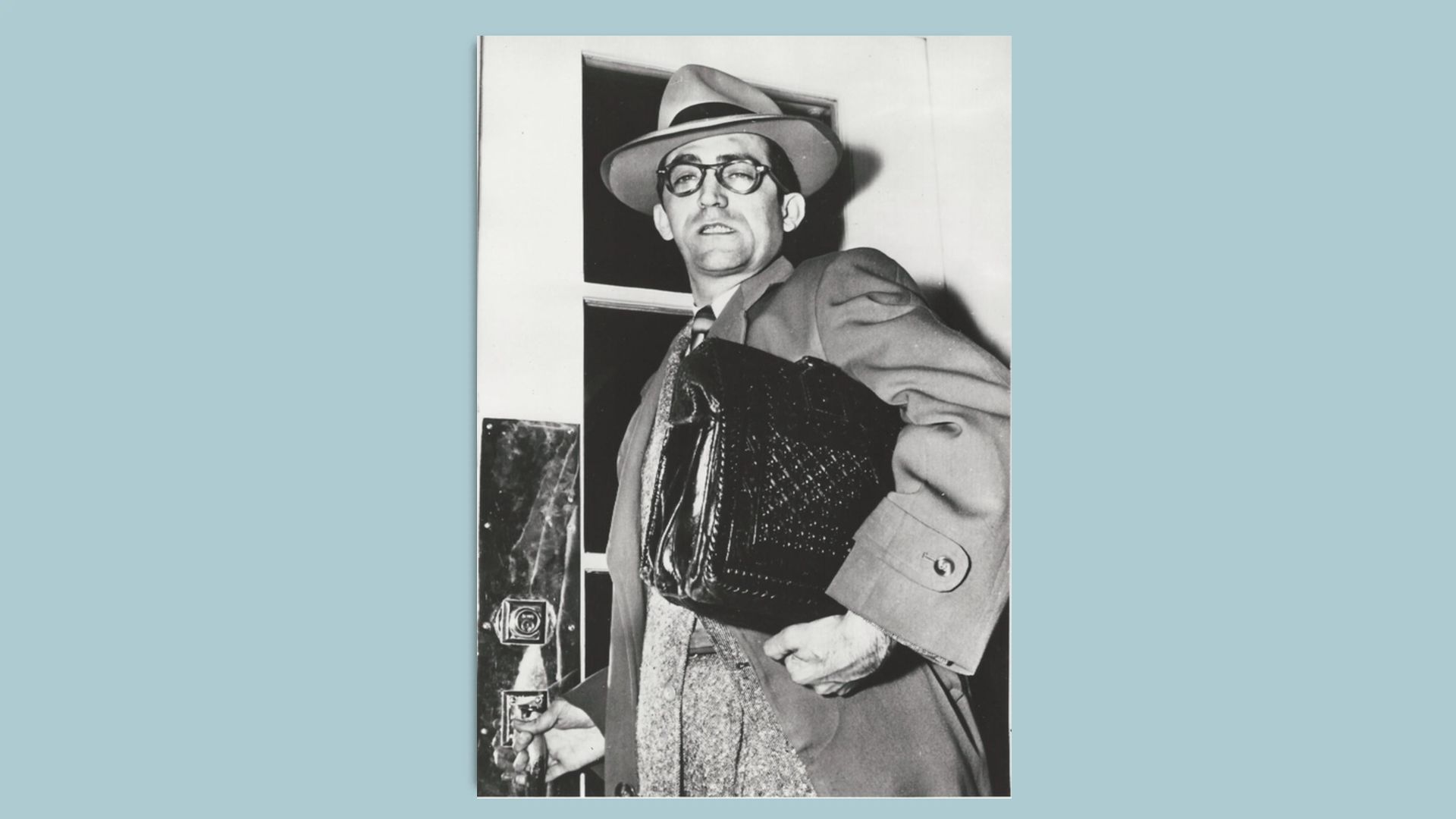
Gus Garcia, a lawyer for the American G.I. Forum, visits the White House in 1952 to press for harsh immigration enforcement measures against Mexican immigrants over concerns Mexican Americans were losing jobs. Photo: New York World-Telegram and the Sun Newspaper Photograph Collection/Library of Congress
Growing Latino support for some of President-elect Trump's harsh immigration policies is nothing new: Decades ago, anti-immigrant sentiment was the status quo among many Latino civil rights leaders.
Why it matters: Latinos helped propel Trump to the White House despite the racist rhetoric he's used to describe undocumented immigrants and his promises for mass deportations, which historically have swept up some Hispanic U.S. citizens.
State of play: Months before the election, an Axios-Ipsos Latino Poll in partnership with Noticias Telemundo found that the percentage of Latinos who say they support building a border wall and deporting all undocumented immigrants had jumped by at least 10 points since 2021.
- An Axios Vibes survey by The Harris Poll in April also found that 45% of Latinos surveyed supported mass deportations of undocumented immigrants.
What they're saying: Anti-immigrant sentiment among Latinos has existed since the 1930s, Brian Behnken, an Iowa State University history professor, tells Axios.
- "Folks in the border region or in Texas, (they) look at undocumented workers or undocumented people, and say, 'You know, you're making the rest of us look bad'."
- Behnken says the pro-immigrant moment of Latinos in the 1990s and 2000s was more of a blip than the norm, and the anti-immigrant sentiment today is a return to the feelings of Latinos in previous generations.
Flashback: During the Mexican American civil rights movement of the 1950s, Latino civil rights leaders often pressed for deportations and limited migration over fear immigrants were depressing wages and taking jobs from poor Hispanic workers.
- Returning World War II Latino veterans joined civil rights organizations and emphasized their "Americanism" as a tactic to fight racial discrimination back home.
- Their push for anti-immigrant policies came as they challenged segregation and discrimination in federal courts and advocated for Latinos to register to vote.
Zoom in: The American G.I. Forum, a Latino organization, even published a pamphlet, "What Price Wetbacks?" with stereotypes about Mexican immigrants as it advocated for policies to stem illegal immigration. "Wetback" is a racial slur for Mexicans.
- Its authors warned that an "invasion" was underway, one that posed "a threat to our health, our economy, (and) our American way of life."
- Another storied Hispanic group, LULAC, required members to pledge allegiance to the American Flag and limited participation from immigrants.
The intrigue: Gus Garcia, a civil rights lawyer for the American G.I. Forum and for future President Lyndon Johnson, traveled to the White House in 1952 to demand the deportations of Mexican immigrants.
- Farmworker union leader Cesar Chavez also used the term "wetback" to describe undocumented immigrants and encouraged union workers to block Mexican immigrants from breaking strikes at the Arizona-Mexico border.
Yes, but: Beginning with the Chicano Movement and later the anti-immigrant proposals of the 1990s, Latino civil rights groups shifted to support undocumented immigrants who were facing discrimination and began pushing for comprehensive immigration reform.
- Many of the largest and most prominent Latino civil rights groups advocate for immigrants' rights, and many have vowed to fight Trump's immigration proposals.
Subscribe to Axios Latino to get vital news about U.S. Latinos and Latin America.
