U.S. and Saudi Arabia discuss security agreement separate from Israel mega-deal

Add Axios as your preferred source to
see more of our stories on Google.
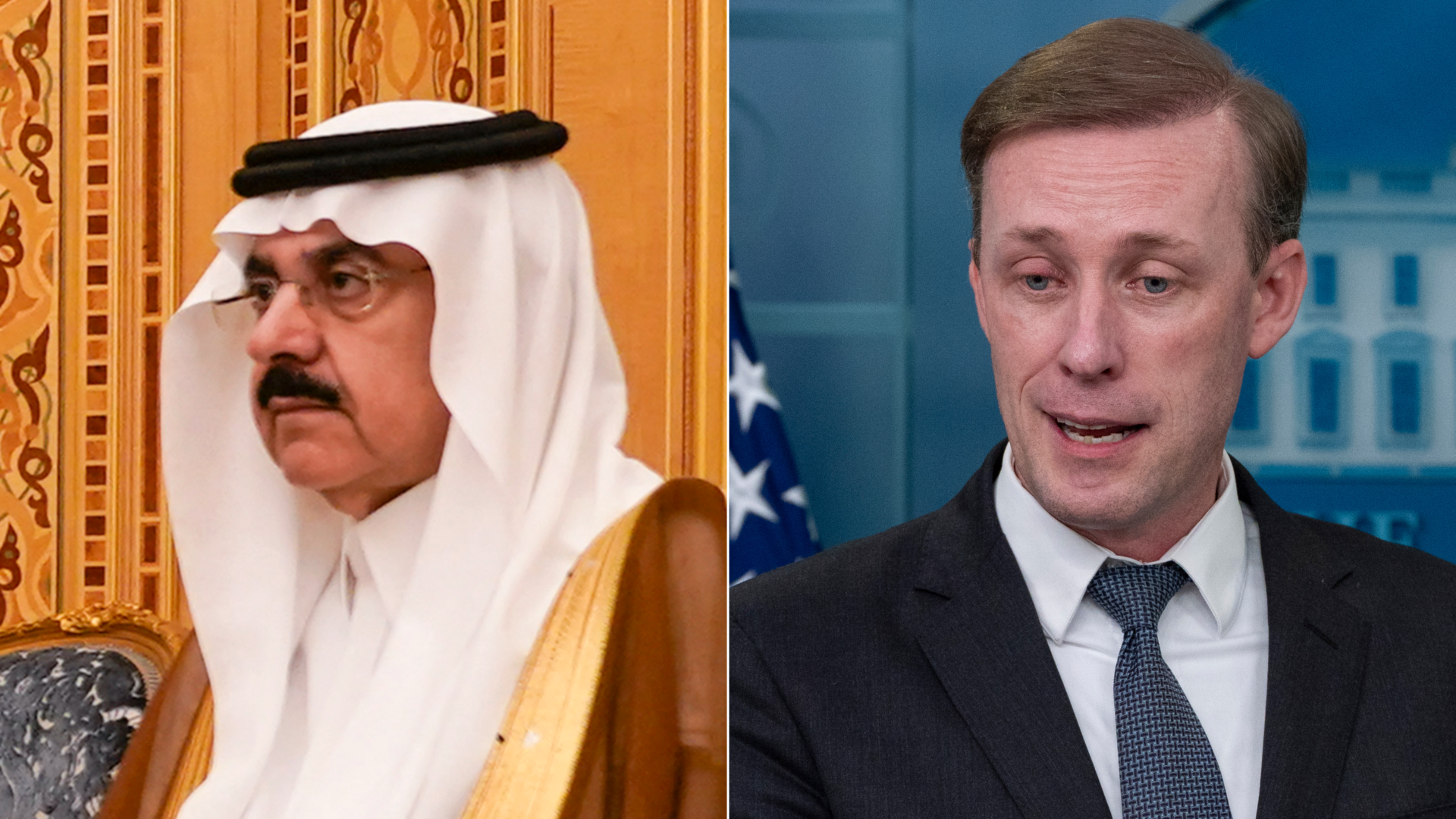
Saudi national security adviser Musaad bin Mohammed al-Aiban (L) and U.S. National security adviser Jake Sullivan. Photos: Nathan Howard/AFP via Getty images, Ken Cedeno/UPI/Bloomberg via Getty Images
The U.S. and Saudi Arabia are discussing a possible security agreement that wouldn't involve a broader deal with Israel, according to three sources with knowledge of the talks.
Why it matters: The agreement wouldn't be the full defense treaty the U.S. and Saudi Arabia were discussing but Saudi Crown Prince Mohammed Bin Salman (MBS) and the White House still want to reach a security agreement before President Biden leaves office in January.
Catch up quick: Before the Oct. 7 Hamas attacks on Israel, the Biden administration was negotiating with Saudi Arabia and Israel on a mega-deal that would include a peace agreement between Israel and Saudi Arabia.
- The White House also wanted the mega-deal to include a U.S.-Saudi defense treaty and an agreement on civilian nuclear cooperation between the countries and thought if it was part of a broader deal, the U.S. Senate might be more likely to ratify the agreement.
- MBS concluded a mega-deal would only be politically possible under a Biden administration.
- But the Oct. 7 attacks derailed the negotiations. The ongoing war in Gaza and Lebanon, and the resulting demand from the Saudis regarding a Palestinian state, turned the deal into a non-starter for both Israel and Saudi Arabia in the near term.
Behind the scenes: Saudi national security adviser Musaad bin Mohammed al-Aiban visited the White House last week and met with his U.S. counterpart Jake Sullivan and with Biden advisers Brett McGurk and Amos Hochstein, the sources said.
- He also met with Secretary of State Antony Blinken, the sources said.
- The sources said the talks at the White House focused on U.S.-Saudi bilateral relations, especially a set of security, technology and economic agreements the parties want to sign before Biden leaves office.
- One source said the security agreement discussed in the meeting was separate from the efforts to advance a mega-deal that would include normalization of relations between Israel and Saudi Arabia.
Between the lines: The idea is to draft a bilateral U.S.-Saudi security agreement similar to those the Biden administration signed with other Gulf countries in recent years, which strengthened the U.S. position in the region, the source said.
- In March 2022, Biden designated Qatar a major non-NATO ally. In September 2023, the U.S. and Bahrain signed a Comprehensive Security Integration and Prosperity Agreement. A year later, Biden designated the United Arab Emirates a Major Defense Partner.
- "Saudi Arabia is part of that and likely to also have something," the source said.
- The White House and the Saudi Arabian embassy in Washington, DC declined to comment.
The big picture: Over the past four years, the Biden administration has tried to push back on growing Chinese and Russian influence in the Gulf.
- U.S. officials say several countries in the region that were moving closer to China and were talking about purchasing strategic systems from Russia have reversed course and are today much closer to the U.S. than before.
- Saudi foreign minister Faisal bin Farhan said in a conference in Saudi Arabia last week that the U.S. is a reliable partner in the region for the kingdom.
- "Today the working relationship with the U.S. is among the best we have ever had, including in the national security space but also in issues of economic cooperation and we are having very good progress," he said.
