Greenhouse gases surged to record levels in 2023

Add Axios as your preferred source to
see more of our stories on Google.
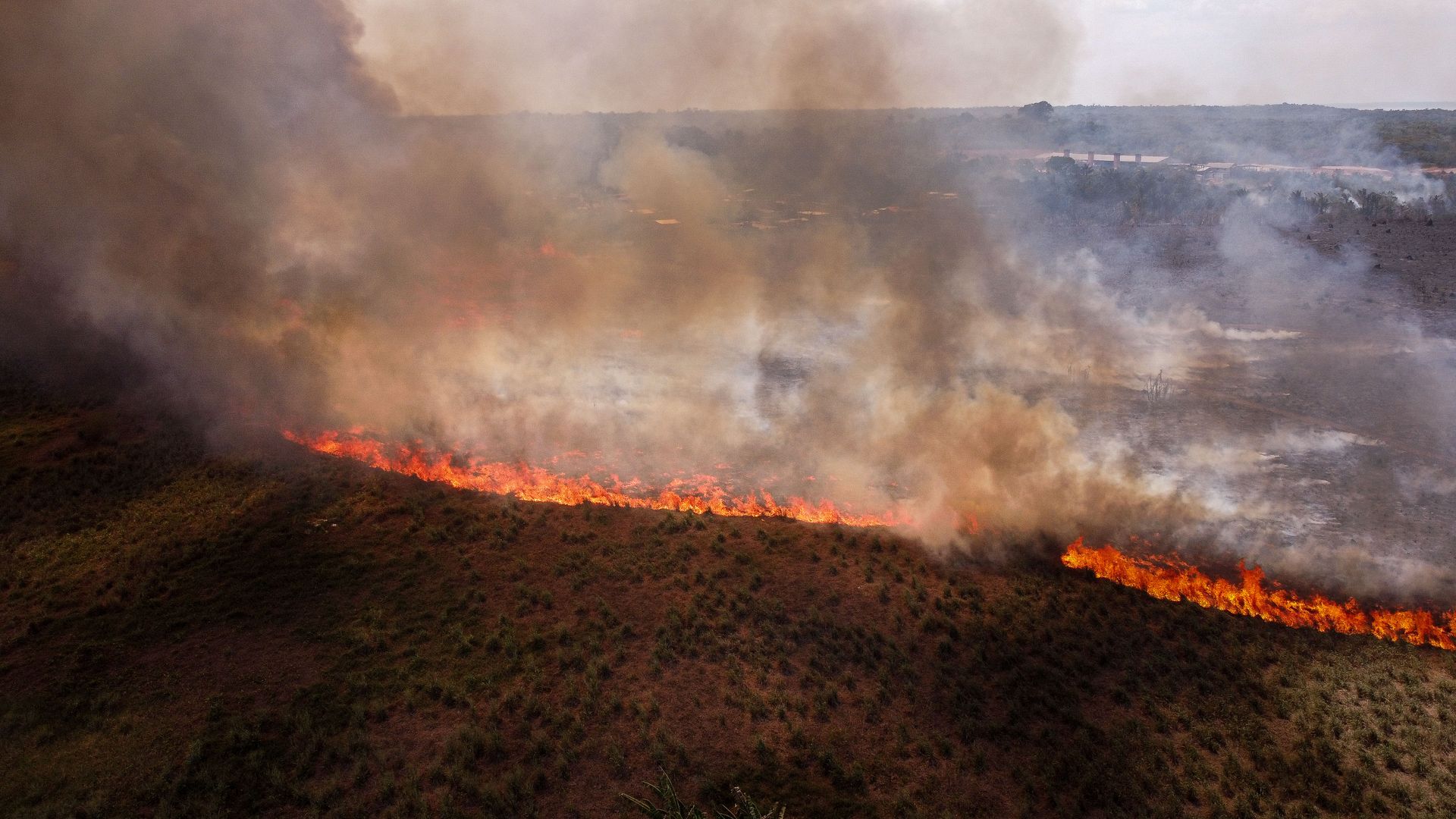
A mixed area of fields and Amazon rainforest seen burning uncontrollably in 2023. Photo: Gustavo Basso/NurPhoto via Getty Images
Global carbon dioxide concentrations reached record levels in 2023, with a surge of 11.4% during the past two decades alone, a new UN report finds.
Why it matters: While countries are deploying renewable energy sources at a quickening pace, it hasn't been enough to halt or reverse emissions growth.
- The annual greenhouse gas concentrations reports are aimed at policymakers headed to the next round of UN climate negotiations, which are scheduled for next month in Baku, Azerbaijan.
The big picture: The report from the World Meteorological Organization, a UN agency, found that CO2 is building up in the atmosphere at a faster rate than at any time during all of human existence.
- The WMO pins the blame for 2023's high CO2 growth in part on vegetation fire-related emissions.
- Other factors included high fossil fuel emissions from burning coal, oil and natural gas and a "possible reduction" in the rate at which forests are taking in CO2.
Zoom in: In total, globally averaged surface concentrations of CO2 — the most abundant and longest-lived greenhouse gas that causes global warming — hit 420 parts per million last year, the WMO found.
- The annual rate of increase in CO2 levels was 2.3 ppm, which made 2023 the 12th straight year with an increase greater than 2 ppm.
- Methane, another powerful greenhouse gas, and nitrous oxide also spiked to record levels.
- The CO2 levels were 151% of preindustrial readings, while methane was 265% above the preindustrial era.
Stunning stat: When WMO annual greenhouse gas bulletins first began in 2004, globally averaged CO2 was 377.1 ppm.
The intrigue: El Niño years, such as 2023, tend to bring steeper increases in greenhouse gas levels because of drought in the tropics that reduces forests' ability to take in CO2.
- There are indications that a continued surge in CO2 concentrations occurred into 2024, though the new report does not cover those early readings.
Zoom out: The last time the world saw CO2 concentrations similar to today's was 3 to 5 million years ago, when the temperature was 2°C to 3°C (3.6°F to 5.4°F) warmer than average and sea levels were up to 65 feet higher than they are now.
What they're saying: "Every part per million and every fraction of a degree temperature increase has a real impact on our lives and our planet," said WMO secretary-general Celeste Saulo in a statement.
- Ko Barrett, the WMO's No. 2 official, warned of a "potential vicious circle," in which climate change pushes ecosystems from net absorbers of CO2 into contributors of the global warming agent.
- "These climate feedbacks are critical concerns to human society," she said in a statement.
