The big labor fight over automation is here

Add Axios as your preferred source to
see more of our stories on Google.
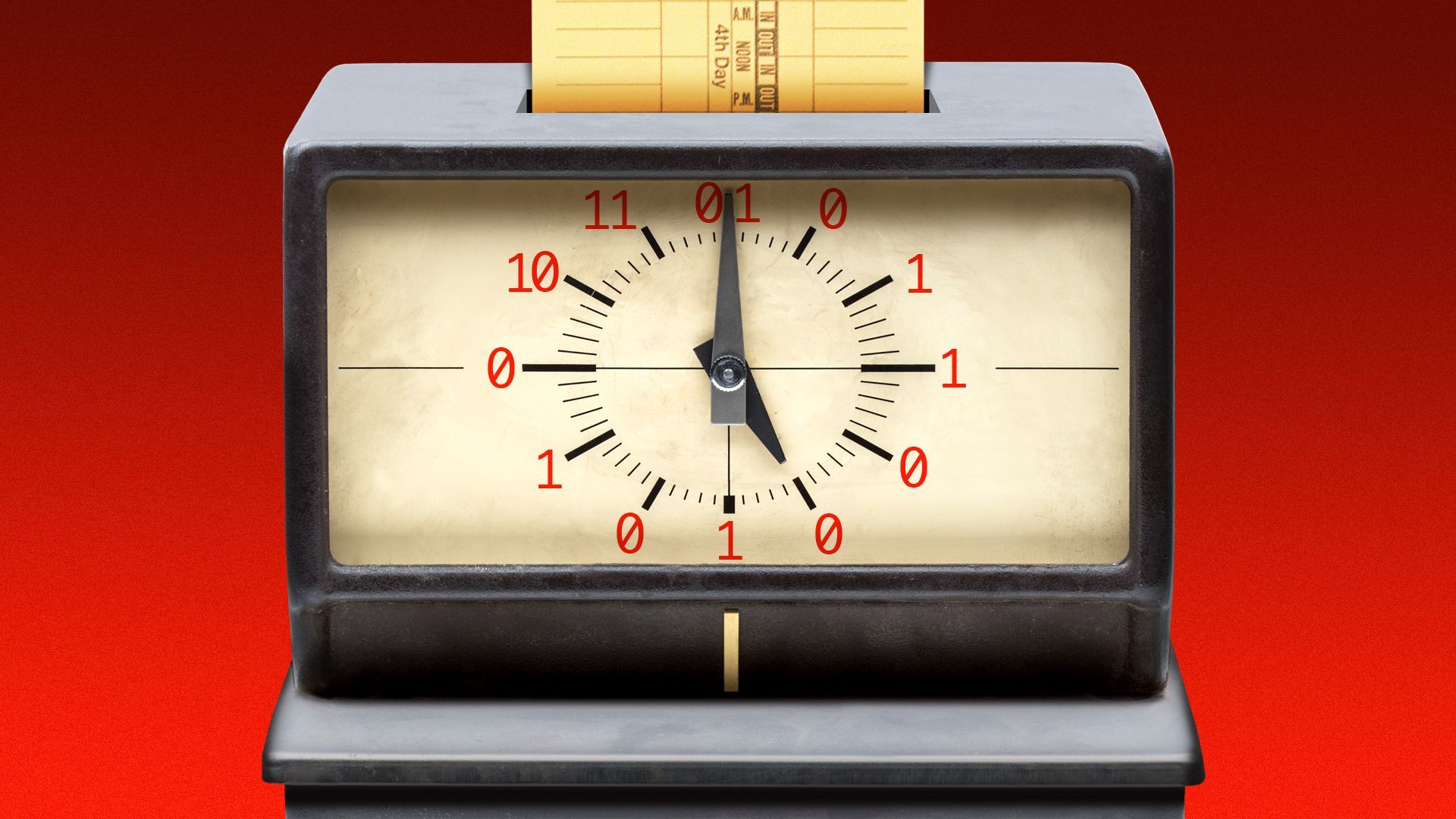
Illustration: Sarah Grillo/Axios
Longshoremen are back to work after hammering out a tentative deal that includes a fat raise, but one key issue remains unresolved: automation.
Why it matters: This isn't just a port worker thing. Workers across industries fear advancements in AI are coming for their jobs.
Where it stands: Last week, the International Longshoremen's Association, the union for East and Gulf Coast dockworkers, ended their strike after hammering out a tentative agreement with their employers for a 61.5% raise over six years.
- The union is seeking more protections against automation. The current contract was extended through Jan. 15 to negotiate further.
Zoom in: In a letter to members over the weekend, union president Harold Daggett said he wants to preserve union jobs and ensure that the union "plays an essential role in port operations," preventing work from being outsourced to non-union workers or automation.
The big picture: In industries without union protections, there's not much workers can do, beyond trying to be adaptable and learn new things, to protect their jobs from technological advancements.
- But where jobs are unionized, you're starting to see more pushback. The Hollywood actors' strike took longer to resolve than the writer's strike because performers pushed to be compensated for AI-generated likenesses of their images. And they won.
- AI provisions are a key sticking point for video game actors who went out on strike in July — and still aren't back at work.
Flashback: Unions have been contending with automation taking away jobs for decades, says William Brucher, a professor at Rutgers University's School of Management and Labor Relations.
- The longshoremen's union started negotiating on this issue in the 1960s. The advent of the shipping container meant there was less need for workers to manually pack goods onto ships.
Zoom out: The union knew then, as it surely does now, that it couldn't stop that from happening. But it could make sure the transition was less painful.
- They negotiated for higher pay, minimum pay guarantees, and something called a "container royalty," special payments made to the union to make up for the job losses.
- "To kind of quote a phrase going around the waterfront was 'workers were going to get a piece of the machine,' " says Brucher.
Between the lines: The union also made sure that as the job of a dockworker changed, it was still a union job.
- That's an issue that striking autoworkers handled last year: Their tentative agreement included a provision that would ensure that workers who make electric vehicles see the same union protections as those making cars powered by combustion engines.
Reality check: Not all unions are bargaining this hard. The deal struck by UPS and its workers last year didn't "adequately address automation," Yossi Sheffi, the director of MIT's Center for Transportation and Logistics, wrote in a column for Harvard Business Review last year.
- Other unions don't have the kind of leverage that the port workers do.
- For years freight rail companies have used tech advancements to become more efficient and cut staffing — with big detrimental impacts to remaining workers, who've been forced to contend with less staffing, harsh restrictions on time off, and sometimes less safe conditions.
- Those unions are covered by a different labor law than dockworkers — one that allows the federal government to step in to prevent strikes (as it did in 2022).
- "Without a genuine right to strike workers have been in less of a position to fight back," says Brucher.
