Netanyahu distances himself from U.S.-led proposal for ceasefire in Lebanon

Add Axios as your preferred source to
see more of our stories on Google.
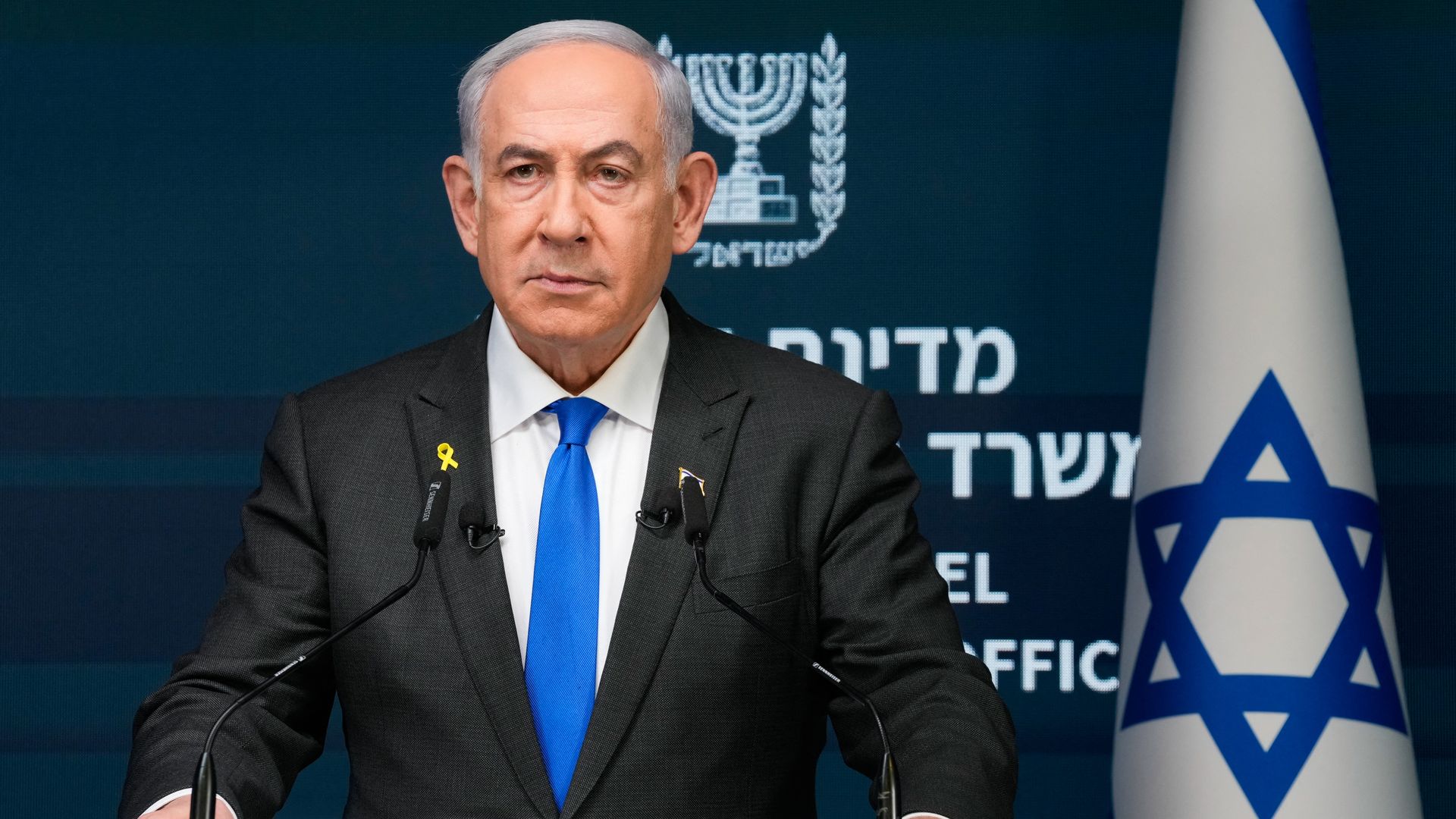
Israeli Prime Minister Benjamin Netanyahu speaks during a news conference in Jerusalem on Sept. 2. Photo: Ohad Zwigenberg/Pool/AFP via Getty Images
Israeli Prime Minister Benjamin Netanyahu on Thursday walked back from a private understanding with the Biden administration and distanced himself from the proposal for 21-day ceasefire in Lebanon presented by the U.S., France and other allies.
Why it matters: U.S. officials said Netanyahu and his close confidants were directly involved in the formulation of the temporary ceasefire.
- The prime minister's change, which comes after public threats by far-right ministers in his government and attacks by Israeli opposition leaders, could increase tensions with the Biden administration.
The latest: White House Press Secretary Karine Jean-Pierre on Thursday said "the announcement about the temporary ceasefire in Lebanon was published in coordination with Israel. We don't believe an all-out war in Lebanon is the answer."
- White House spokesperson John Kirby said in a call with reporters that the Biden administration would not have presented the 21-day ceasefire proposal if it didn't think the Israeli government was on board.
- He said the White House had every reason to think the discussions with the Israelis before the announcement was published "were sincere." The statement was published after consulting with Israel and the Israelis "were aware of every word" in the statement.
- "I don't know why Netanyahu said what he said and I don't know what his considerations were — whether they were political or operational. Ask him why he said that," Kirby said.
The big picture: The fighting continued on Thursday with Hezbollah launching more than 100 rockets and drones toward targets in Israel.
- Israel Defense Forces conducted an airstrike in Beirut and claimed it killed the commander of Hezbollah's air force who is in charge of all drone attacks. Hezbollah has not confirmed whether he died.
- Israeli airstrikes and attacks have killed more than 700 people, including many women and children, in Lebanon over the past 10 days.
Driving the news: On Thursday morning local time, as Netanyahu left for New York, the U.S., France and 10 other Western and Arab countries issued a statement calling for an immediate 21-day ceasefire between Israel and Lebanon. Netanyahu was aware that the statement was coming.
- The statement said the U.S. and the other countries expect all parties — including the governments of Lebanon and Israel — to express their support for the proposal.
On Wednesday night during the meeting of the Israeli Security Cabinet, the issue of the ceasefire proposal was not discussed and the ministers mainly heard about the IDF's plans for the continuation of the fighting against Hezbollah, Israeli officials said.
- When the ministers left the meeting and saw the press reports about the ceasefire proposal, some published strong-worded statements against the move.
- Ultranationalist ministers Bezalel Smotrich and Itamar Ben-Gvir made clear they oppose a ceasefire and threatened to vote against the coalition if it agrees to the proposal.
Netanyahu heard these statements while he was on a flight to New York to attend the UN General Assembly. At first his office published a statement denying a ceasefire was imminent and stressing the prime minister has not yet given his response to the proposal.
- Several hours later, one of his aides told reporters on the plane that "Israel's direction right now is not a ceasefire but further military action against Hezbollah."
Netanyahu doubled down when he landed in New York.
- U.S. officials said the understanding was the prime minister would say publicly he "welcomes" the initiative.
- Instead, Netanyahu said Israel's "policy is clear — we continue to hit Hezbollah with all our might. We will not stop until we achieve all of our goals, first of all returning the residents of the north safely to their homes. This is the policy and no one should make a mistake about that."
Behind the scenes: Senior U.S. officials said discussions on the ceasefire initiative began after a phone call on Monday between White House national security adviser Jake Sullivan and Israel's Minister for Strategic Affairs Ron Dermer, a close confidant of Netanyahu.
- The officials said the conversation with Dermer ended with the mutual understanding that a temporary ceasefire was the "right thing to do" and that the U.S. would aim to announce the ceasefire initiative prior to Netanyahu's arrival in New York.
- On Tuesday and Wednesday, senior U.S. officials held intense negotiations with Dermer and with senior Lebanese officials.
"The message that Biden's advisers received from Dermer is that Netanyahu thinks that a temporary ceasefire is the right thing because he does not want to be dragged into a ground invasion that could lead to entanglement and erode the achievements that the IDF has achieved so far," said a source with direct knowledge of the talks.
- A U.S. official said Netanyahu and Dermer were directly involved in the negotiation over the ceasefire initiative and "knew every word" in it in advance.
- The official said the White House would not have moved forward with the ceasefire initiative unless it had been given assurances from Netanyahu and from the Lebanese side that both agree in principle.
What to watch: The talks on the ceasefire proposal continued on Thursday in New York, officials said.
- Dermer is expected to meet with Secretary of State Antony Blinken and with Biden advisers Brett McGurk and Amos Hochstein, with whom Dermer conducted the negotiations in recent days.
- A U.S. official said the U.S. is still not giving up on the ceasefire initiative and stressed that the proposal did not include a date for the start of the ceasefire and the issue was supposed to be discussed further after both sides respond to the proposal.
- "Last night over a dozen countries joined in a call for an immediate 21-day ceasefire across the Lebanon-Israel border," U.S. ambassador to Israel Jack Lew said in a statement on Thursday.
- "This is the best way for diplomacy to restore safety for citizens to return to their homes."
Editor's note: This story has been updated with comments from White House spokesperson John Kirby.
