U.S., France and key allies call for a 21-day ceasefire in Lebanon

Add Axios as your preferred source to
see more of our stories on Google.
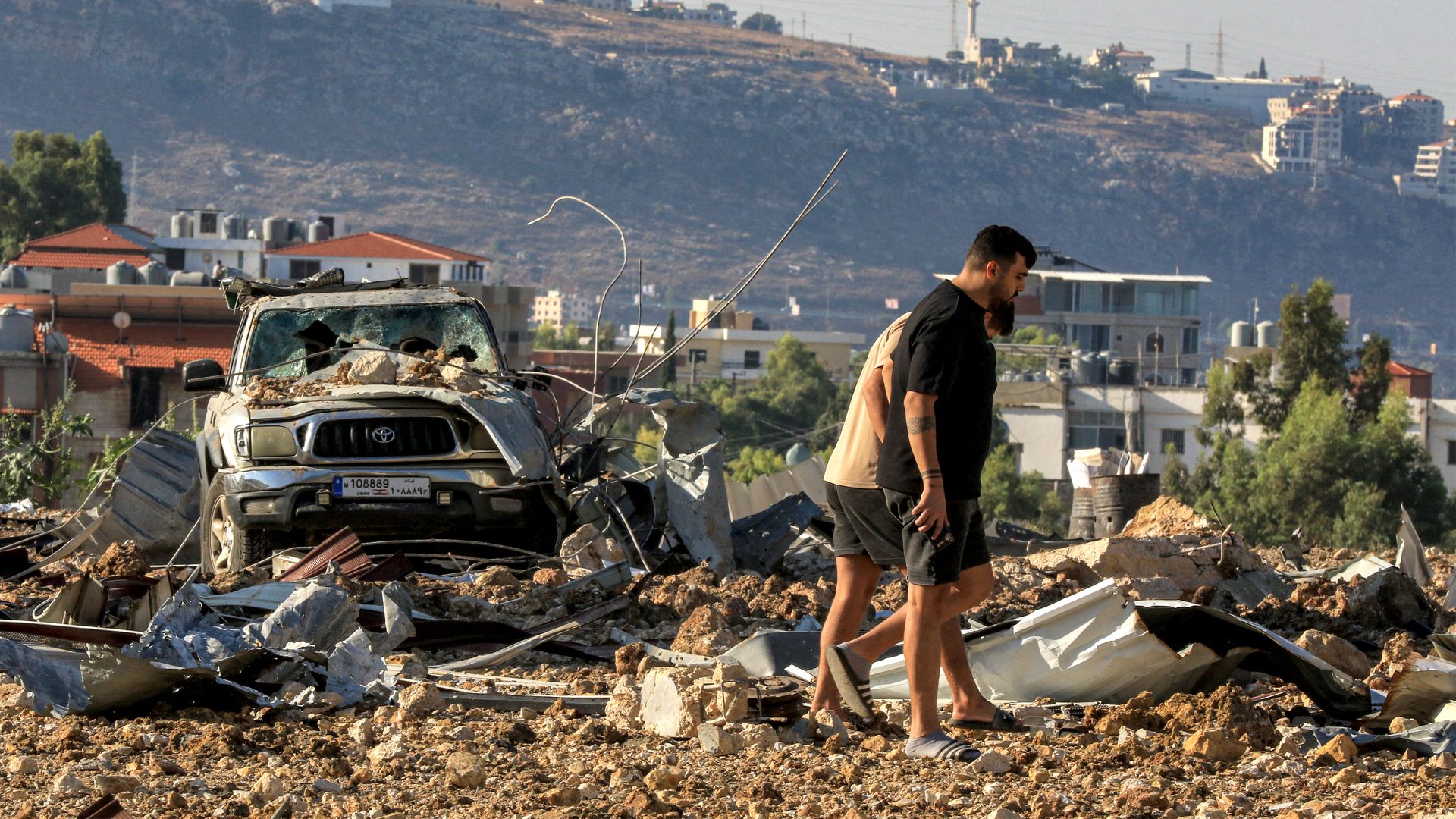
People inspect the site of an Israeli air strike in Jiyeh along the highway linking Beirut to the southern city of Sidon on Sept. 25, 2024. Photo: Mahmoud Zayyat/AFP via Getty Images
The U.S., France and key allies issued a joint statement on Wednesday calling on Israel and Hezbollah to agree to a 21-day ceasefire during which negotiations could take place on a diplomatic solution to the crisis on the Israeli-Lebanese border.
Why it matters: The statement — released after 10 days of intense fighting that has killed more than 700 people in Lebanon — is aimed at stopping the escalation and particularly at preventing a possible Israeli ground invasion of southern Lebanon to push Hezbollah militants away from the border.
- The joint statement was issued by the U.S., France, Australia, Canada, European Union, Germany, Italy, Japan, Saudi Arabia, United Arab Emirates, and Qatar.
- A senior U.S. official told reporters that the countries that signed the statement hope that during the 21 days of the ceasefire in Lebanon, the negotiations between Israel and Hamas on a hostage-release and ceasefire in Gaza deal will also begin again.
- The U.S. official said the wording of the joint statement and a separate one from President Biden and French President Emmanuel Macron was coordinated with the Israeli and Lebanese governments. In the opinion of the countries that signed the statement, 21 days is a sufficient period of time to reach a diplomatic settlement on the border between Israel and Lebanon, the official said.
- In their statement, Biden and Macron called "for broad endorsement and for the immediate support of the Governments of Israel and Lebanon."
Driving the news: On Wednesday, Axios reported the Biden administration was working with France and several other countries on a new diplomatic initiative for a "pause" in the fighting in Lebanon and a resumption of negotiations on a Gaza hostage and ceasefire deal.
- Biden and Macron met on Wednesday in New York on the sidelines of the UN General Assembly and discussed the diplomatic initiative.
What they're saying: "It is time for a settlement on the Israel-Lebanon border that ensures safety and security to enable civilians to return to their homes," the statement from Biden and Macron said.
- "The exchange of fire since October 7th, and in particular over the past two weeks, threatens a much broader conflict, and harm to civilians," it continued.
- "We therefore have worked together in recent days on a joint call for a temporary ceasefire to give diplomacy a chance to succeed and avoid further escalations across the border."
Behind the scenes: Discussions of the new initiative started after a phone call on Monday between White House national security adviser Jake Sullivan and Israeli Minister of Strategic Affairs Ron Dermer, U.S. and Israeli officials said.
- Over the last two days, the U.S. has been discussing the idea with France, Israel, Lebanon and several other Arab countries, a U.S. official and a European diplomat said.
- Secretary of State Antony Blinken spoke several times over the last 48 hours with his French counterpart and the two exchanged drafts of a possible statement calling for a ceasefire, U.S. officials said.
- At the same time Biden's advisers Amos Hochstein and Brett McGurk worked with Macron's team, U.S. officials said.
- A U.S. official said that on Wednesday morning Blinken met with the foreign ministers of the Gulf countries and discussed the situation in Lebanon.
- After the meeting, Blinken pulled the Saudi and the Qatari foreign ministers aside for separate one-on-one meetings and got them to support the U.S.-French initiative, the U.S. official said.
What's next: Blinken, McGurk and Hochstein are expected to have separate meetings on Thursday in New York with Israeli Prime Minister Benjamin Netanyahu.
Editor's note: This story has been updated with additional details.
