Instagram left up racist, sexist attacks on women lawmakers, study says

Add Axios as your preferred source to
see more of our stories on Google.
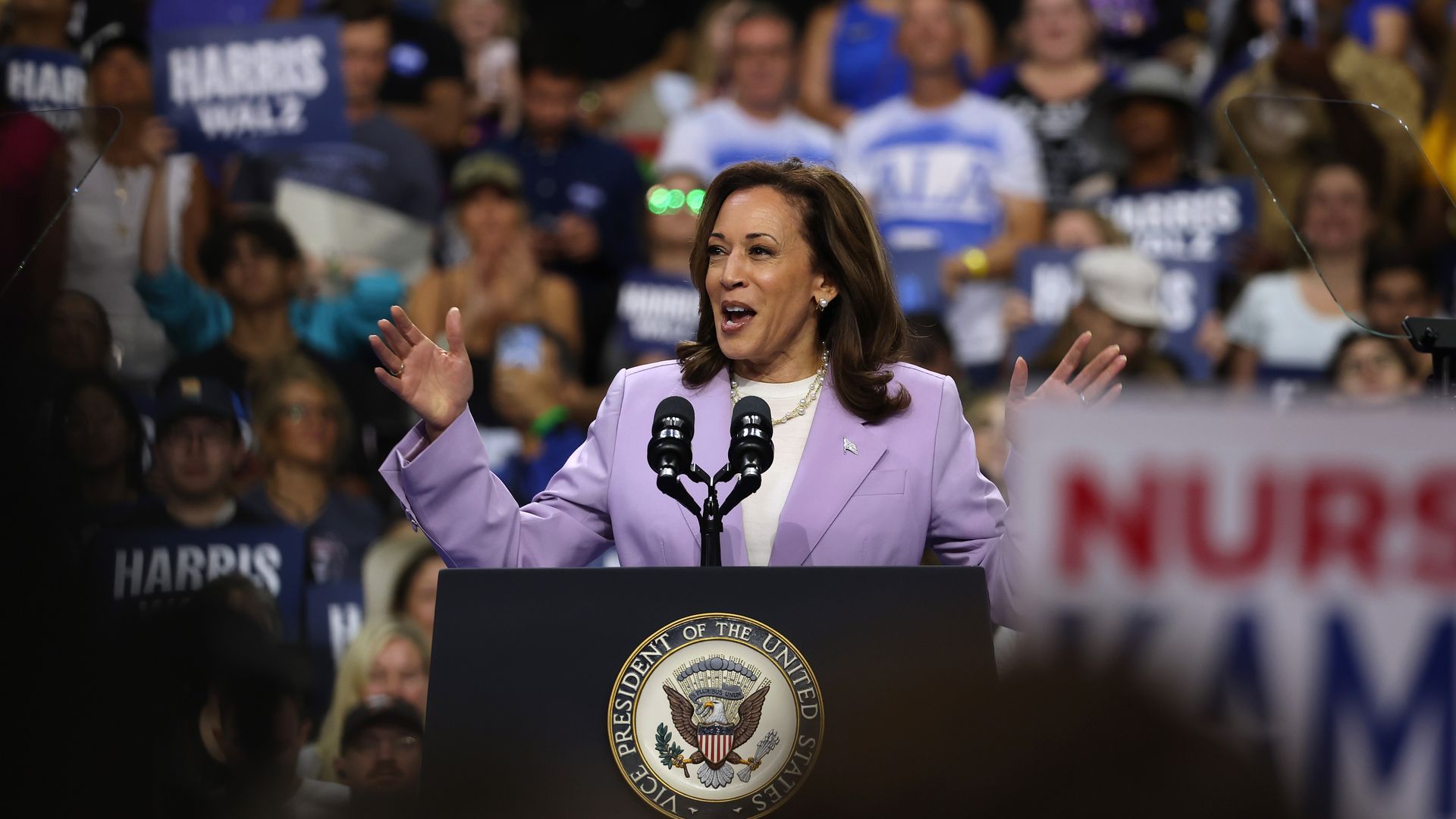
Vice President Kamala Harris speaks during a campaign rally at the University of Las Vegas Thomas & Mack Center on Aug. 10, 2024. Photo: Justin Sullivan/Getty Images
Instagram did not act on 926 out of 1,000 abusive comments directed at female politicians that were flagged to the app, a study released Wednesday found.
Why it matters: Vice President Kamala Harris' presence at the top of the Democratic presidential ticket shines a spotlight on the violent threats and sexist attacks regularly directed at women in politics.
- Long before she assumed the reins of the Democratic ticket, Harris faced persistent attacks targeting her race and gender — from political opponents, like former President Trump, and online.
- This election cycle, Harris has been target of baseless attacks utilizing gendered and racial tropes, from labeling her a "DEI" hire to repeated attempts to delegitimize her multiracial identity.
Driving the news: The Center for Countering Digital Hate, a nonprofit organization targeting online hate speech and disinformation, compiled comments from the Instagram accounts of five Republican and five Democratic female politicians — including Reps. Alexandria Ocasio-Cortez (D-N.Y.) and Marjorie Taylor Greene (R-Ga.) and Sens. Elizabeth Warren (D-Mass.) and Marsha Blackburn (R-Tenn.) — and used Google's Perspective API and a keyword search to score comments as most likely to violate the app's policies.
- The final set of 1,000 comments deemed abusive was reported to the platform. After one week, researchers found that the vast majority of those comments remained on the site.
By the numbers: 93% of comments that researchers determined were abusive — many of which included clearly racist, sexist or threatening language — were still viewable one week after reporting.
- 77% of the 1,000 abusive comments observed in the study were categorized as containing "gendered terms."
- A fifth of the reported comments came from "repeat offenders" who had posted abusive language at least twice.
- Out of 421,361 comments, over 1 in 25 were determined most likely to be "toxic" in the study. Instagram's policies prohibit credible threats, hate speech, blackmail and other forms of online abuse, but speech deemed toxic may not necessarily violate the app's guidelines.
Zoom in: Researchers flagged 105 abusive comments targeted at Harris — and found that 97 were not removed.
Imran Ahmed, the CEO of the Center for Countering Digital Hate, in the study's foreward called for the platform to enforce existing policies and be forthcoming about why hateful speech is removed or not.
- "The cacophony of hate speech, threats, and gendered abuse we find flooding the comment sections of prominent women politicians is united in one shared purpose: to push women out of political life," he wrote.
What they're saying: Meta said it will review the examples flagged in the study and will determine if removal is necessary, noting that though comments may be offensive, they may not necessarily trigger a policy violation.
- "We provide tools so that anyone can control who can comment on their posts, automatically filter out offensive comments, phrases or emojis, and automatically hide comments from people who don't follow them," Meta's Head of Women's Safety Cindy Southworth said in a statement provided to Axios.
- She continued: "We work with hundreds of safety partners around the world to continually improve our policies, tools, detection and enforcement, and we will review the CCDH report and take action on any content that violates our policies."
- Instagram's community guidelines note that the platform does "generally allow stronger conversation around people who are featured in the news or have a large public audience due to their profession or chosen activities."
Go deeper: Online hate and harassment continues to rise
