How Los Angeles is preparing for the 2028 Olympics

Add Axios as your preferred source to
see more of our stories on Google.
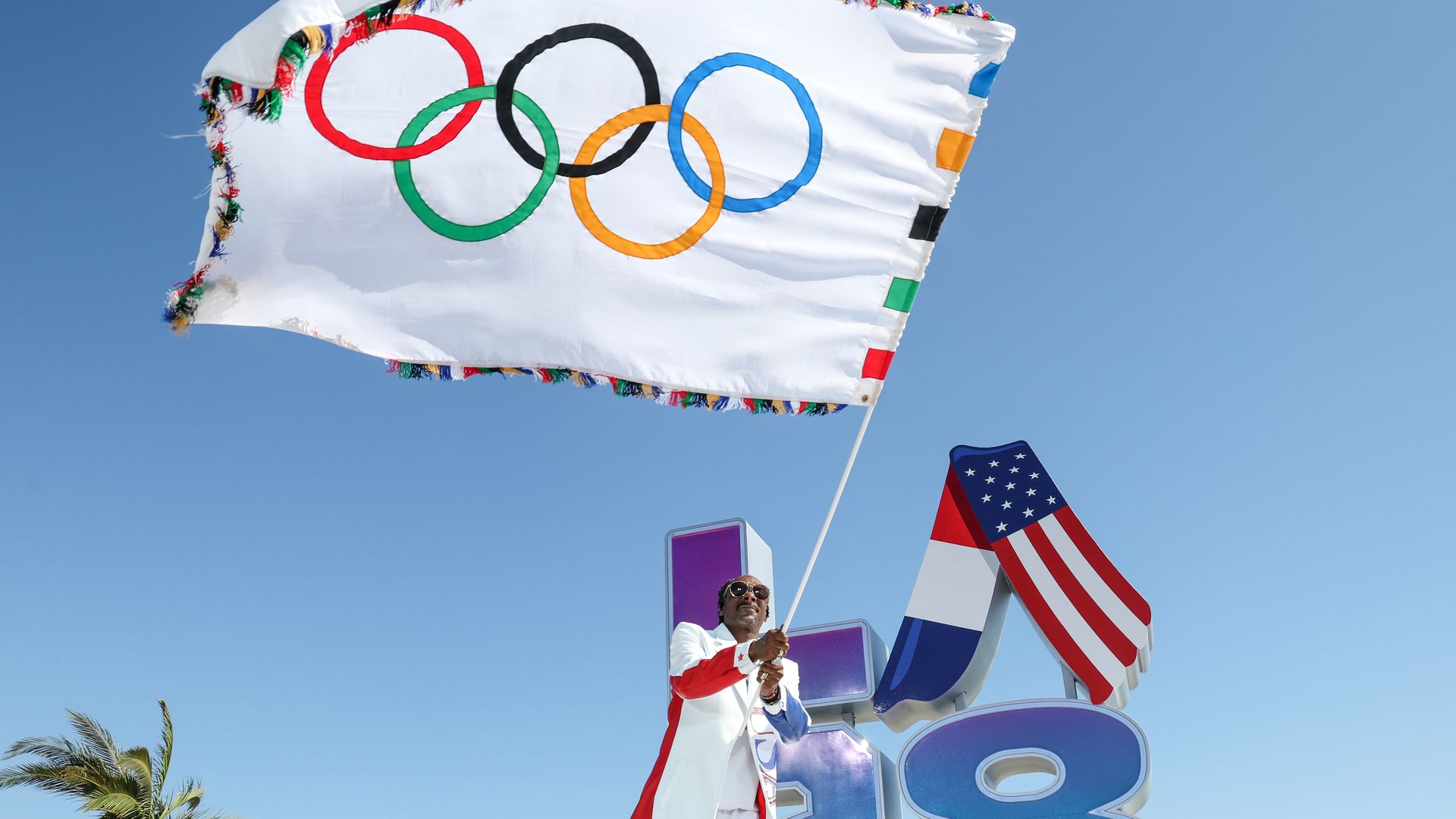
Snoop Dogg performs at the LA28 Olympic Games Handover Celebration on Aug. 11. Photo: Kevin Mazur/Getty Images for LA28
The closing of the Paris Games Sunday concluded with the handover of the Olympic flag to Los Angeles Mayor Karen Bass, officially kicking off the countdown to the 2028 Summer Olympics.
Why it matters: Organizers of the L.A. Games are taking a cue from Paris on striving for sustainability, vowing the tournament will be a "no build" and "car-free" feat.
- Paris made ambitious pledges related to sustainability and cleanup of the River Seine.
- While swimming events did take place in the Seine, the water quality was deemed not safe to swim in during some days of the tournament and several athletes who competed in the water subsequently fell ill, though it's not immediately clear if it was due to the water's pollution.
- And despite Paris organizers' efforts to install a carbon-friendly water-cooling system in the Olympic Village, many teams hauled their own AC units to the Games.
The big picture: The L.A. Games will take place from July 14, 2028 through July 30, 2028 and will mark the third time the City of Angels has hosted the tournament.
- Sporting events will be spread out across more than 80 existing venues across the city. Casey Wasserman, chairman of the LA28 organizing committee, has vowed that no new permanent structures will be built.
- "LA is an ambitious city of endless possibilities," Wasserman said last month. The city "will provide the perfect backdrop to host the biggest cultural, sporting and entertainment event in the world."
Zoom in: The L.A. Games will take advantage of the city's vast geography to host different events, with the Olympic Village to be stationed on the UCLA campus.
- SoFi Stadium — which has hosted everything from NFL games to Taylor Swift concerts — will play a role in the opening ceremony and host swimming events.
- The San Fernando Valley will host BMX racing while the Pacific Palisades — between Santa Monica and Malibu — will host golfing.
- Long Beach will host triathlon and marathon swimming. The area has a "mixed history" on water cleanliness though its ocean waters scored high in a recent review, AP reported.
Between the lines: Ferrying athletes and spectators across locations will demand efficient transportation in a city known for its abysmal traffic congestion.
- Mayor Bass told CNN this weekend that the L.A. Games will be "car-free."
- "We're a very car-dependent city but it means that if you are going to attend any of the sports venues, you're going to have to take public transportation," Bass said.
- The city has been building out its public transportation system, will use more than 3,000 buses from across the country to aid transport, and will encourage remote eligible workers to reduce traffic, according to Bass.
Reality check: While Bass cited the success of the 1984 L.A. Games' success in avoiding massive traffic jams, the city has grown significantly since then.
- L.A. county had a population of about 7.9 million people in 1984, per the Los Angeles Times. Now, the county has more than 9.7 million people — and that's before the arrival of a massive wave of spectators and Olympic teams.
- Organizers' plans of 28 projects to improve the regional transit system have also hit snags. Dubbed the "Twenty-Eight by '28" initiative, only five of the projects have been completed so far.
Go deeper: Paris Olympics: See the viral moments of the 2024 Games
