How Detroit's lowest moment launched its turnaround

Add Axios as your preferred source to
see more of our stories on Google.
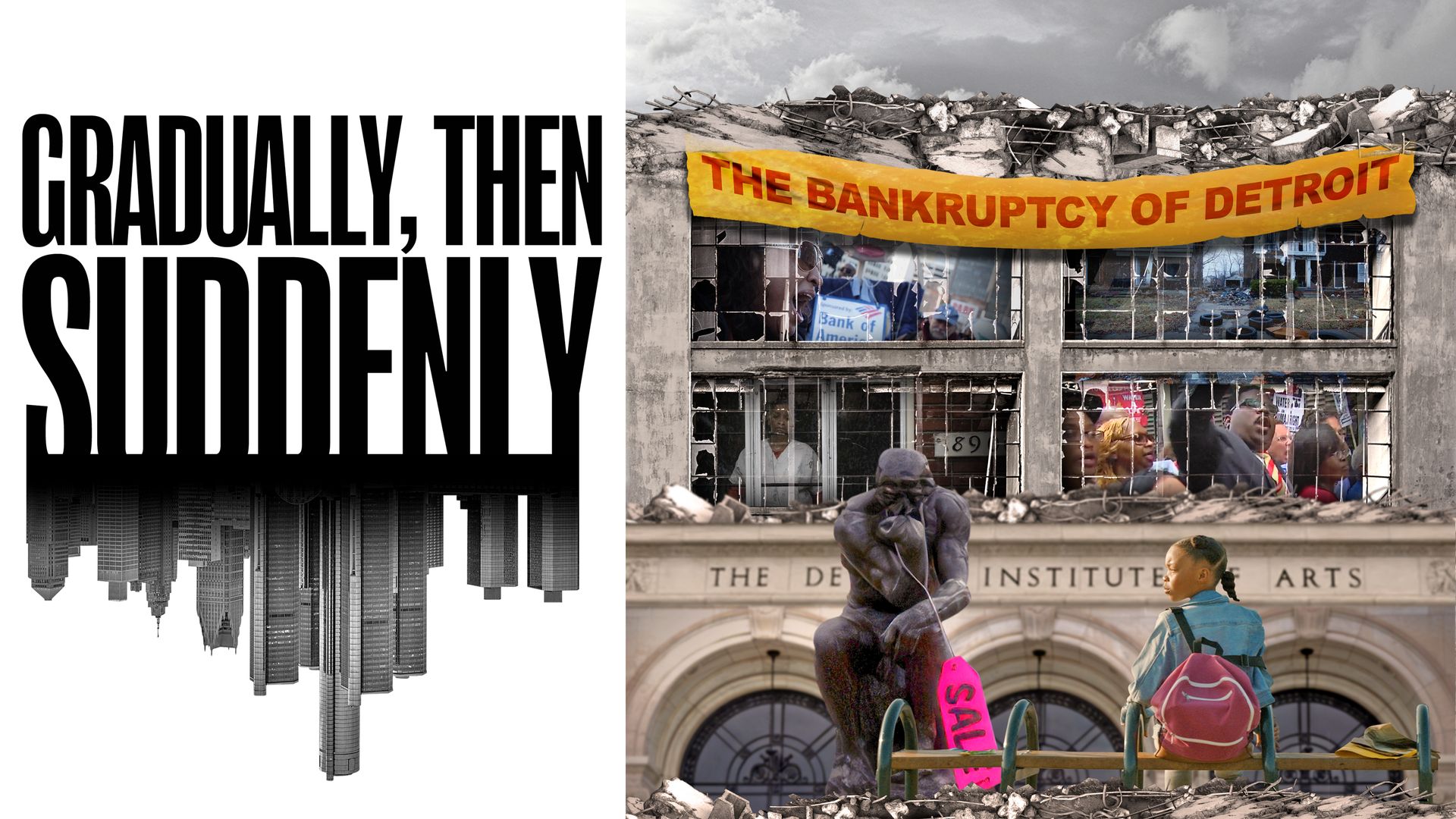
"Gradually, Then Suddenly: The Bankruptcy of Detroit" is making its streaming debut. Photo: Global Digital Releasing
Eleven years ago today, Detroit hit rock bottom — but that low point set the city up for a comeback.
Why it matters: The Motor City filed for the largest municipal bankruptcy case in U.S. history at 4:06pm Thursday, July 18, 2013.
State of play: The dramatic story of how Detroit went broke — and what happened next — is featured in "Gradually, Then Suddenly: The Bankruptcy of Detroit," a new documentary debuting on streaming today.
- Axios Closer co-author Nathan Bomey, author of "Detroit Resurrected: To Bankruptcy and Back," served as producer and principal scriptwriter of the 92-minute film.
Worthy of your time: Winner of the $200,000 Library of Congress Lavine/Ken Burns Prize for Film, the documentary will be available for free on Tubi, YouTube and other streaming services.
Here are three lessons from the bankruptcy that resonate for Nathan more than a decade after he covered the story for the Detroit Free Press:
1. Pain now is better than pain later.
- Long after it was obvious that Detroit was broke, local officials were promising benefits to workers that the city could not afford.
- When the city ran out of money, those benefits had to be reduced.
- "When you're in bankruptcy, it's not like you have great options and
terrible options," Detroit Free Press opinions editor Nancy Kaffer says in the film. "You have only terrible options and you have to choose the ones that are going to be least terrible for you."
2. Someday the bill comes due.
- When it was trying to avoid bankruptcy, the city borrowed billion.
- Kevyn Orr — who led the city's bankruptcy in his controversial role as state-appointed emergency manager — told Nathan those types of transactions are known on Wall Street as "IBGYBG" deals: I'll be gone, you'll be gone when it falls apart.
3. Compromise makes the future possible.
- The "grand bargain" — a sweeping deal that resolved the crisis — was one that neither Wall Street nor Main Street was thrilled about.
- Pensioners accepted a cut to their paychecks, bondholders took a haircut on what they were owed and the state government kicked in money, too.
- Their collective sacrifice set Detroit on a new path toward financial sustainability.
- Without the back-breaking debt that plunged the city into bankruptcy, Detroit has been able to restore city services and reestablish itself as a good place to invest.
The bottom line: Detroit still has numerous challenges — including a challenged education system, unemployment and crime — but the city is rebounding in a way that few thought was possible on its darkest day.
- The tough decisions Detroit made in bankruptcy set it on a brighter path, enabling the city to reinvest in public safety, parks, street lights and blight demolition.
