Exclusive: Meta removes Trump account restrictions ahead of 2024 election

Add Axios as your preferred source to
see more of our stories on Google.
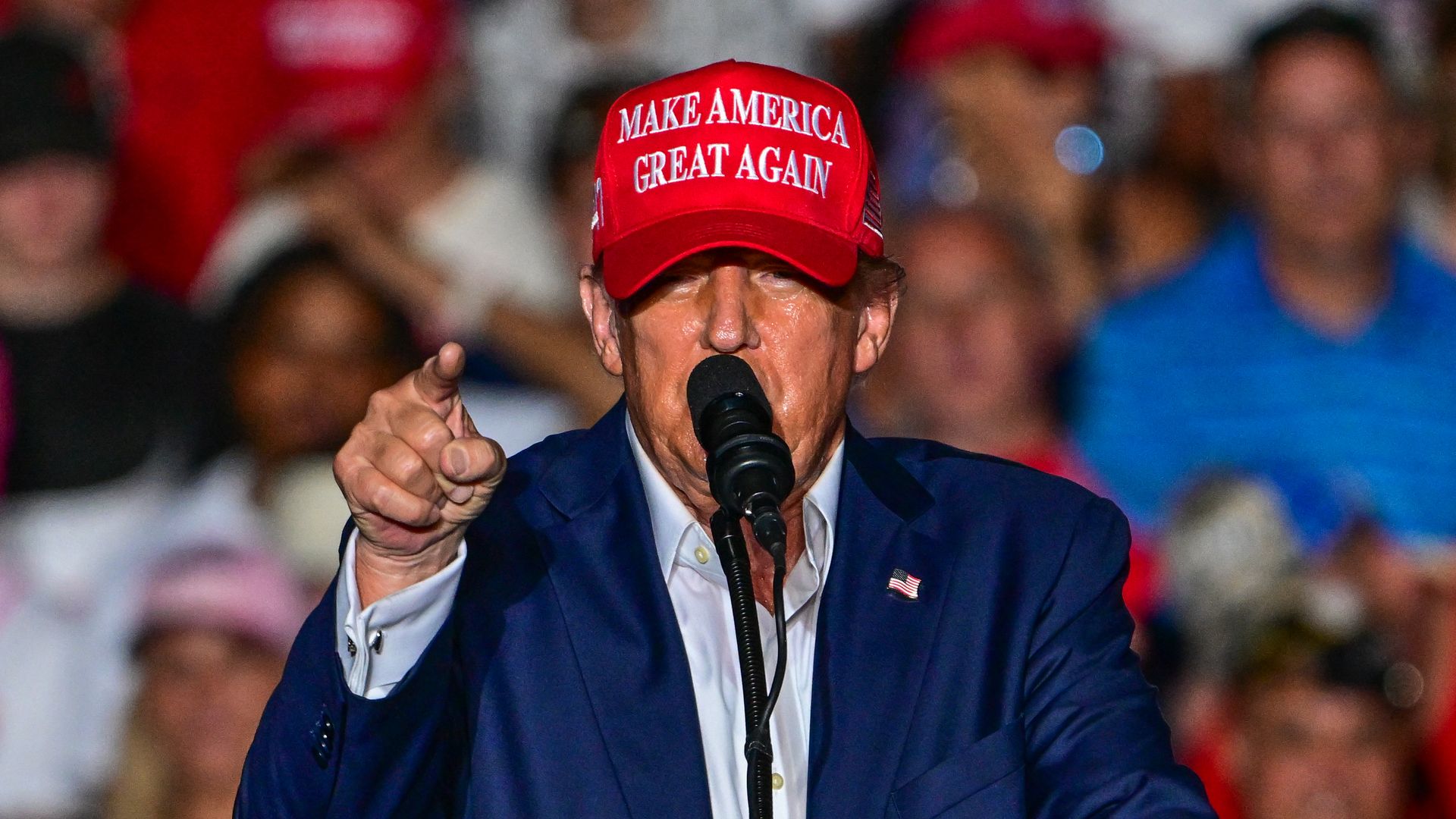
Photo: Giorgio Viera/AFP via Getty Images
Meta on Friday said it would soon roll back restrictions it placed on former President Trump's Instagram and Facebook accounts.
Why it matters: The company said it was making the change to ensure parity among presidential candidates leading up to the 2024 election.
State of play: Since being reinstated in January 2023, Trump's accounts have been subject to stricter penalties than other Meta users, including account suspensions and advertising restrictions, if he violated the company's rules.
- While those penalties were designed to limit any public figure's accounts during civil unrest, Donald Trump's accounts were the only ones that have so far been subject to those restrictions, a spokesperson confirmed.
- Neither of Trump's official accounts on Instagram or Facebook violated the company's policies during his restriction period, which meant his accounts never triggered those penalties.
Zoom in: Meta decided to roll back the restrictions to Trump's accounts amid concerns that a smaller policy violation could result in his account being suspended or limited leading up to the election, a spokesperson said.
- If Trump were to violate Meta's policies for a minor infraction, such as posting a person's address without permission, the restrictions could suspend his account for up to two years — which would block him from reaching users during the final months before the election.
Yes, but: While Meta is doing away with stricter penalties on Trump's account, it maintains its ability to limit the distribution of problematic posts for his or any accounts even if they don't explicitly violate Meta's rules — such as oblique references to QAnon.
- Trump's accounts, and those of all politicians and public figures, are still subject to the same general content rules that apply to all users of Meta's apps.
What they're saying: "In assessing our responsibility to allow political expression, we believe that the American people should be able to hear from the nominees for president on the same basis," Meta president of global affairs Nick Clegg said in a statement.
- "In reaching this conclusion, we also considered that these penalties were a response to extreme and extraordinary circumstances, and have not had to be deployed," he noted.
Catch up quick: Meta and many other social media platforms barred Trump soon after the Jan. 6, 2021 attack on the U.S. Capitol for breaking their rules and over fears of further incitements to violence.
- Those bans inspired Trump to start his own social network, Truth Social, which he has used as his primary vehicle for public comments throughout his 2024 campaign.
- X, then called Twitter, reinstated Trump's account shortly after Elon Musk bought the platform in late 2022. But Trump has only posted on X once since his return, due to a commitment that requires him to post on Truth Social ahead of other networks.
- He has also posted less on Facebook during this campaign compared to his previous presidential races, although his campaign is still running ads on the platform. Trump is still banned on Snapchat.
The big picture: Meta's move is part of a broader effort by Big Tech companies to revisit policies put in place during extraordinary circumstances that they may feel no longer apply.
- Meta and X have both rolled back misinformation policies related to COVID-19. YouTube reversed its election integrity policy to allow posting of content that argues fraud, errors or glitches occurred in the 2020 presidential election.
What's next: In the future, Meta says that if it places other accounts under the restrictions it applied to Trump, it will periodically review them to see whether they should be removed.
- Meta will make those determinations by weighing its responsibility, as outlined by an independent Oversight Board that it funds to help guide its policies, Clegg said.
