Top Biden aide defends president's health during fiery White House briefing

Add Axios as your preferred source to
see more of our stories on Google.
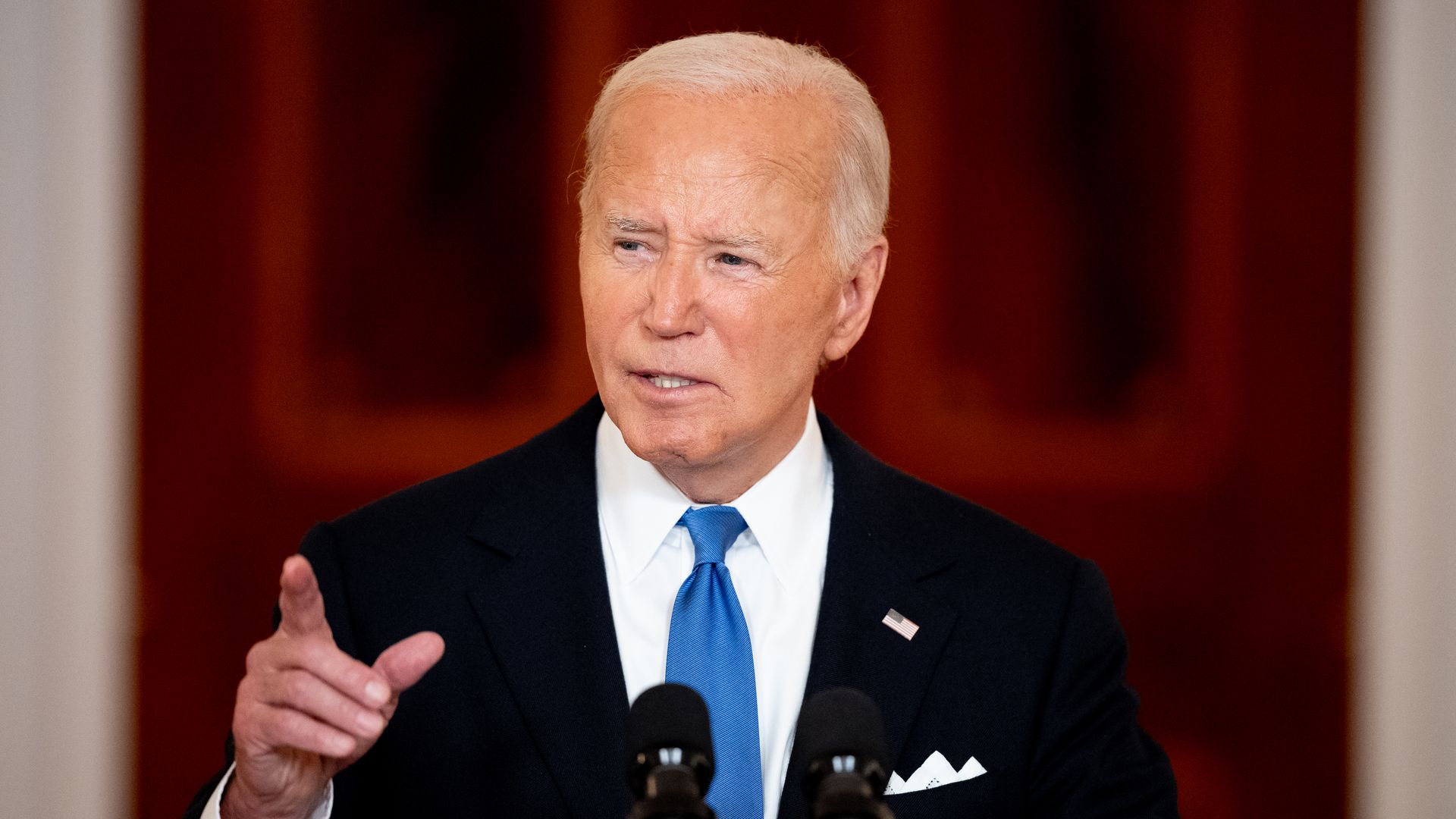
President Biden at the White House earlier this month. Photo: Andrew Harnik/Getty Images
The White House is pushing back on reports raising questions about President Biden's neurological health that have escalated following his presidential debate performance.
Why it matters: After reporters demanded White House press secretary Karine Jean-Pierre provide more details on a top Parkinson's disease specialist's meetings with Biden, his physician released a letter late Monday that emphasized the specialist had only conducted routine annual physical examinations.
Driving the news: Jean-Pierre had at a briefing cited privacy reasons for not answering questions about a New York Times report on visitors' logs showing that the specialist doctor from Walter Reed National Military Medical Center visited the White House eight times from last August through March this year.
- Jean-Pierre refused to confirm during Monday's briefing his name or discuss anything about White House visits by Kevin Cannard, a neurologist and movement disorders specialist, citing privacy and "security reasons" — even after reporters including CBS News' Ed O'Keefe pointed out that the details were in the visitors' log.
- Several reporters raised concerns at the briefing that the White House was not sharing information with them on Biden's health, prompting Jean-Pierre to say: "Has the president been treated for Parkinson's? No. Is he being treated for Parkinson's? No, he's not. Is he taking medication for Parkinson's? No."
Zoom in: O'Keefe said Jean-Pierre was "not answering a very basic, direct question" about whether Cannard had visited Biden at the White House.
- "Ed, please, a little respect here," Jean-Pierre replied. "Every year around the president's physical examination, he sees a neurologist. That's three times, right? So I am telling you that he has seen a neurologist three times while he has been in this presidency," she said.
- "So every time he has a physical, he has had to see a neurologist. So that is answering that question," Jean-Pierre added.
O'Keefe responded: "No, it's not. Has Dr. Kevin Cannard come to the White House specifically about the president's condition?"
- Jean-Pierre maintained privacy reasons prevented her from disclosing any details even as O'Keefe noted these were in the public domain.
- Following a further back-and-forth that saw NBC's Kelly O'Donnell also note the visitors' log point, Jean-Pierre said "there's no reason to go back and forth with me in this aggressive way."
- She called the reporters' questioning "really, really unfair" and said she took "offense to what was just happening" at the briefing and later added that "the personal attacks" were "not OK."
Context: Parkinson's disease is a motor syndrome characterized by rigidity, tremors and slowness of movement, per Axios health care editor Tina Reed.
- There's no cure, but medication can help manage symptoms.
- White House physician Kevin O'Connor said in his letter that no signs of Parkinson's disease had been detected in Biden.
- And he emphasized that Cannard was chosen for the physicals "not because he is a movement disorder specialist, but because he is a highly trained and highly regarded neurologist here at Walter Red and across the Military Health System."
Zoom out: Several Democrats and some donors have called for Biden to end his 2024 candidacy following his performance during the June 27 presidential debate, which the president and his aides blamed on a cold and jet lag.
- Biden maintains he will not drop out, and Axios' Andrew Solender reports that after a week of bombardment from members from his own party, the president is now seeing his first sustained groundswell of public support from lawmakers on Capitol Hill.
Go deeper: What a cognitive test could (or could not) say about Biden's mental fitness
Editor's note: This article has been updated with more details from White House physician Kevin O'Connor's letter and further context.
