White House says ICC sanctions "not the right answer"


Add Axios as your preferred source to
see more of our stories on Google.
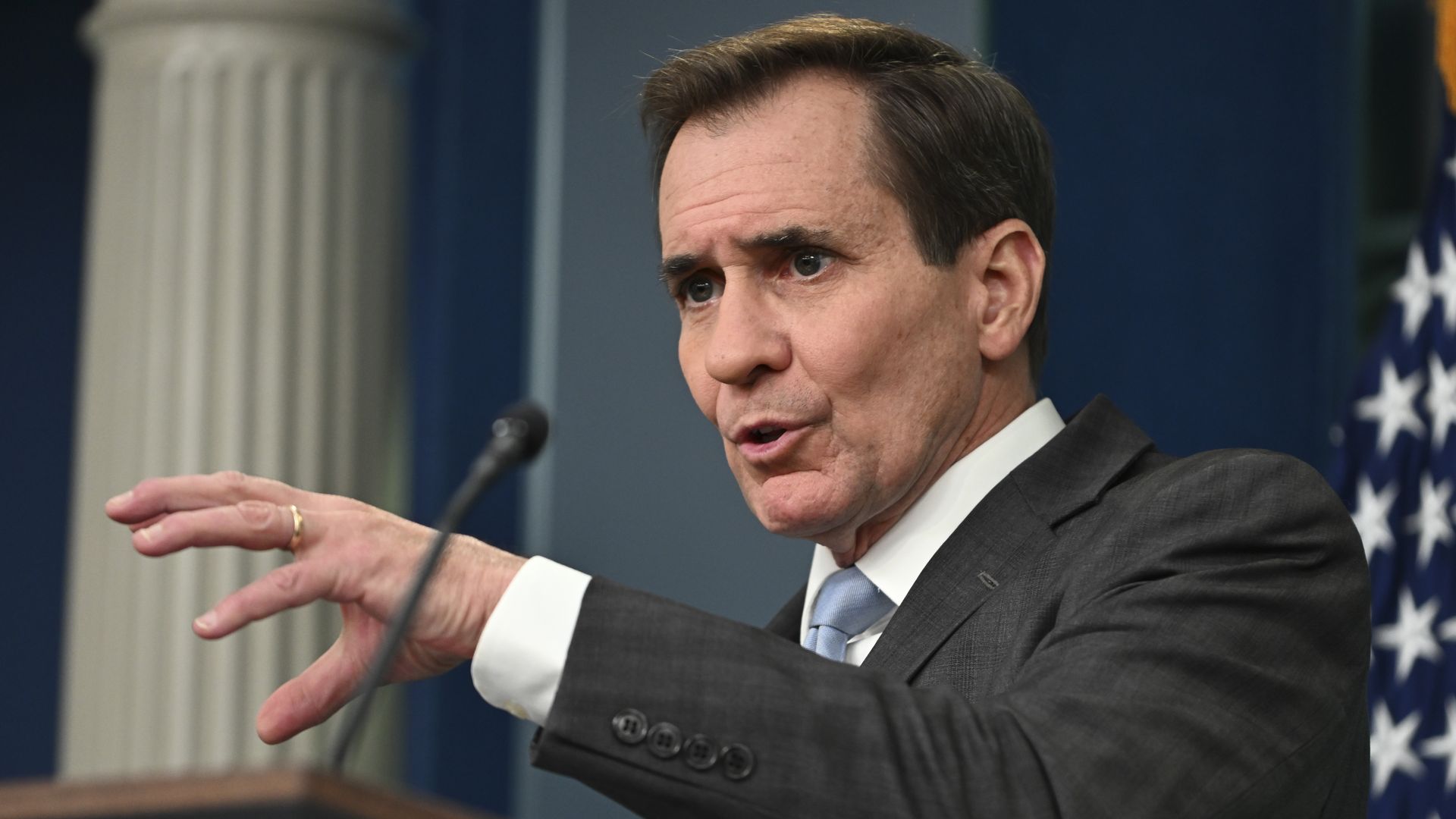
White House spokesperson John Kirby speaks during a press briefing on Feb. 27. Photo: Roberto Schmidt/Getty Images
The Biden administration on Tuesday said it opposes sanctions being pushed by Republicans in Congress against the International Criminal Court in response to its prosecutor's decision to seek arrest warrants against Israeli leaders over the war in Gaza.
Why it matters: The White House and the State Department have been conducting consultations with Republicans and Democrats in the House and the Senate over possible action against the ICC.
- Republicans are pushing for tough U.S. sanctions against the prosecutor and other ICC officials, but Democrats want to explore other options.
Driving the news: At a Senate hearing last week, Secretary of State Antony Blinken signaled the Biden administration would support bipartisan action in Congress against the prosecutor of the ICC.
- But on Tuesday, White House spokesperson John Kirby said in a briefing with reporters that sanctions were "not the right answer" to deal with the ICC arrest warrants and added the administration opposes that approach.
- White House press secretary Karine Jean-Pierre, who spoke after Kirby, reiterated that message and said legislation against the ICC "is not something the administration is going to support."
- "Sanctions on the ICC are not an effective or appropriate tool to address U.S. concerns. We will work with Congress on other options to address the ICC overreach," she said.
Between the lines: Kirby's comments threaten to create a rift with House Republicans, who have expressed a rare desire to work with Biden to ensure a response to the ICC is passed into law.
- House Speaker Mike Johnson (R-La.) said on a post on X on Tuesday: "The ICC should clearly be sanctioned for its outrageous and unfounded claims of authority. The White House's refusal to protect Israelis and Americans is a terrible decision that will set a dangerous precedent."
- House Foreign Affairs Committee Chair Michael McCaul (R-Texas), however, told reporters last week, "We want this to be signed into law, we don't it to be a messaging bill. Otherwise, we have no deterrence against the ICC."
- Pro-Israel lawmakers in both parties have expressed support for sanctions, but others — even some who have harshly criticized the ICC — have voiced reservations about the idea.
