Schumer corners House GOP on January government shutdown

Add Axios as your preferred source to
see more of our stories on Google.
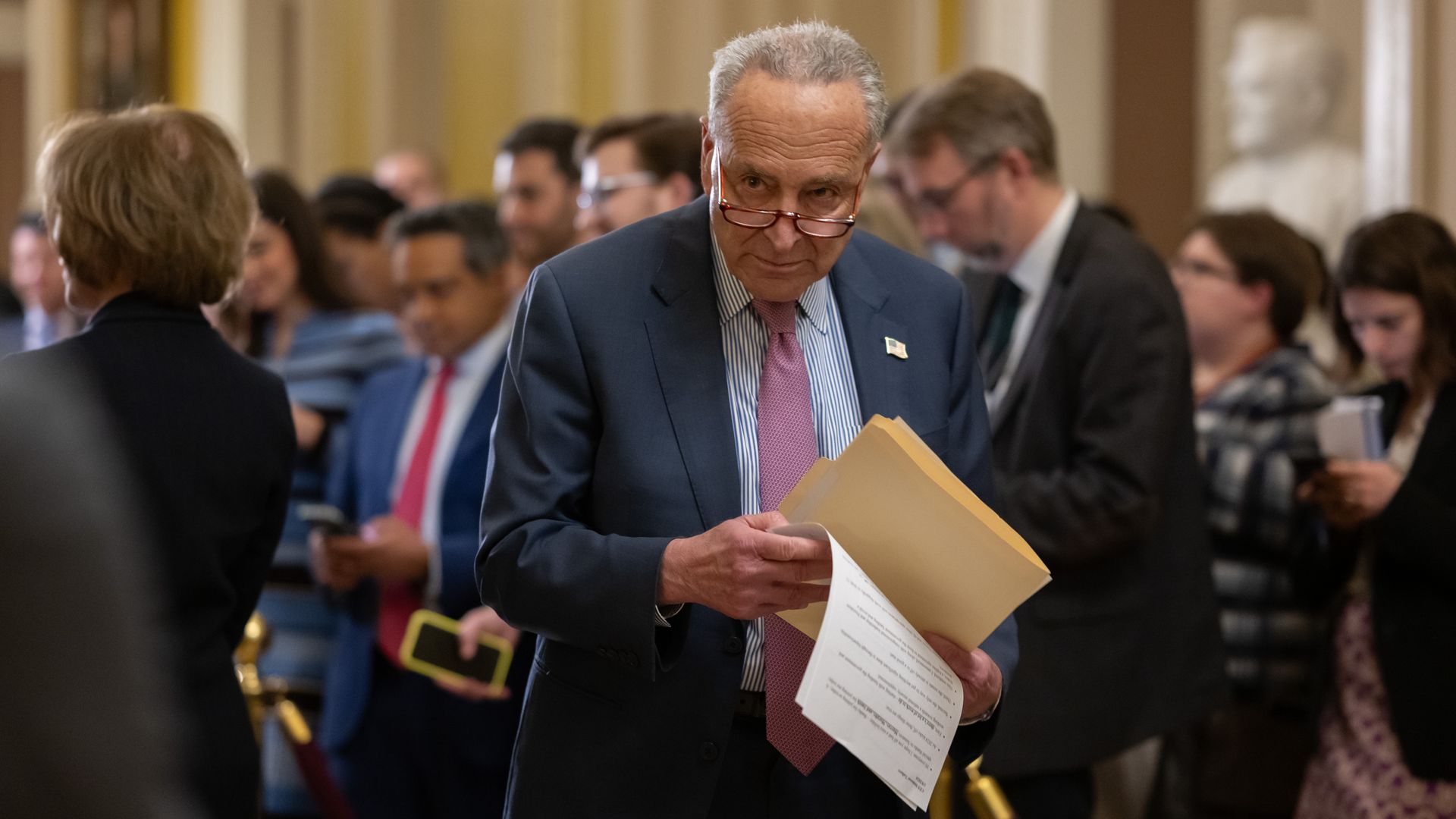
Senate Majority Leader Chuck Schumer. Photo: Craig Hudson/Bloomberg via Getty Images.
Senate Majority Chuck Schumer (D-N.Y.) on Thursday teed up a Senate vote on legislation to extend federal spending past the Jan. 19 funding deadline.
Why it matters: The move puts pressure on House Speaker Mike Johnson (R-La.) to act to avoid a government shutdown despite his past pledges not to pass another stopgap and growing rebelliousness from his right flank.
Driving the news: In a floor speech on Thursday, Schumer said he will file cloture on a spending stopgap called a continuing resolution (CR), setting up a likely final vote on the measure by early next week.
- "Unfortunately, it has become crystal clear that it will take more than a week to finish the appropriations process," Schumer said, adding that "the vast majority of us are all on the same page that a government shutdown would be a recipe for chaos."
- It is unclear how long the CR would keep the government funded and whether it would maintain the "laddered" approach of the last CR, which funded a handful of government agencies until Jan. 19 and the rest until Feb. 2.
- Schumer's move was first reported by Punchbowl News.
The backdrop: Schumer and Johnson reached a deal over the weekend on overall government spending levels for annual appropriations bills, but it will take considerable time to write and pass those bills.
- Compounding matters for Johnson is that many of his most right-wing members are up in arms about the deal, and have proven willing to force a stoppage on other legislation in protest.
- Those same members have advocated allowing a government shutdown unless Senate Democrats approve House GOP legislation re-instituting Trump-era border policies.
Between the lines: Schumer isn't the only one putting pressure on Johnson to acquiesce and pass a CR.
- Leading Senate Republicans have acknowledged the likely need for a CR, as have some House Republicans who say the Senate's slowness is the main culprit.
