Banks' unrealized losses grew in the third quarter

Add Axios as your preferred source to
see more of our stories on Google.
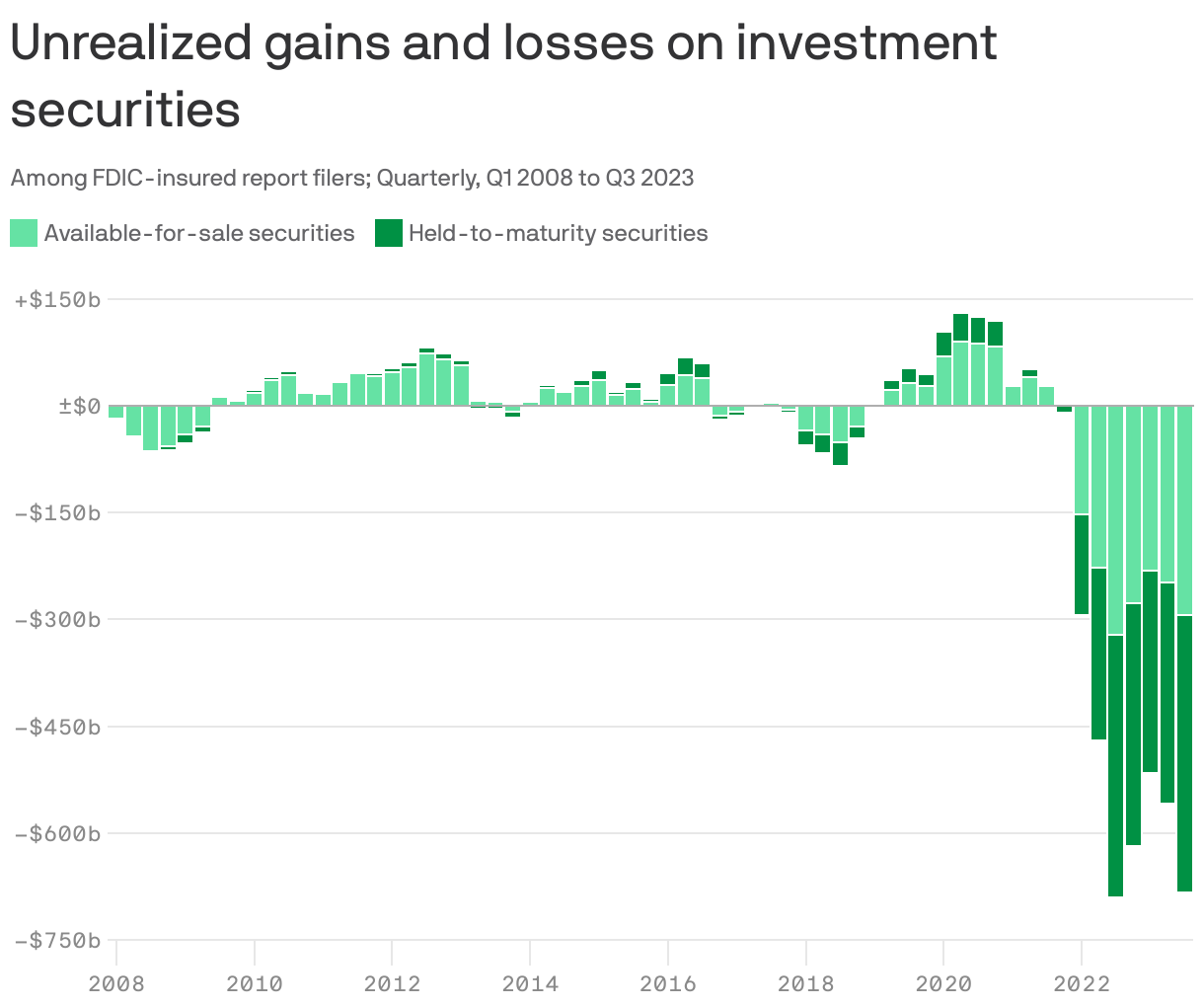
The FDIC on Wednesday released its third-quarter update on the state of the nation's banks, showing growing theoretical losses on bank stockpiles of bonds.
Why it matters: Such potential losses were at the heart of the collapse of Silicon Valley Bank, which sparked a weekslong quasi-financial panic earlier this year.
The big picture: The banking system is healthy, with high and stable profits and solid scores on the performance of most kinds of outstanding loans.
But, but, but: The surge in interest rates — which pushes down the value of fixed-income securities — continued to inflict (largely theoretical) losses through Q3.
- FDIC-insured banks reported unrealized losses — essentially the difference between the price they paid for bonds in their investment portfolio and the current market price for those securities — of $684 billion in the third quarter.
Be smart: The banks don't have to actually realize the losses on their balance sheets unless they sell the bonds.
- That's basically what Silicon Valley Bank was forced to do when it needed to raise cash this past spring, leading to its collapse.
Where it stands: The Fed launched new programs after SVB's failure, to drastically reduce the risk that the unrealized losses would lead to more bank collapses.
