Australia and New Zealand reopen after coronavirus cases plummet

Add Axios as your preferred source to
see more of our stories on Google.


AUCKLAND, New Zealand — Australia and New Zealand are reopening their economies from coronavirus constraints and are on track to share a "COVID-safe travel zone" within weeks.
Why it matters: New Zealand is ending some of the world's toughest lockdown measures this week, after eliminating community spread. Australia is on course to suppress the virus and remove all domestic restrictions by July.
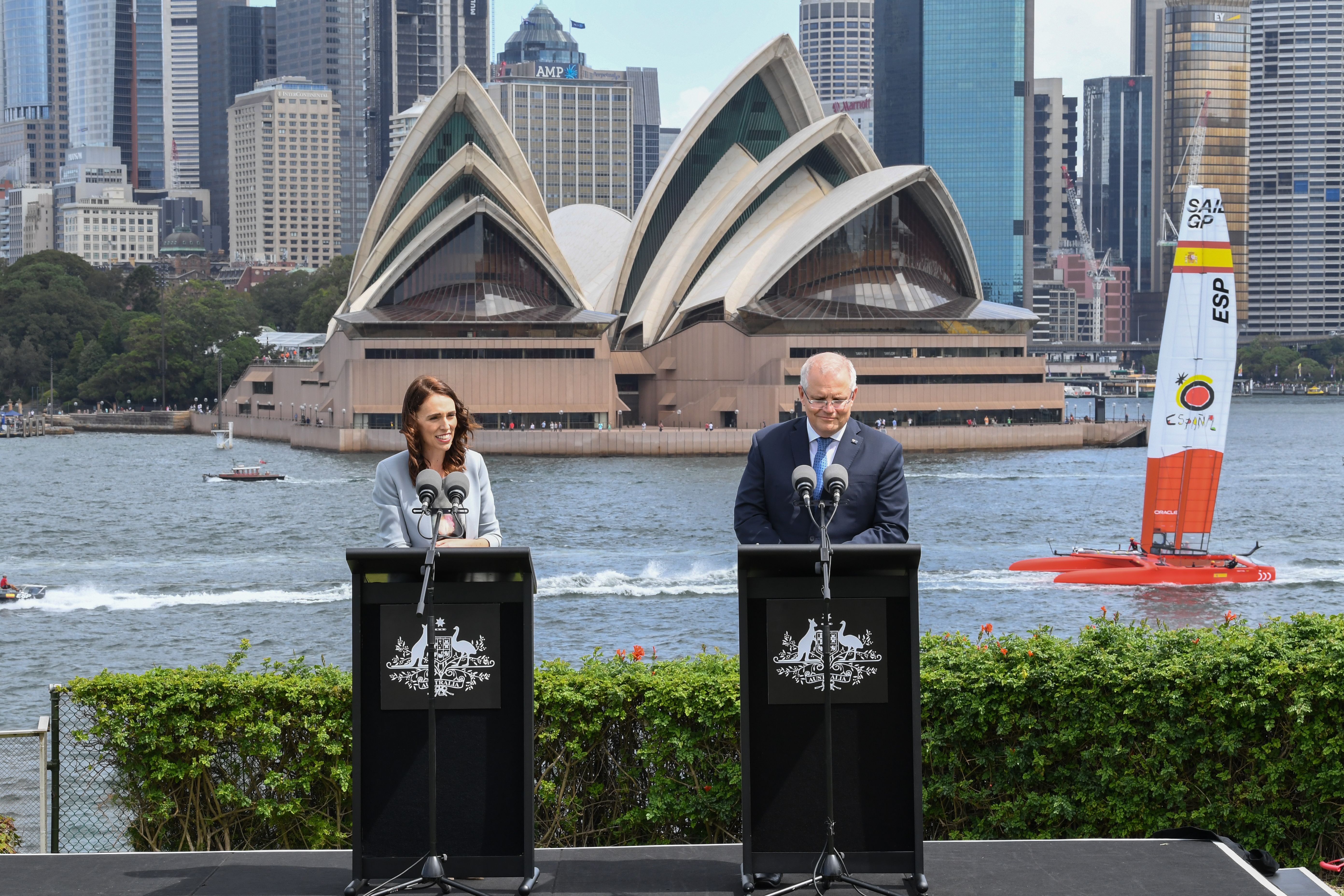
What they're saying: "If we wish to reclaim the ground we have lost, we cannot be too timid," Australian Prime Minister Scott Morrison said on May 8, announcing a three-step plan to reopen the economy "in a COVID-safe way."
- "We went hard and we went early. We got control of the virus, and now we're in a position where we can safely step out of those controls and open our economy back up," New Zealand Prime Minister Jacinda Ardern said on May 11.
What's happening: Australian retail re-started on May 4 and school resumed May 8 following weeks of single-digit or zero daily cases.
- On May 13, New Zealand starts a monthlong gradual relaxation of restrictions, with retailers and restaurants among the first to reopen.
Between the lines: Conservative Morrison and progressive Ardern are drawing on the two countries' close economic and diplomatic ties to develop plans that benefit both nations.
- A priority is reopening borders to each other within six weeks, said Shaun Hendy, who heads a scientific body advising the New Zealand government.
- A Kiwi rugby team is in quarantine in Australia as the test case. The season resumes May 28.
- The "travel bubble" could expand to coronavirus-free South Pacific island nations in July, but borders won't fully reopen for some time, Hendy said.
By the numbers: In Australia, COVID-19 has killed 97 people and infected more than 6,900, with over 855,000 of the population of 25.6 million tested.
- New Zealand has reported 21 deaths, over 1,100 cases and tested more than 197,000 of the population of 4.9 million.
- In the U.S., the virus has killed over 82,300 people and infected more than 1.36 million, with 9.6 million tested.
The big picture: Australia introduced restrictions on March 23 and New Zealand entered the highest tier of a four-level lockdown two days later.
- Both countries advise people not to wear face masks in public unless sick.
- New Zealand and Australia have among the highest testing and lowest death rates.
- Australia has begun the mass roll-out of a contact-tracing app based on Singapore's model, which New Zealand is adopting.
Threat level: Australia’s Treasury forecasts restrictions would cause unemployment to double to 10% and the economy to shrink 10% in Q2.
- Australia and New Zealand Banking Group expects New Zealand's unemployment to increase to 11% and GDP to be 8%-10% lower this year.
- Morrison announced two stimulus measures totaling $189 billion to soften the blow. New Zealand released a $12.1 billion package and announced a $50 billion rescue fund on May 14.
- "The economic impacts if we didn’t get on top of this would likely have been much worse," ANZ economist Liz Kendall said.
Situational awareness: "The U.S. is talking about opening up, and from our perspective, we would say that’s far too early," Hendy said. "We're going to be doing it with the luxury of just a handful of cases that we can very much link."
- Hendy attributes their success to testing capacity, contact-tracing and getting "on top of the disease before you unlock."
- "Then you won’t have to put your economy at risk by having to lock down again or simply having the disease do damage to your economy," Hendy said.
The bottom line: Allen Cheng, an epidemiology professor at Melbourne's Monash University, told Axios while the measures worked, the issue now is "how to maintain sustainable suppression while mitigating all the social and economic damage that lockdowns have caused."
Go deeper: Midnight race for a haircut as New Zealand barbers reopen from lockdown
Editor's note: This article has been updated with details of the NZ rescue fund.
