President Trump's decision to yank the U.S. from UN climate change agencies will set back international progress on addressing the climate, observers say.
Why it matters: The U.S. is the world's second-largest emitter of greenhouse gases after China and provides much of the scientific heft addressing the problem.
Sens. Todd Young (R-Ind.) and Maria Cantwell (D-Wash.) on Thursday will introduce legislation to reauthorize the National Quantum Initiative for five years, according to a bill summary shared first with Axios.
Why it matters: The program is meant to boost quantum research and development — which experts say could lead to scientific breakthroughs and keep the U.S. globally competitive — but Congress let it expire in 2023.
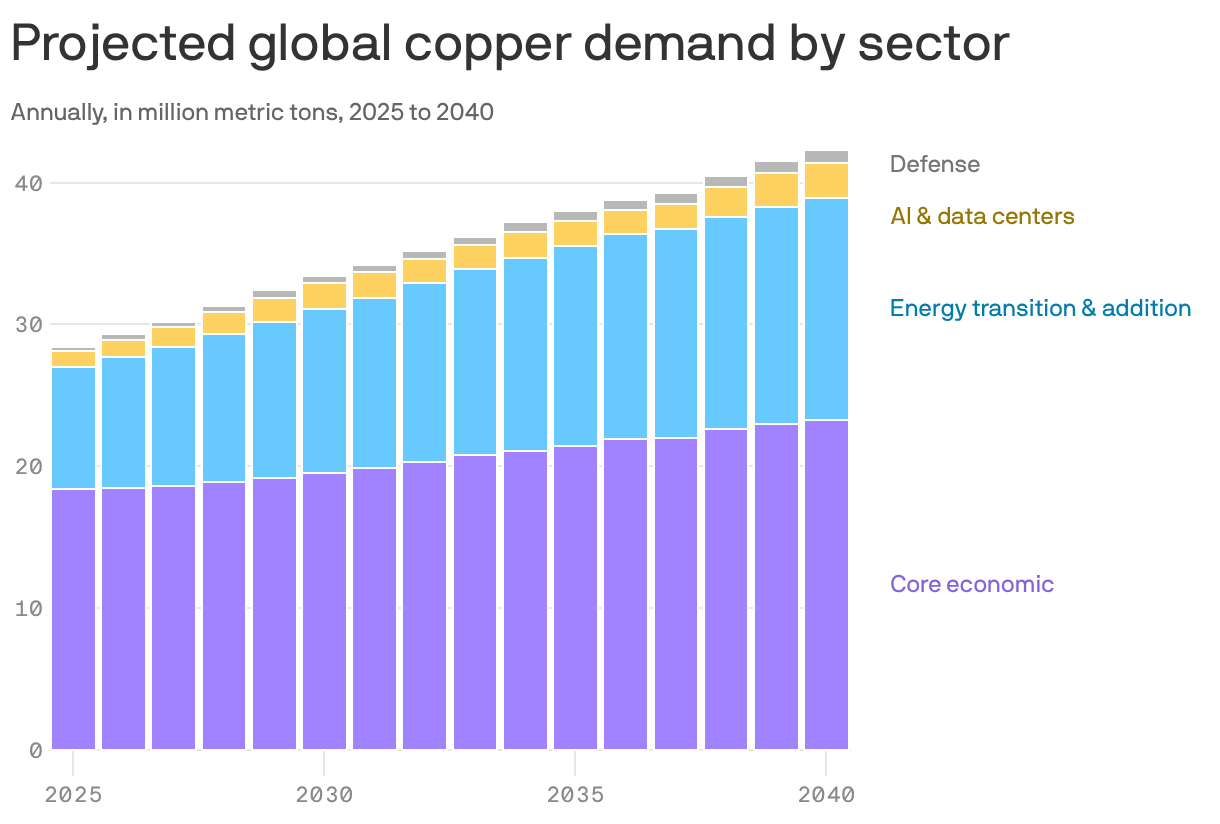
Data: S&P Global; Note: "Core economic" includes construction and fossil power generation; Chart: Axios Visuals
AI and military needs could worsen what's already shaping up as a looming copper supply gap in coming decades, new analysis finds.
Why it matters: Copper supply is foundational to energy transition including EVs and renewables — even as traditional uses like construction and machinery grow, as you can see above.
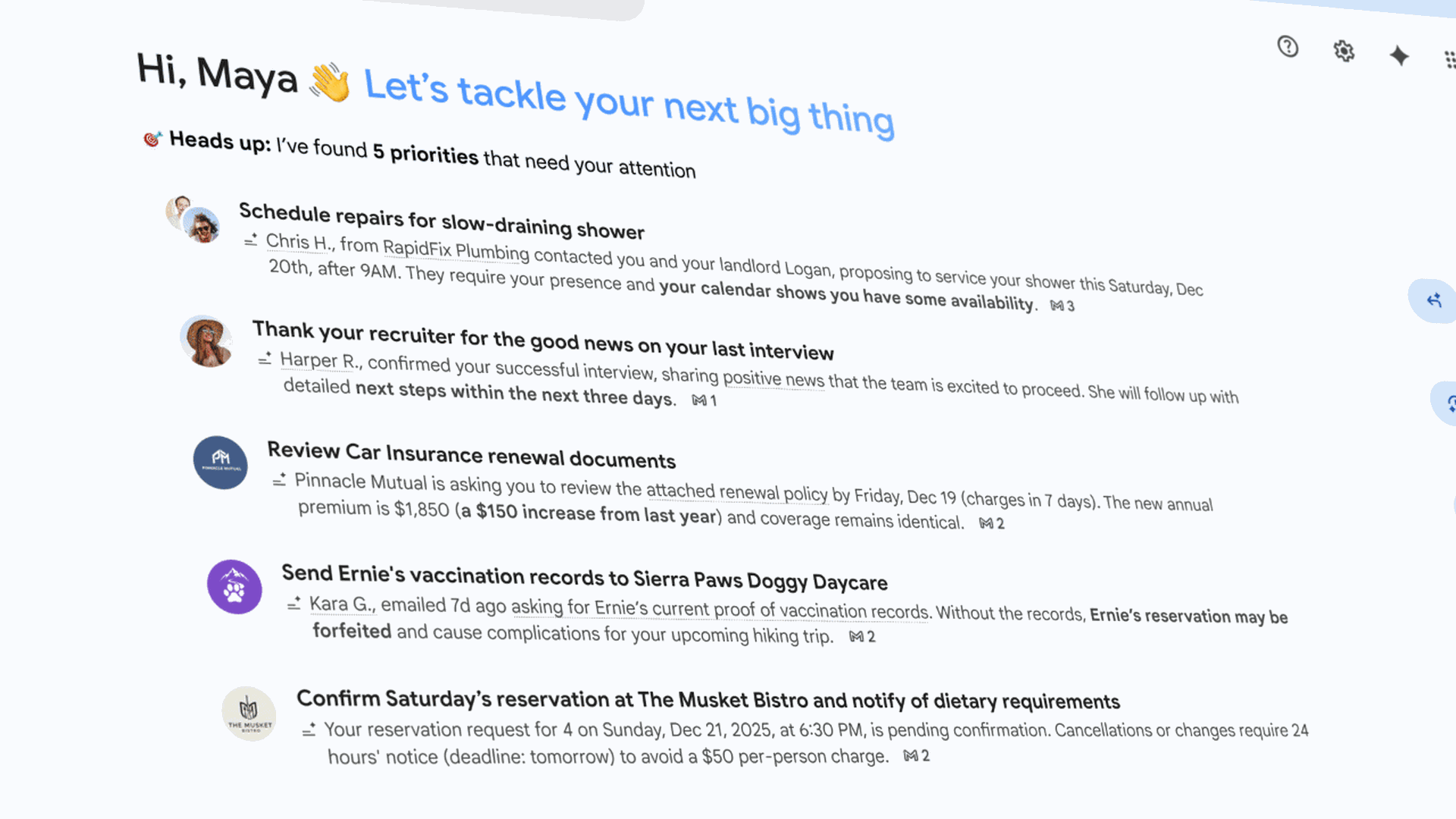
Google is giving Gmail a big AI boost with a built-in proofreader, an automated summary of long e-mail threads and an "AI Inbox" that plows through your e-mail to suggest tasks that need follow-up.
Why it matters: The new features are part of an effort to make finding information in e-mail more like talking with a chatbot.
Character.AI and Google have agreed to settle multiple lawsuits brought by families of teens who harmed themselves or died by suicide after interacting with Character.AI's chatbot online, per court documents made public this week.
Why it matters: The settlements would mark the first resolutions in the wave of lawsuits against tech companies whose AI chatbots encouraged teens to hurt or kill themselves.