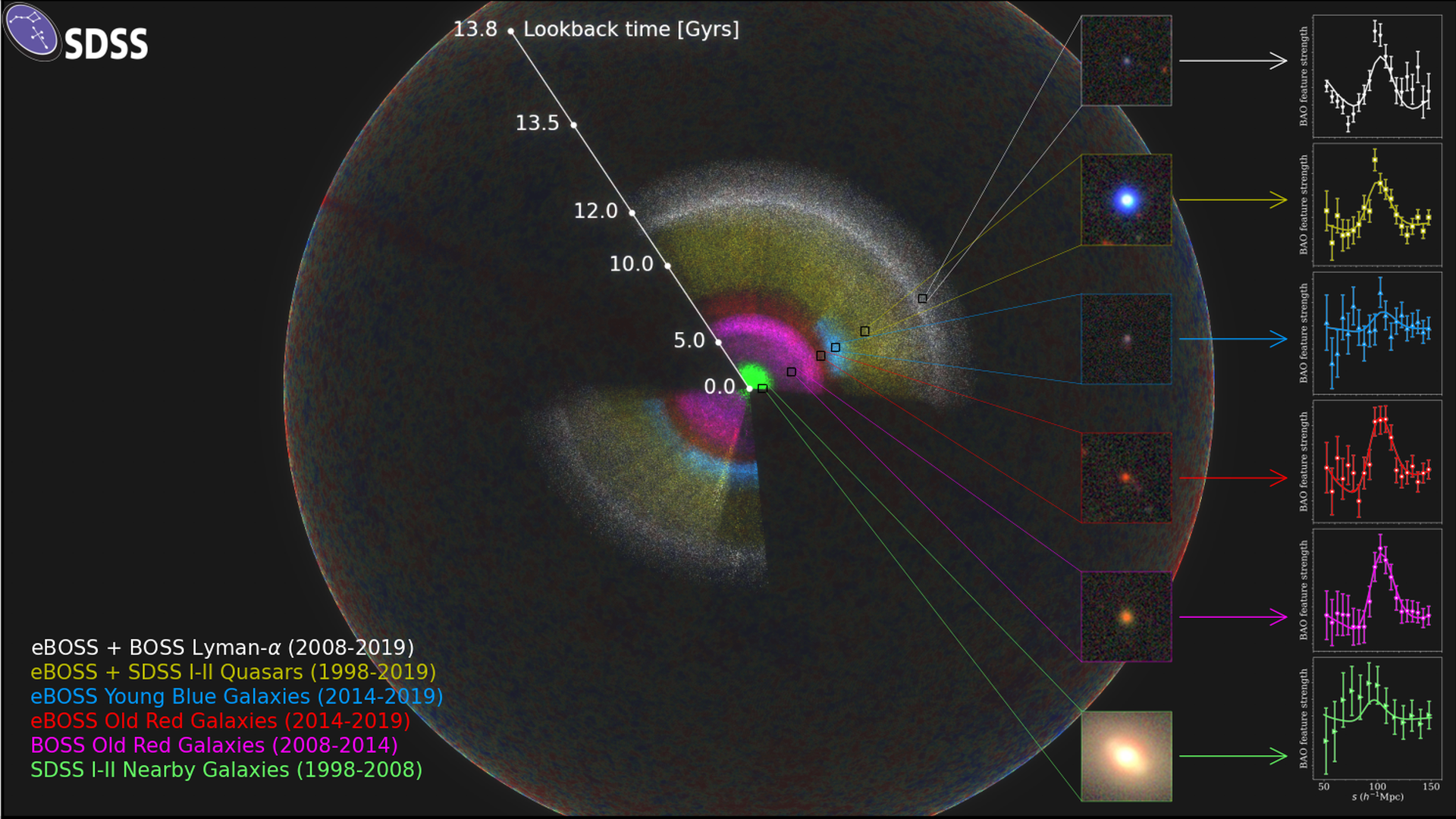
A new, sweeping analysis fills in 11 billion years of the history of our universe in unprecedented detail.
The big picture: Previous studies have illuminated the very earliest days of the universe and others have detailed the cosmos' more recent history, but until now, there's been an 11 billion year gap in knowledge of our roughly 13.8 billion year old universe.
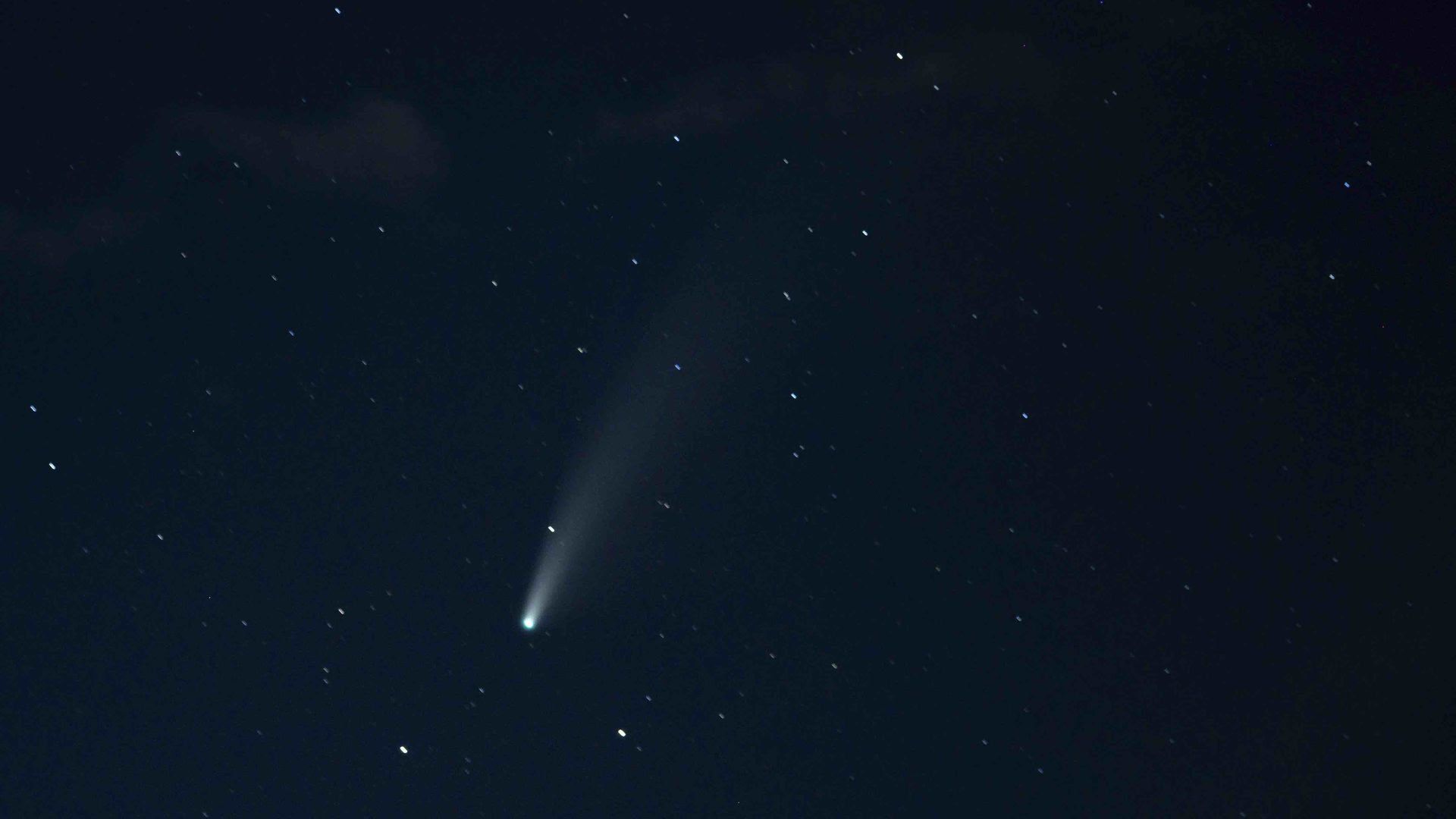
The new comet gracing skies in the Northern Hemisphere provides scientists with an opportunity to learn more about these mysterious, icy objects from relatively close range.
Why it matters: Comets are thought to be leftovers from the dawn of the solar system. Learning more about their nature could help scientists piece together answers about how our part of space formed and even how water was delivered to Earth billions of years ago.
This was supposed to be the year for the space industry, but the ambitious plans of companies and agencies are threatened by the pandemic and its economic fallout, exacerbating the growing pains of a promising industry.
Why it matters: The U.S. has historically dominated the global space industry, which some have projected could be worth up to $1 trillion by 2040. Delays and setbacks can come at a huge cost — both financially and symbolically — in the global space race.