NASA's head of human spaceflight, Doug Loverro, has resigned from his position at the space agency.
Why it matters: Loverro's resignation comes only a week before SpaceX is expected to launch a pair of NASA astronauts to the International Space Station, marking the first crewed launch from the U.S. since 2011.
Astronomers have found the heartbeat powering a class of pulsating stars in deep space for the first time.
Why it matters: The stellar heartbeats were detected using data from NASA's TESS spacecraft, which is designed to hunt for alien planets circling distant stars. The new discovery shows TESS' versatility and the spacecraft's ability to shed light on more than just far-off worlds.
Comets are fickle cosmic beasts. Many are beautifully bright hundreds of millions of miles from the Sun before breaking apart as they get closer to the star.
What's new: The Hubble Space Telescope caught a rare glimpse as Comet ATLAS broke apart at the end of April.
Two people — NASA astronauts Doug Hurley and Robert Behnken — are about to risk their lives in the name of bringing human spaceflight back to the U.S.
Why it matters: The first crewed SpaceX launch on May 27 is a huge moment for NASA and the U.S. as a whole. When the final test launch takes off, Hurley and Behnken are the ones taking on most of the immediate risk in this historic moment.
NASA is trying to keep its people and the public on the ground safe during the historic launch on May 27 to the International Space Station in the midst of the coronavirus pandemic.
Why it matters: Thousands of people have shown up on Florida's beaches up and down the Space Coast to watch crewed launches in the past. For this historic launch — which will mark the first time astronauts take flight from U.S. soil since the end of the space shuttle program in 2011 — NASA would typically expect more.
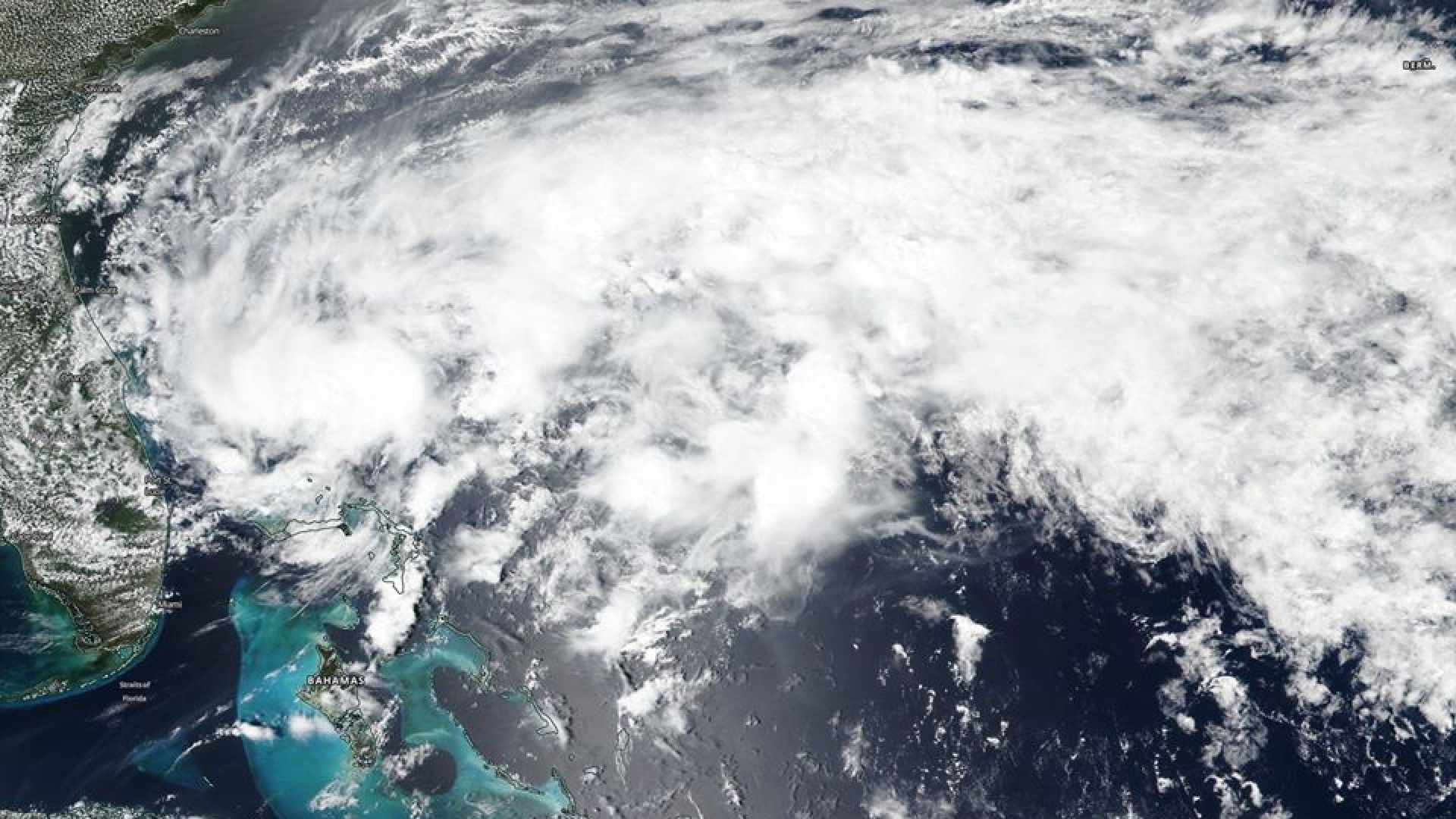
Tropical Storm Arthur lashed North Carolina's Outer Banks with heavy rain before moving out to sea Monday, but its effects could cause "dangerous rip currants" on the U.S. East Coast for at least another day, per the National Hurricane Center.
The big picture: It dumped more than 4 inches of rain on Newport and Havelock and 2 inches elsewhere, "causing some secondary roads to flood," notes AP, which reports wind gusts of "40 mph or more" were recorded in "at least two places on the Outer Banks." Arthur was the first named storm of the Atlantic hurricane season, forming off the east-central coast of Florida after strengthening from a tropical depression late Saturday, per the NHC. The season officially begins June 1.


/2020/05/19/1589907902702.gif?w=3840)