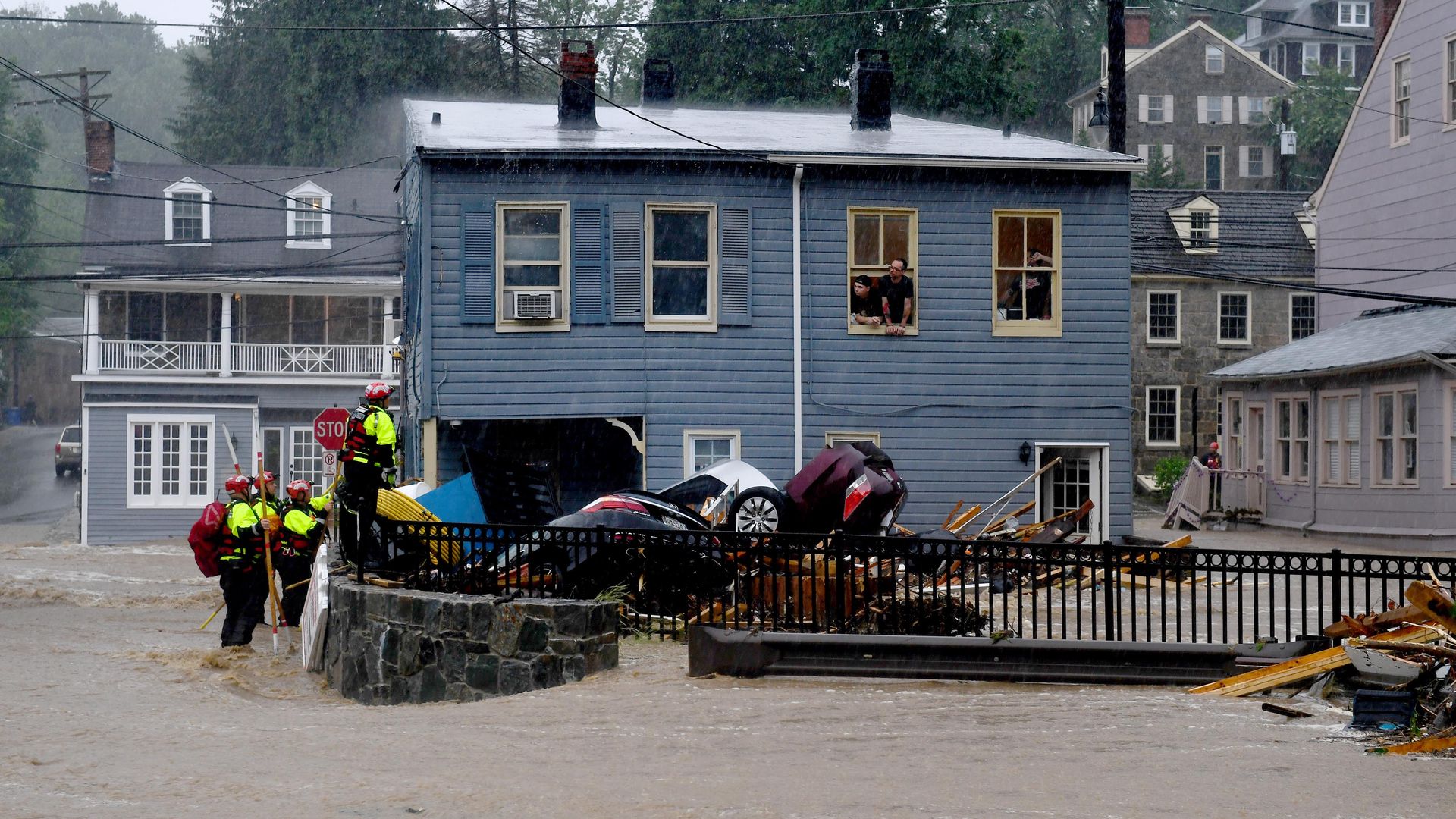
Flash flooding from a massive rainstorm rushed through Main Street on Sunday in Ellicott City, Md., which was severely ravaged by flood waters just two years ago.
Why it matters: Sunday's and 2016 flooding likely rank as greater than 1-in-1,000 year rainstorms, which means than in any given year there's just a 0.1 percent chance of them occurring, Axios science editor Andrew Freedman explains. By adding more moisture to the air available for storms, climate change is leading to a well-documented uptick in heavy rain events, particularly in the Northeast. Human development patterns are also elevating flood risk in many areas.
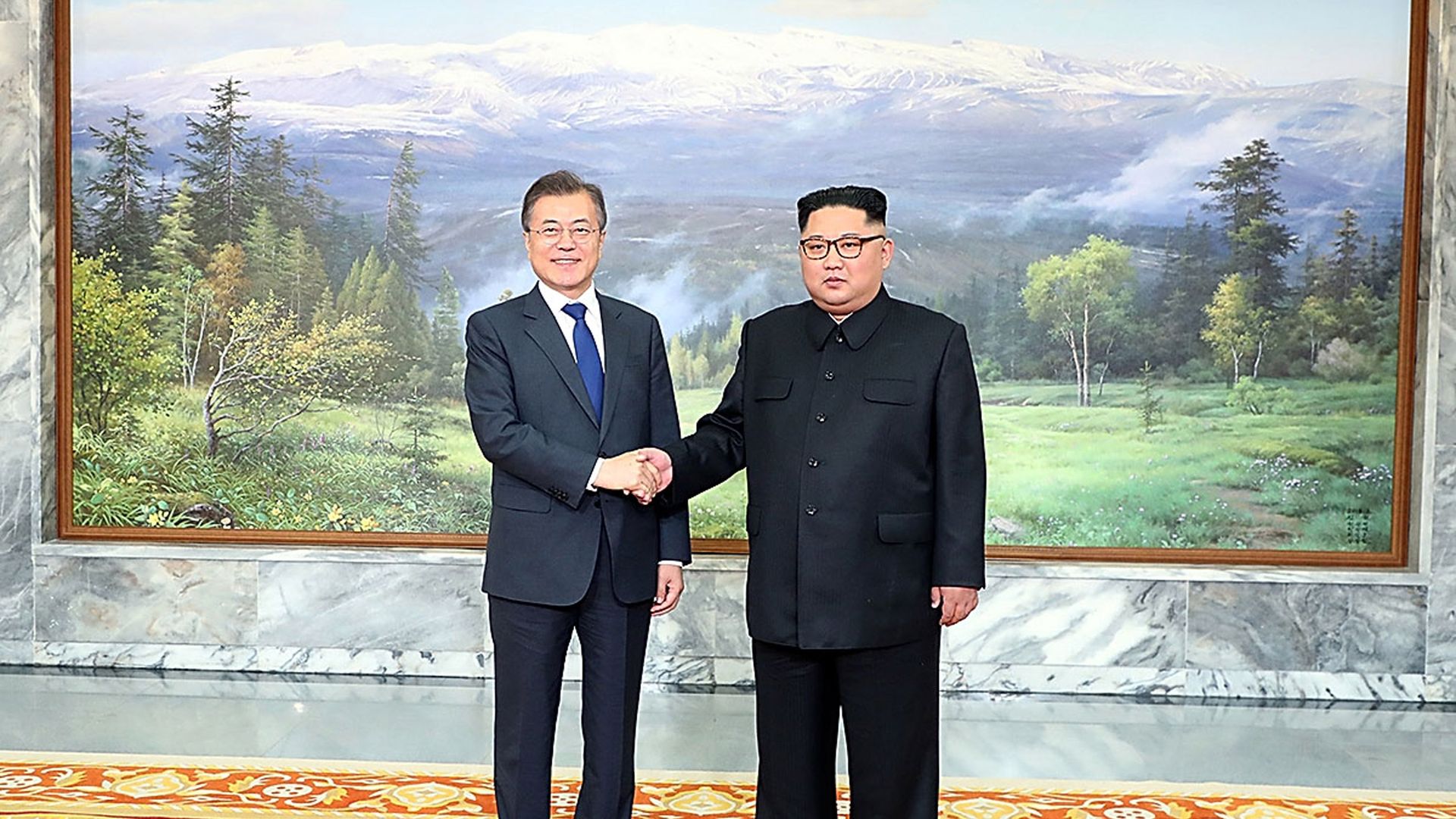
Shortly after Trump announced he was canceling the summit with Kim Jong-un — and before Trump publicly signaled the summit might still happen after all — I received a prescient email from John Park, the director of the Korea Working Group at the Harvard Kennedy School.
The big picture: Park is impeccably connected in South Korea and his email is worth reproducing in full: "[South Korean President Moon Jae-in] has initiated a very bold game plan and has assumed a lot of the risk for Kim and Trump to have their summit and produce a joint declaration. Moon needs this particular outcome to move forward with implementation of the Panmunjom Declaration — i.e. have more control over fate of the Korean Peninsula."
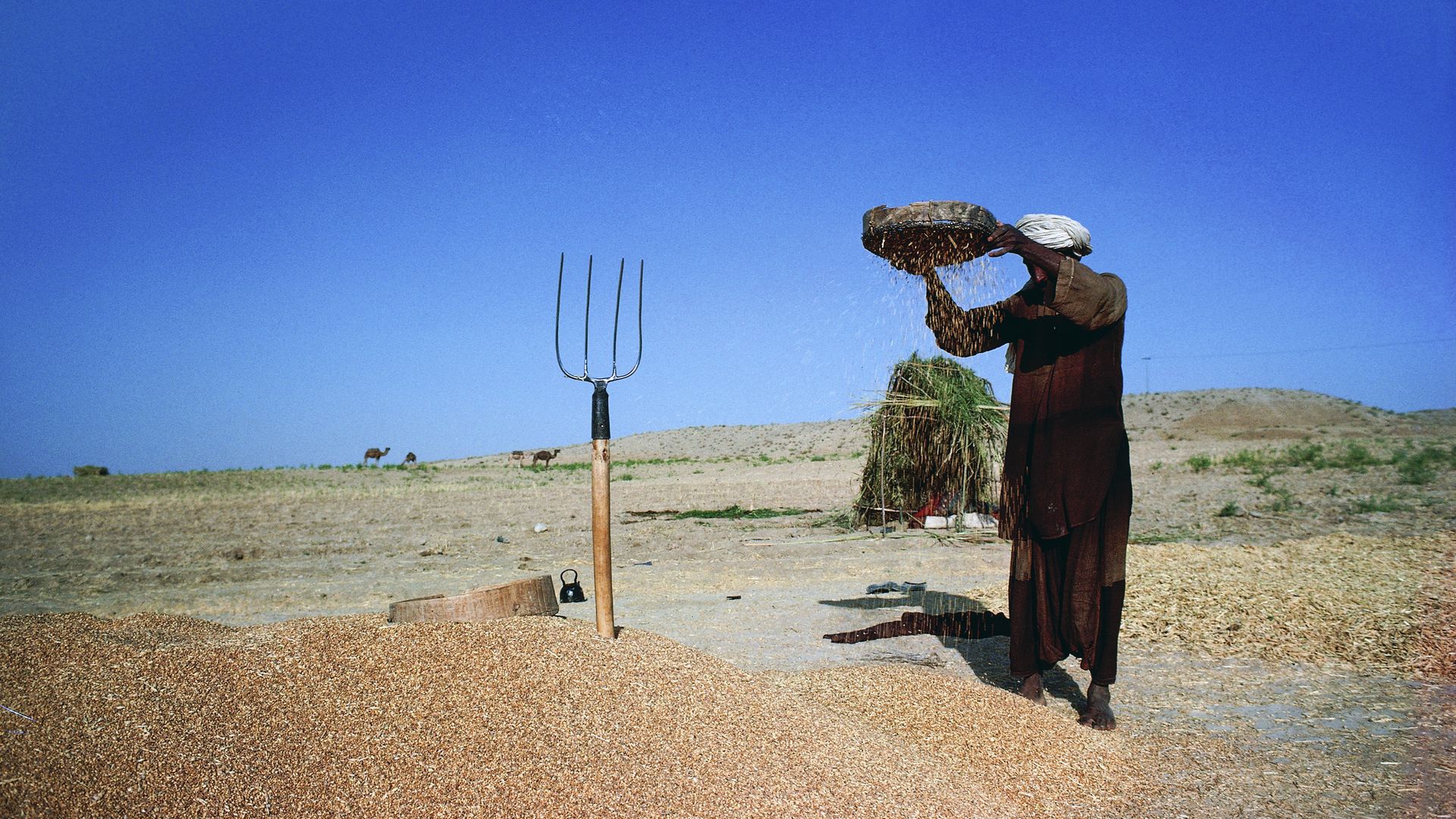
The United Nations has warned that almost two million people in Afghanistan are at risk of severe food shortages thanks to drought across two-thirds of the country, the New York Times reports.
The big picture: The U.N. reported that — in the 20 provinces most directly impacted by the drought — almost 15 million people "rely on farming, livestock or [labor] opportunities in agriculture." The U.N. is trying to collect at least $115 million to give assistance to the 1.4 million people considered most vulnerable, on top of an earlier request of $430 million for humanitarian aid. But, per the NYT, only 28% of the original request has been filled.