Saturday's science stories

NASA will either sample a comet or visit Saturn's moon Titan
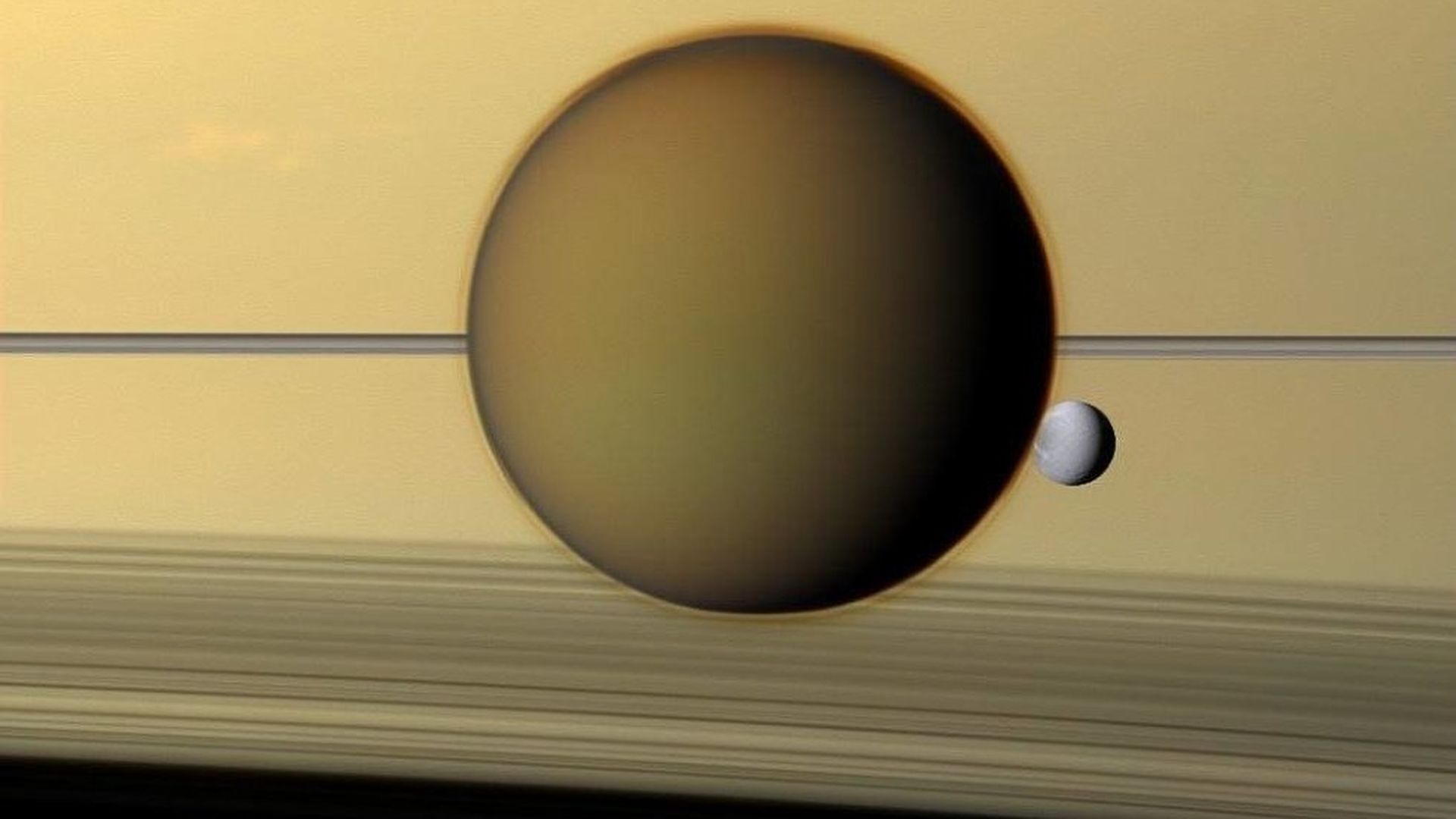
NASA has selected two finalists for the New Frontiers space program:
- The Dragonfly mission would send a drone-like lander to Saturn's methane-covered moon Titan, in search of complex chemicals that some scientists believe could form precursors for life.
- The CAESAR mission would go to the comet 67P/Churyumov-Gerasimenkom, previously visited by the Rosetta Spacecraft and Philae Lander. The goal would be to gather a sample from the comet's surface and return it to Earth in hope of eventually mining such comets for rare minerals.
Why it matters: Both concepts will receive further design funding and one will eventually launch, possibly in the mid 2020s. Thomas Zurbuchen, associate administrator for NASA's Science Mission Directorate in Washington, D.C, told Scientific American's Lee Billings, "These are tantalizing investigations that seek to answer some of the biggest questions in our solar system today."

Crowd-controlled Jupiter camera bridges science and art
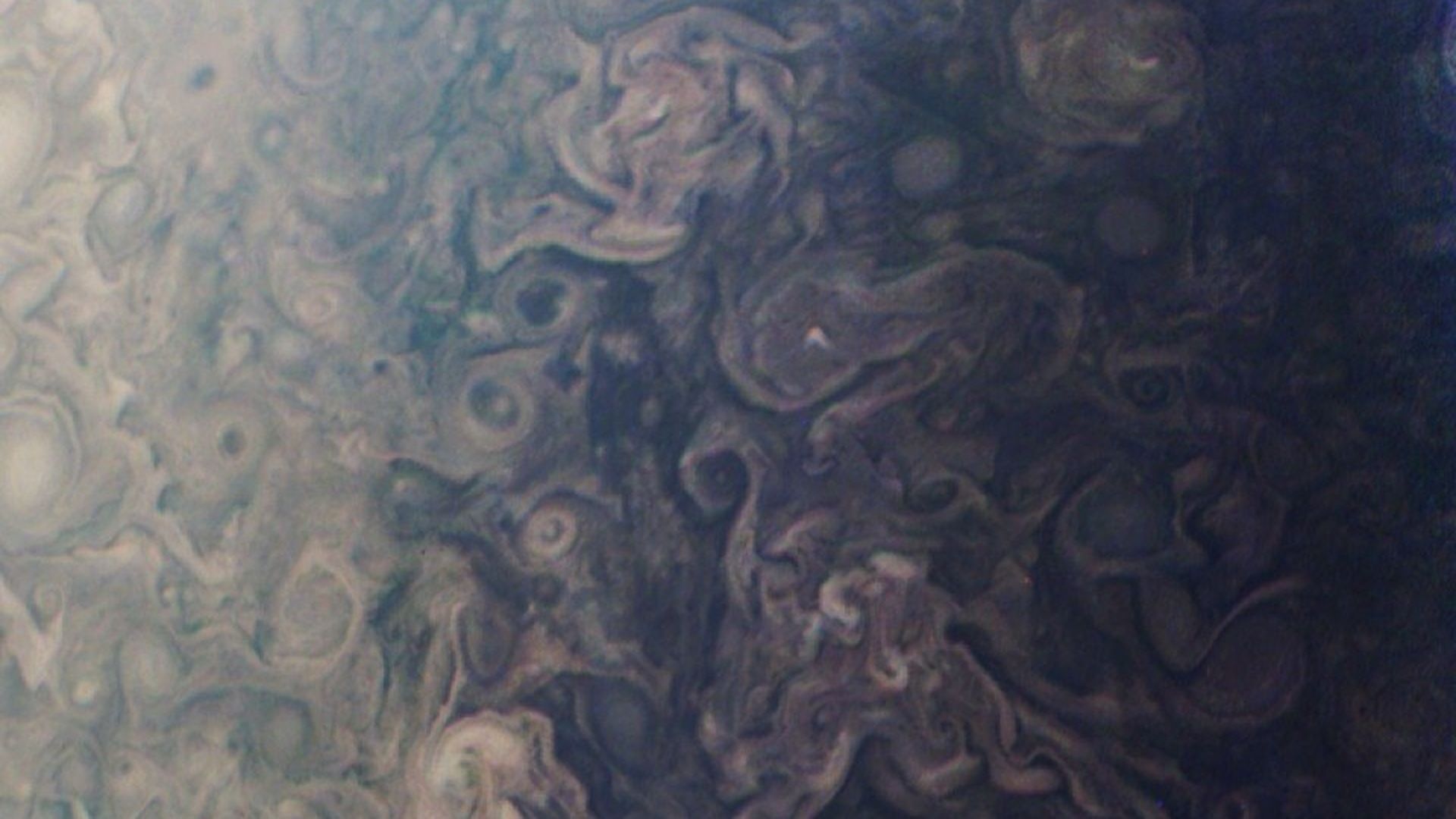
NASA's Juno spacecraft, currently in orbit around the mighty gas giant Jupiter, hosts an array of sensors designed to peer under the outermost cloudtops and gather crucial data. Since Jupiter is the most massive planet orbiting the sun, its structure and ingredients are directly tied to the formation of the solar system itself. The deeper we peer into Jupiter, the further we look into our own past.
Tucked in between the spacecraft's sophisticated instruments is a relatively low-power digital camera, JunoCam, that is controlled via crowdsourced directions. People around the world suggest and vote on its next target by selecting points of interest on global images of Jupiter using NASA-provided software, and the raw images are made freely available to both researchers — who are already using the results to study the formation and evolution of smaller storms — and the public.
One fun thing: While the camera provides rare views of Jupiter's frenzied surface, it also presents an opportunity for artists of all stripes to draw inspiration from this remote world — and some of their work is simply stunning.
Paul Sutter is a cosmological researcher at Ohio State University's Center for Cosmology and Astro-Particle Physics.