Friday's science stories

Crowd-controlled Jupiter camera bridges science and art
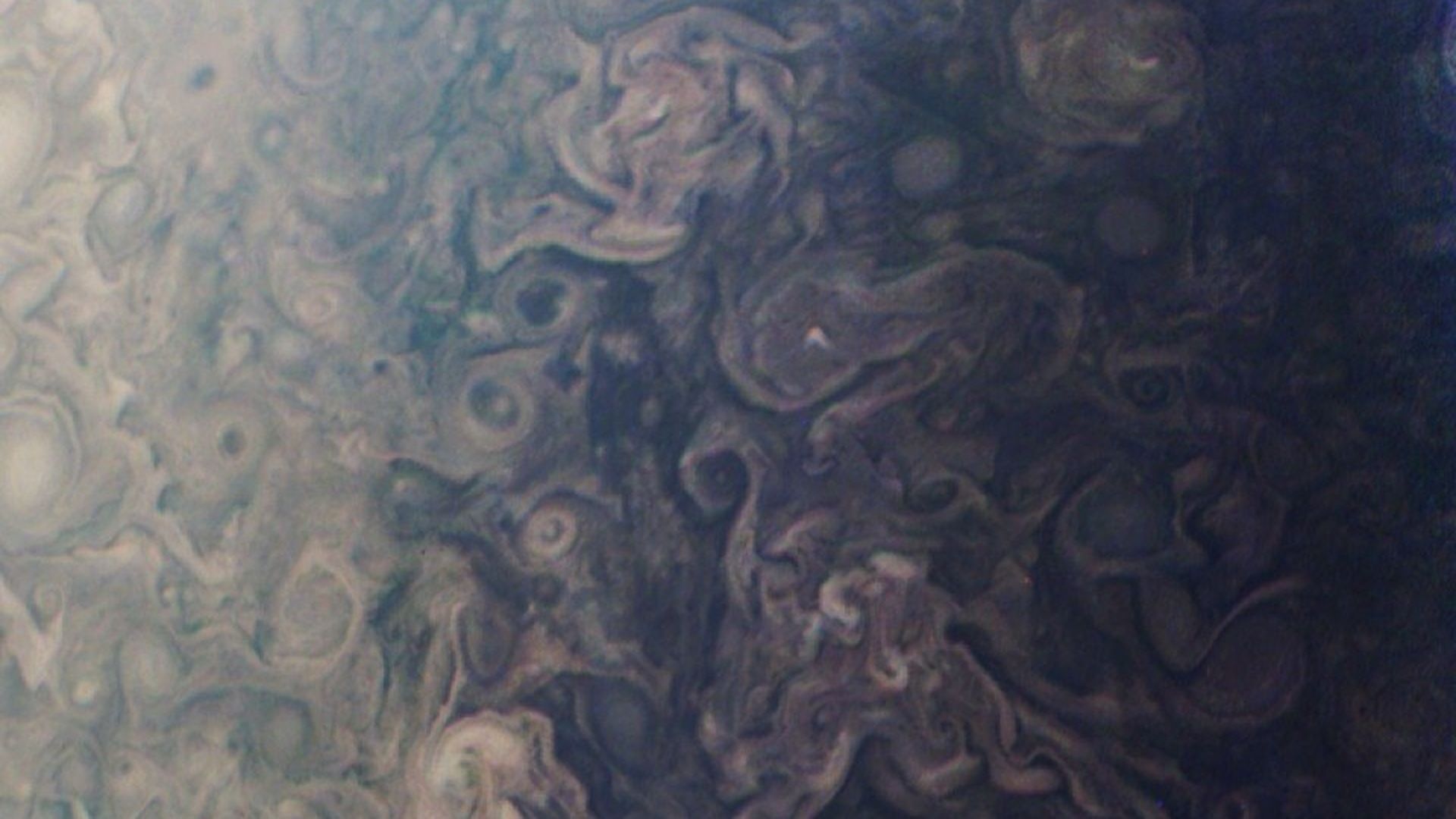
NASA's Juno spacecraft, currently in orbit around the mighty gas giant Jupiter, hosts an array of sensors designed to peer under the outermost cloudtops and gather crucial data. Since Jupiter is the most massive planet orbiting the sun, its structure and ingredients are directly tied to the formation of the solar system itself. The deeper we peer into Jupiter, the further we look into our own past.
Tucked in between the spacecraft's sophisticated instruments is a relatively low-power digital camera, JunoCam, that is controlled via crowdsourced directions. People around the world suggest and vote on its next target by selecting points of interest on global images of Jupiter using NASA-provided software, and the raw images are made freely available to both researchers — who are already using the results to study the formation and evolution of smaller storms — and the public.
One fun thing: While the camera provides rare views of Jupiter's frenzied surface, it also presents an opportunity for artists of all stripes to draw inspiration from this remote world — and some of their work is simply stunning.
Paul Sutter is a cosmological researcher at Ohio State University's Center for Cosmology and Astro-Particle Physics.

Where in the world is Mars' water?
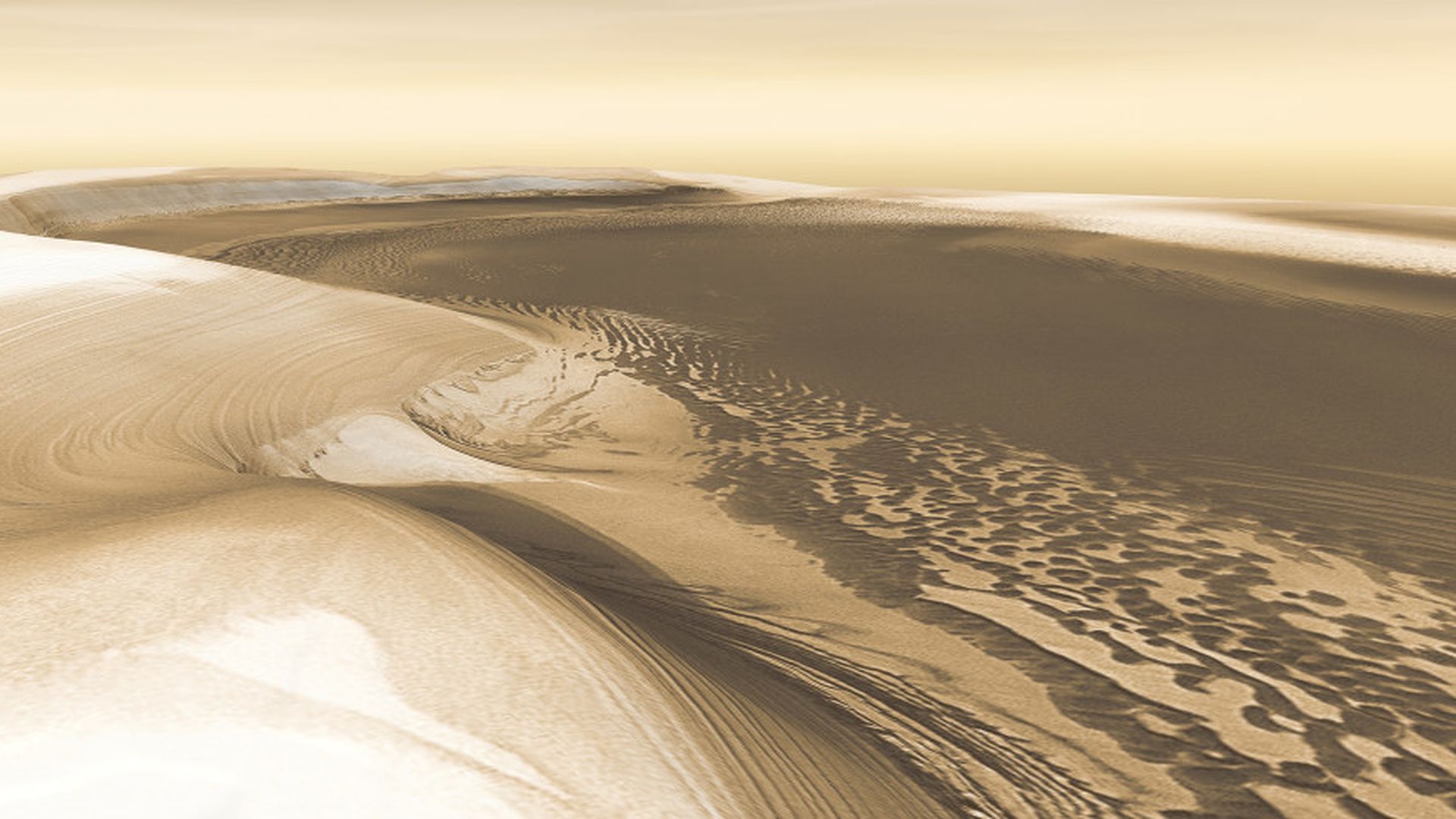
In the beginning, Mars was a water world. But at some point in Mars' distant past, much of that water disappeared, leaving behind polar ice caps and a complex geology. Figuring out just where it went has been a major priority for scientists — life as we know it can't exist without water, and any future settlers would need a steady supply.
What's new: A new study, published Wednesday in Nature, suggests that much of what remains might in inaccessible. Some went into space, but even more of it may have sunk into the ground like a sponge, only to become bound up in minerals deep within the planet. "Mars, by virtue of its chemistry, was doomed from the start," study author Jon Wade, of Oxford University, tells Axios.