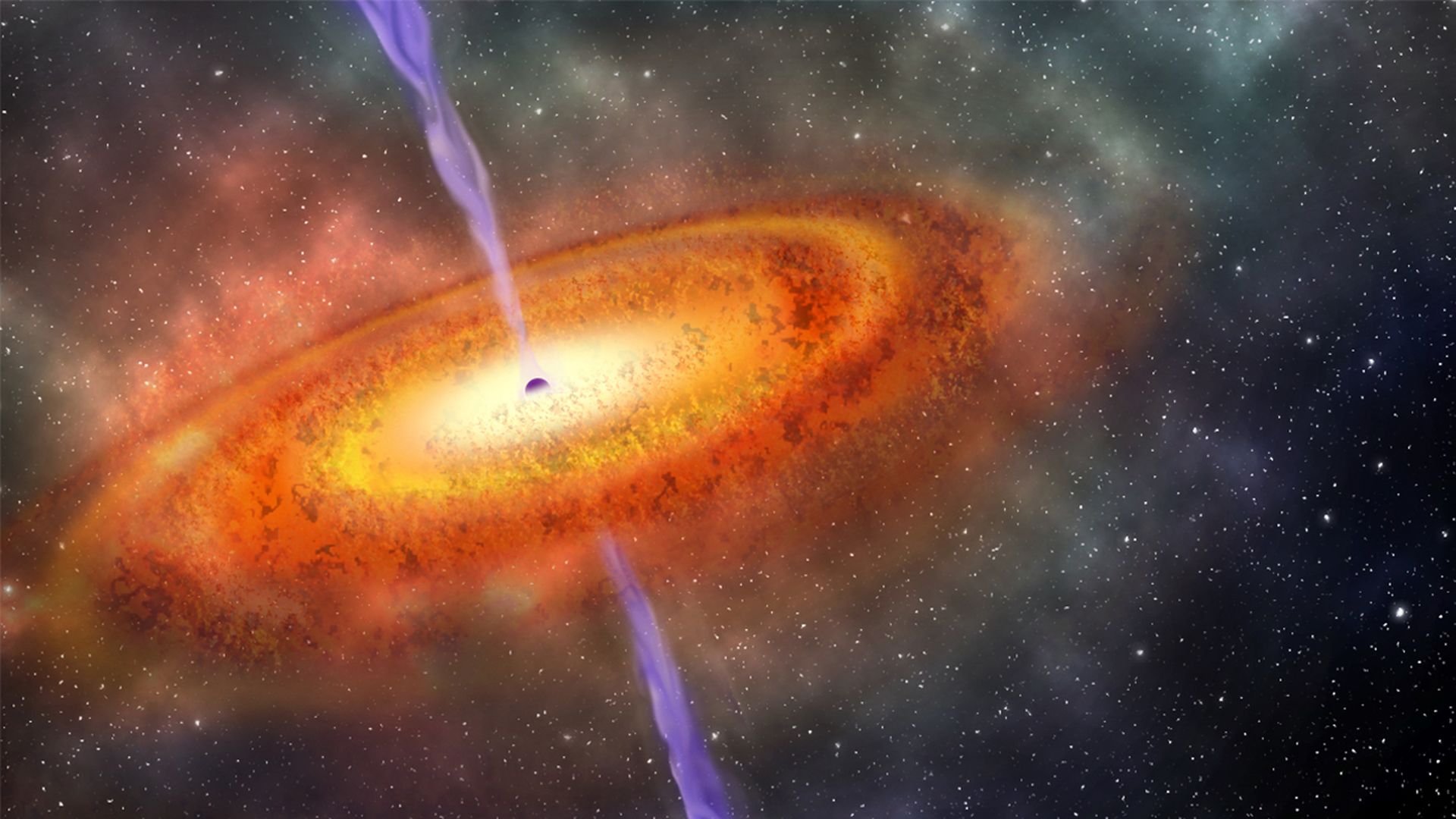
Astronomers have found a black hole with a mass 800 million times greater than that of the Sun. The finding from 690 million years after the Big Bang, reported today in the journal Nature, may help scientists to better understand the evolution of the early universe when the first galaxies, stars and elements formed.
“It was the universe's last major transition and one of the current frontiers of astrophysics," astronomer Eduardo Bañados from the Observatories of the Carnegie Institution for Science said in a press release.