Tuesday's science stories

Our galaxy's giant black hole has a smaller sibling
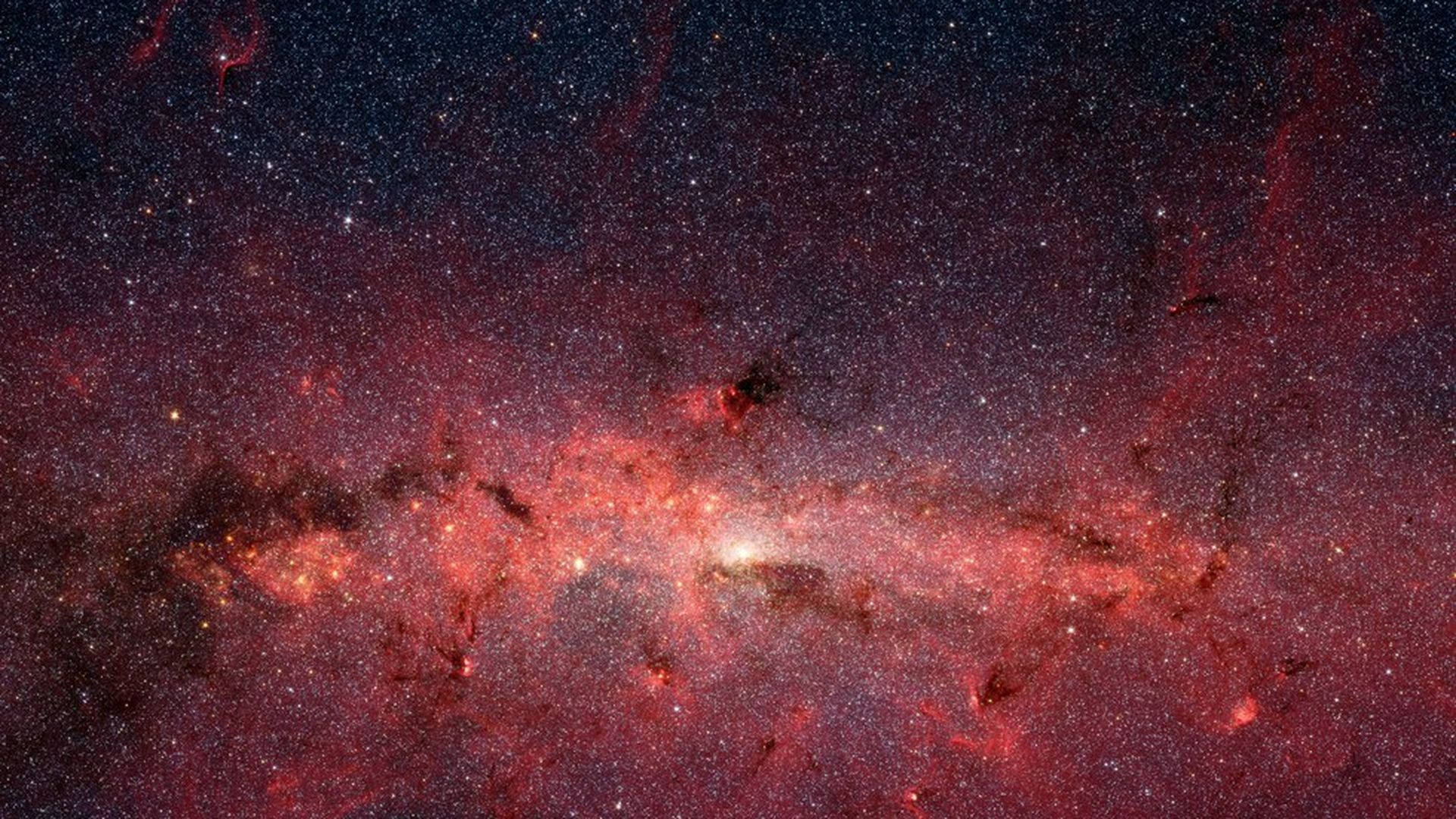
By studying the motions of a particularly dense cloud of gas, astronomers have inferred the existence of a new black hole near the center of the Milky Way galaxy. It's not confirmed yet, but it's estimated to weigh in at a whopping 100,000 times the mass of our sun.
That's big, but not the biggest — that title goes to Sagittarius A*, a supermassive black hole sitting in the middle of our galaxy that has a mass 4 million times greater than our sun.
Why it matters: This "intermediate" class of black hole provides clues to the formation of their bigger cousins. It seems that every galaxy hosts a giant black hole. How do these black holes form and grow? What's the connection between giant black holes and the evolution of their host galaxies? Having a "missing link" in our own backyard helps answer those questions.

Irma becomes an 'extremely dangerous' Category 5 storm
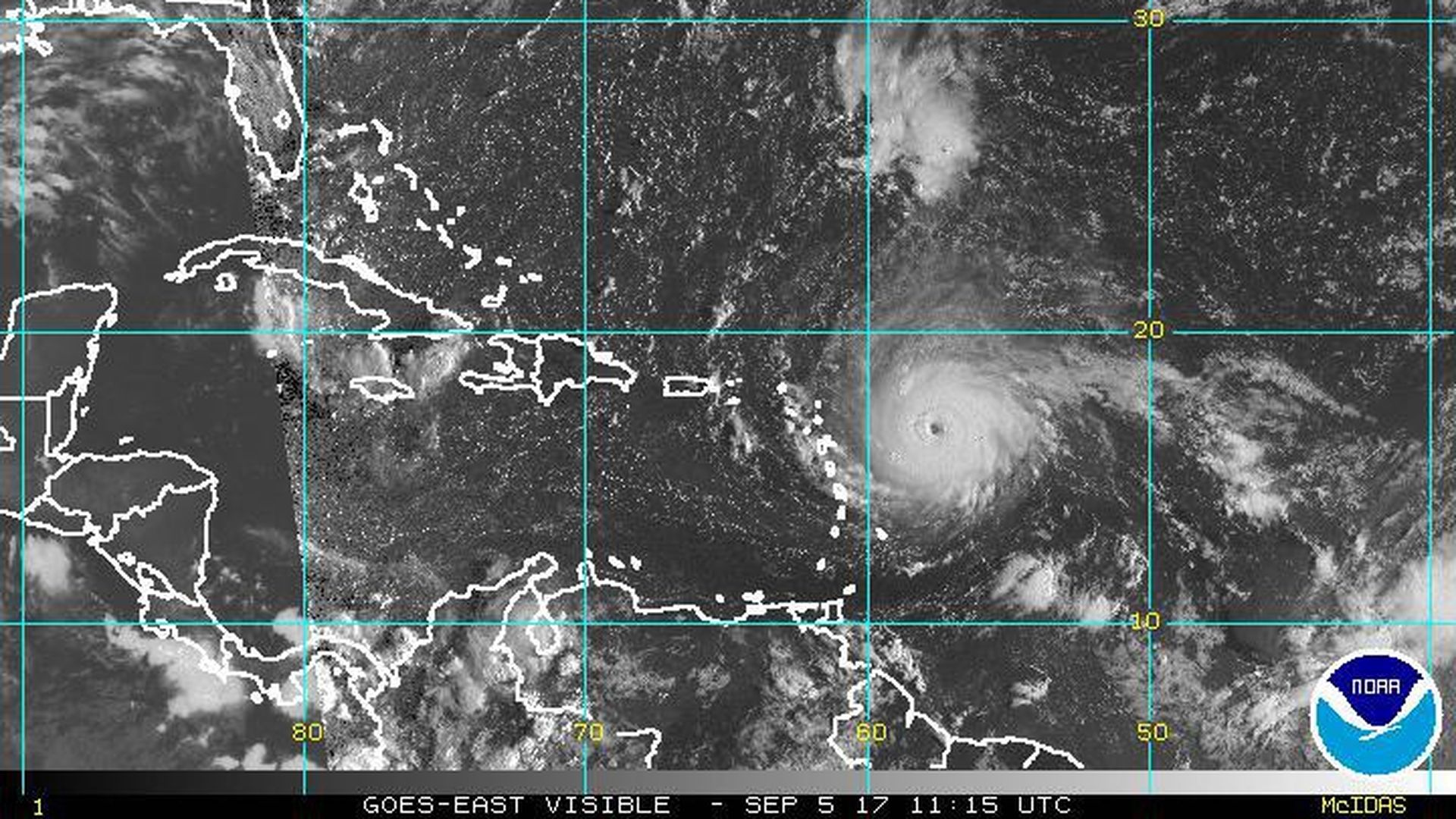
Hurricane Irma has strengthened into an "extremely dangerous" Category 5 storm as it approaches the eastern Caribbean — with the Virgin Islands and Puerto Rico in its sights over the next few days, per the National Hurricane Center.
- By the numbers: As of 7 a.m. EDT, Irma sits about 270 miles east of Antigua with sustained winds at 175 mph. The storm is expected to remain a Category 4 or 5 hurricane for at least the next few days.
- The impacts: The Virgin Islands could see a storm surge that tops 10 feet at some point tomorrow, coupled with Irma's intense windspeed.
- What's next: That's the big question. Most models put Irma as a major hurricane south of the Bahamas at some point on Friday, according to WaPo's Capital Weather Gang, but things get murkier from there. At that point, it's expected to turn north toward the Florida coast — though the exact track of the storm is anyone's guess.