Sunday's science stories

The Internet of Things is making it harder to study space
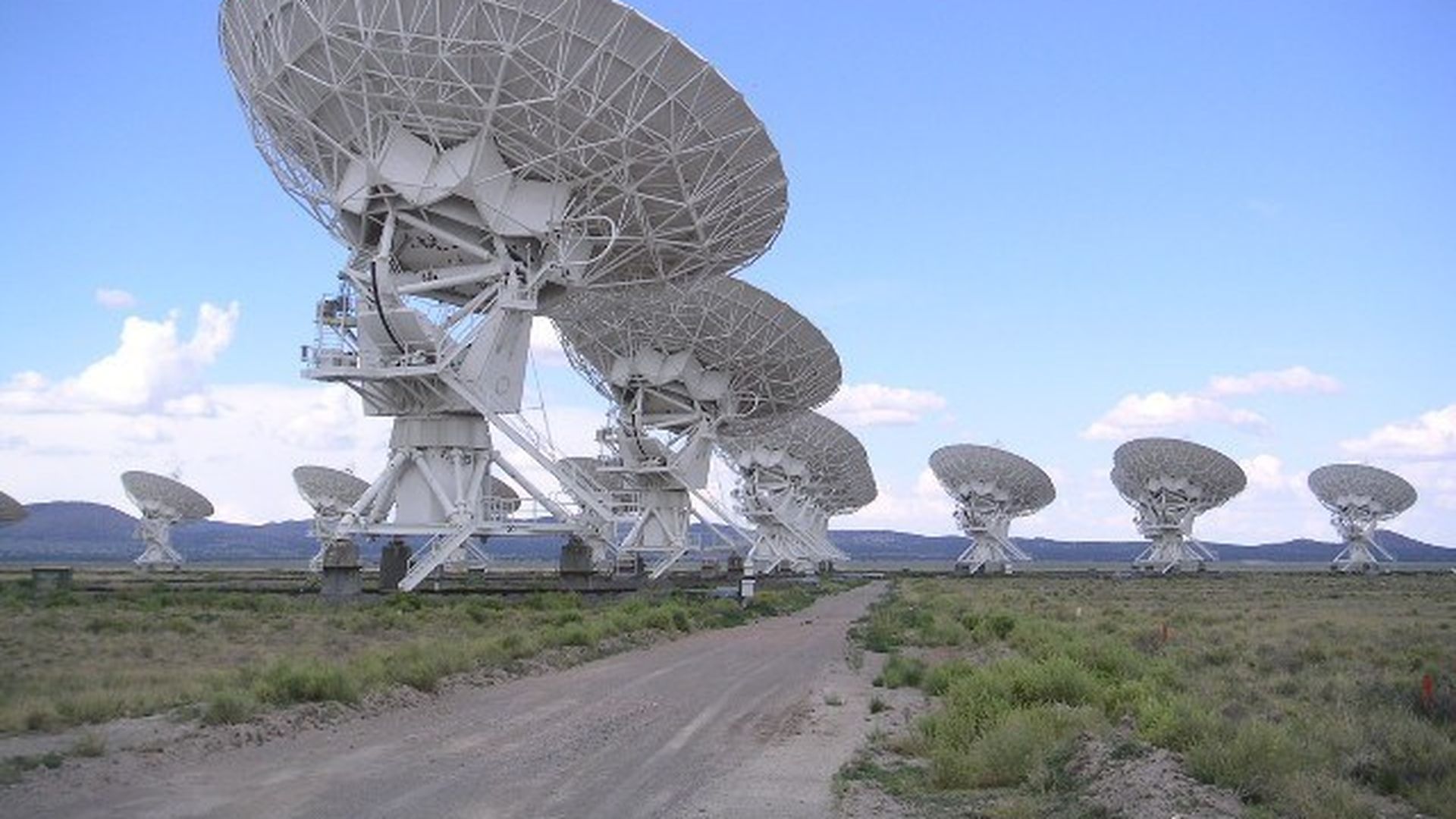
Most connected devices use radio waves, be it WiFi or Bluetooth. Although it makes our lives more convenient, it's making astronomers' lives harder, according to Wired. Radio waves don't just come from humans, they're emitted by objects in space, and scientists can use them to analyze just about everything, from stars to nebulas to comets.
Right now, some radio wavelengths are reserved exclusively for radio astronomy. But that doesn't mean they're the only frequencies space sends towards Earth, and it's getting harder to detect space's signals through all the earthly noise. (Mysterious "alien" radio signals detected in Australia in 2015 were caused by a microwave, for example.)
Military and industry groups are working toward possible solutions, but they come with their own challenges. The best solution is to figure out how to share the spectrum, says Wired's Sarah Scoles. "If you fill the spectrum with man-made emissions, you will never be able to understand certain parts of the universe," astronomer Liese vanZee told Wired.

Robot that mimics gecko could pick up space trash

Researchers at Stanford and NASA have developed a new robotic gripper that resembles gecko feet for use in space.
How it works: Geckos have small hairs on their feet that collectively work as an adhesive and allow them to climb smooth, vertical surfaces. The robotic gripper mimics those hairs using thousands of silicone rubber wedges pointing in opposite directions. When pulled together, they produce an adhesive force.
Why it matters: Hundreds of thousands of pieces of space junk orbit Earth, increasing the likelihood of space collisions and, in some cases, occupying prime positions for new satellites. If the gecko-inspired gripper can work in the cold environment of space (something the researchers plan to test), it could help robots collect debris and help clear the way.