October 31, 2023

👻 Good afternoon! The spookiest place in D.C. might just be the Capitol's pipe-lined basement hallways.
🎤 Today's last song comes from noted Swiftie Sen. John Hickenlooper, who listened to "Shake It Off" and then ran up to Jael in the tunnels last night to tell her.
- What's the last song you listened to? Tell Jael at [email protected].
1 big thing: Machine makers make IRA push

Illustration: Tiffany Herring/Axios
A new industry — battery manufacturing machinery — is vying for IRA support, Jael writes.
Why it matters: The IRA offers riches to industries needed to combat climate change. But it didn't give money to everyone — and omissions may have energy security implications.
Driving the news: Machinery makers this month formed an ad-hoc group in D.C., the U.S. Battery Machine Builders coalition.
- The coalition — which includes multinational energy and tech giant Siemens, U.S. construction company Bechtel and furnace maker Abbott Furnace — aims to convince Congress and the executive branch that they should fund battery companies that buy equipment and parts at home.
Last week, the coalition took its first action: a letter to the president calling for a domestic procurement preference in funding decisions.
- "[F]ew incentives were included for battery machinery; inadvertently putting our segment of the industry at a disadvantage," says the letter, which singles out the expanded 48C advanced energy credit in the IRA as a key program for applying a preference.
Between the lines: From mining to autos and batteries and chips, a lot of industries are asking for federal money, citing energy security.
- Battery machinery is a business with risks that ring similar to those of other sectors, as China is the leading producer of requisite equipment.
- "We know through our coalition members and through our knowledge of the current recipients of federal funds that they're largely looking overseas for equipment. It's largely based on price," said coalition spokesman Bennett Resnik, who's also senior vice president at D.C. government affairs firm Venn Strategies.
Zoom out: It's notable that as the IRA is being implemented, other business segments are also coming forward with claims of potential flaws in the law's design.
- Sustainable steelmaking startups recently told climate news outlet Cipher that the law's credits for carbon capture and storage are "skewing the market" in favor of steel made with hydrogen and natural gas, as opposed to newer innovative methods.
The big picture: We don't know whether this idea will pick up traction. The White House and the Energy Department didn't respond to requests for comment.
- In a political environment where anti-China sentiment is a rare source of bipartisanship, anything could be possible in the future.
2. What they're saying: DOE's transmission cash
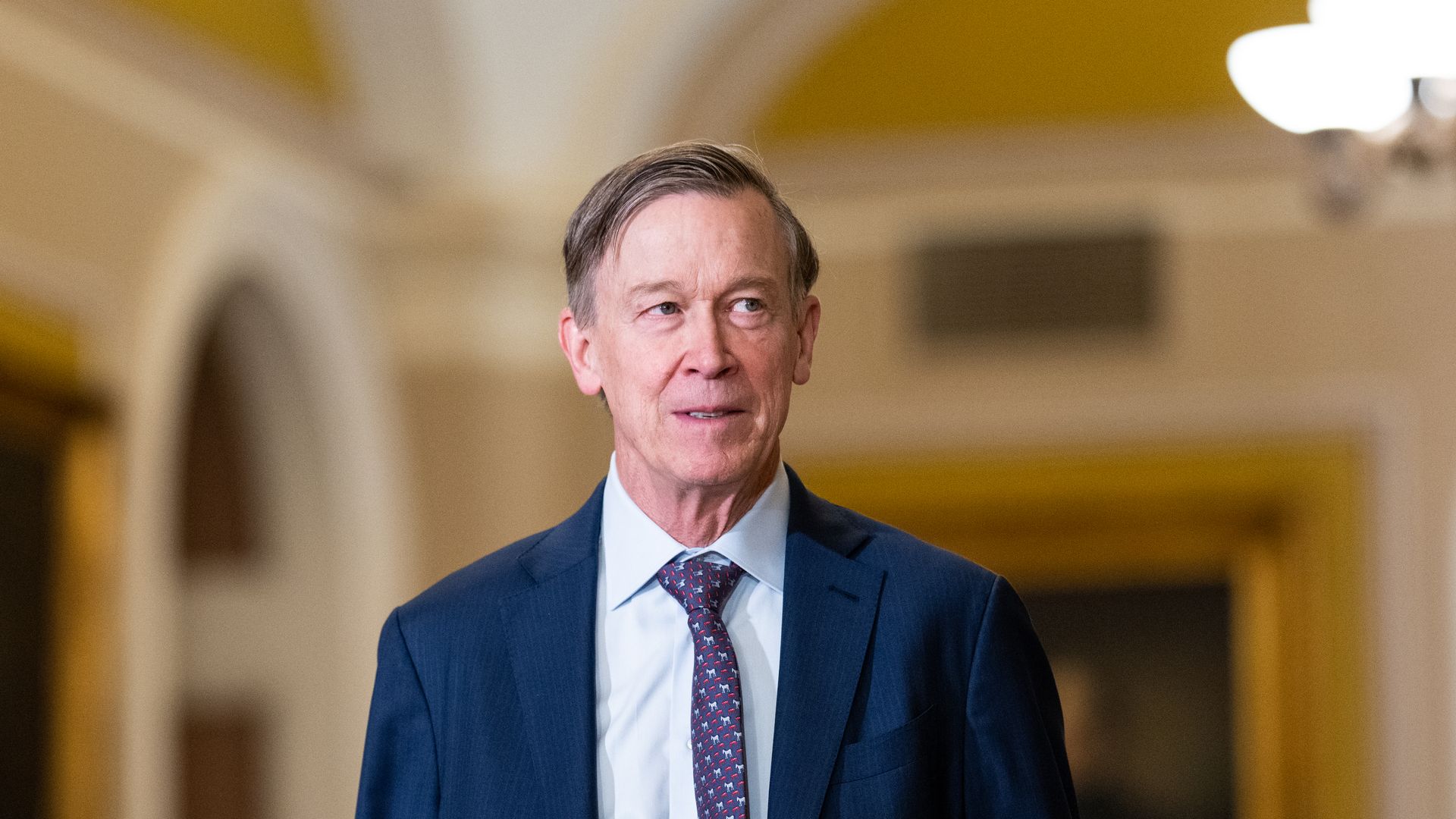
Hickenlooper in September. Photo: Bill Clark/CQ-Roll Call Inc. via Getty Images
The Energy Department is doling out $1.3 billion for transmission projects — but lawmakers still see the funding as a drop in the bucket.
Why it matters: The agency is funding three projects with the infrastructure law money — a hefty sum that's still only a fraction of what's needed to decarbonize the grid in the next few decades.
What they're saying: "When we actually pull together the major components of the great transition … it will probably be a couple trillion dollars," Sen. John Hickenlooper told Nick.
- "It's daunting but it's also inspiring," he said.
- Sen. Kevin Cramer told Nick that more transmission is needed. "But we also need more generation, and you can't do one and then the other. You have to have a better plan than what they've demonstrated to this point."
Driving the news: The funding through the Transmission Facilitation Program will go to projects in the Mountain West, Southwest and the Northeast.
- DOE also concurrently released its final Transmission Needs Study.
- To reach the IRA's full potential, the study said, the U.S. would need to double regional transmission capacity and increase interregional capacity fivefold by 2035.
Between the lines: That's an enormous undertaking, and building this stuff takes a long time. The earliest any of these projects will come onto the grid is 2027.
- Take the Southline Transmission Project, proposed to carry renewable power from New Mexico to Arizona.
- The developers say they have all the permits in hand and completed state siting processes in 2017. It'll still be at least four years until the first phase is completed.
- According to DOE's study, it'll account for 14% of the regional transmission needed in the Southwest.
3. Interior's staffing standoff
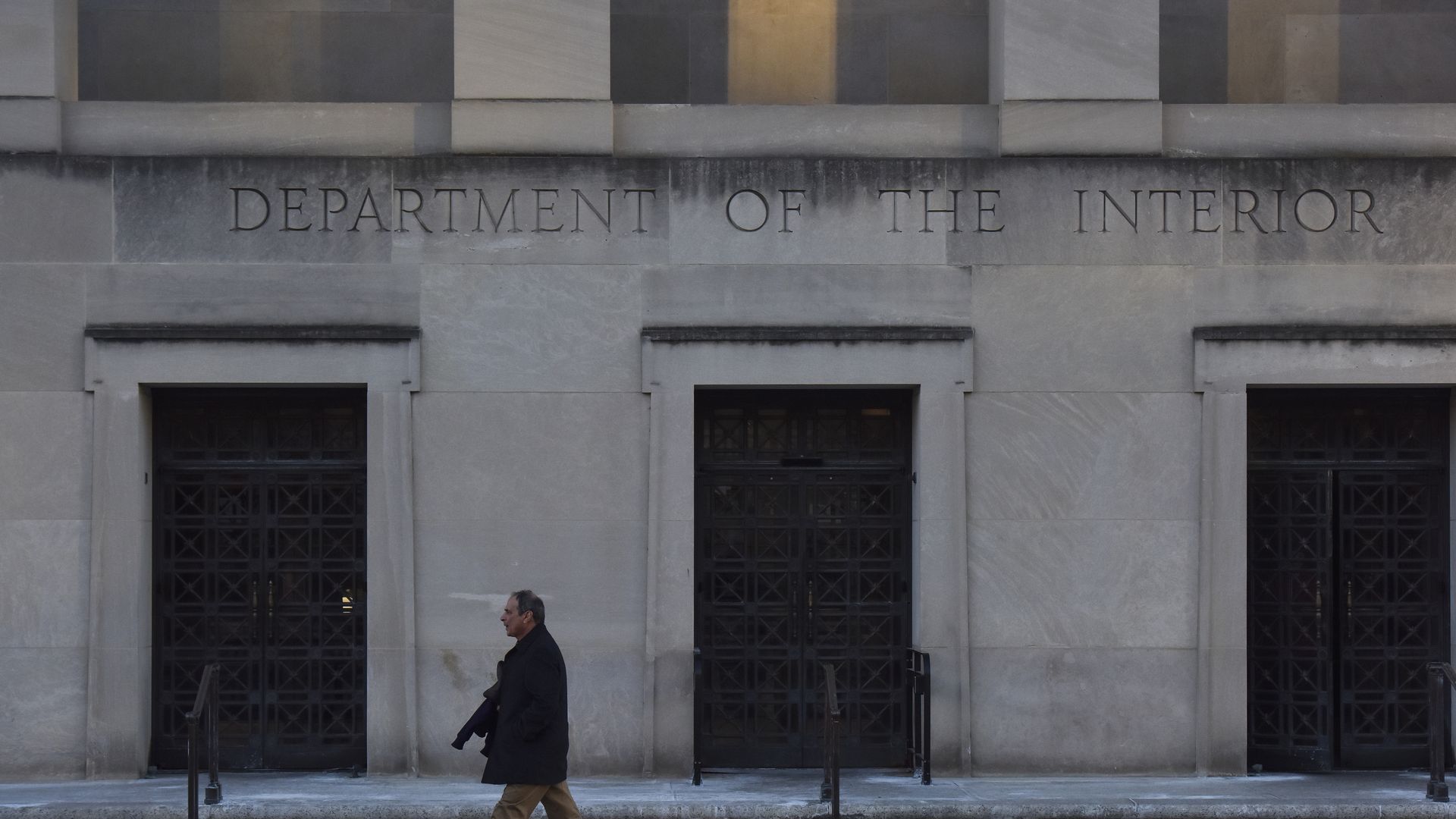
Photo: Jahi Chikwendiu/The Washington Post via Getty Images
Laura Daniel-Davis will serve as acting deputy Interior secretary after the departure of Tommy Beaudreau, the agency said today, Nick writes.
Why it matters: It could further inflame Interior's relationship with the Hill.
Flashback: Daniel-Davis was nominated to be assistant secretary for land and minerals management but faced intense opposition from Republicans and Sen. Joe Manchin.
- She's been effectively performing that duty at the agency — without the Senate confirming her — since 2021.
- "There are few people who have been by my side more over the past two and a half years than Laura, and I am so grateful that she has agreed to step into this role as we work together to implement President Biden's ambitious and historic agenda," Interior Secretary Deb Haaland said in a statement.
What they're saying: "This is a mistake. She's already been rejected by the United States Senate," Sen. John Barrasso told reporters.
- Sen. Lisa Murkowski, who worked closely with the administration to get the Willow Project approved, said it is "bypassing" the confirmation process with Daniel-Davis.
- "She encountered quite the headwinds before, and I would imagine the administration is observant enough that they realize she would run into the same problems," she said. "Instead they put her in an acting position."
✅ Thank you for reading Axios Pro Policy, and thanks to editors Chuck McCutcheon and David Nather and copy editor Brad Bonhall.
View archive