August 09, 2023

☀️ Hey, friends! We've got a few thoughts for you to keep the recess chugging along.
🎤 Today's last tune is from Rep. Jeff Duncan (featured below), who's been listening to Fleetwood Mac's "Go Your Own Way."
1 big thing: Political gains from carbon tariffs

Illustration: Sarah Grillo/Axios
Carbon tariffs could be good long-term politics — for both parties — in the new age of protectionist trade policy, Nick writes.
Why it matters: Taxing carbon-intensive imports appears to fit the "Bidenomics" messaging used to ramp up President Biden's 2024 campaign because it has potential to help heavily unionized domestic industries — and ding China.
- "There's a narrative for the administration that works politically here, which is that we are finally going to put the screws to China on … carbon-intensive goods," said Paul Bledsoe, a strategic adviser at the Progressive Policy Institute.
For Republicans, the policy is an opportunity to go after Chinese imports and continue aggressive tariff-based trade policies pursued by the Trump administration.
- Sen. Bill Cassidy has called it "a national security play, as well as an environmental play," and other Republicans have sought to frame carbon trade regimes as "America first" policy.
- Robert Lighthizer, former President Trump's U.S. trade representative, also offered some support for the idea in his recent book.
What they're saying: Senate Finance Chair Ron Wyden noted that carbon tariffs were an issue for Biden in 2020, particularly in swing states like Pennsylvania.
- "The Biden campaign asked me to step in and try to lay out what our Finance position was," he told Nick. "Done right, this is a big opportunity for both workers and innovation and America's place in the global economy."
- Biden told the United Steelworkers in 2020 that his administration would "impose carbon adjustment fees or quotas on carbon-intensive goods from countries that are failing to meet their climate and environmental obligations."
- That helped win their endorsement.
Zoom in: The test case will be the Global Arrangement on Sustainable Steel and Aluminum that the U.S. is negotiating with the EU.
- The Biden administration wants to form a "carbon club" with Europe, in which the two blocs agree to put tariffs on emissions-heavy steel and aluminum goods imported from elsewhere.
- Those talks, set to wrap up in October, will likely become more relevant on the Hill soon.
The USW and the steel industry are key supporters of the global arrangement talks, both as a way to address the international steel glut and promote cleaner U.S. producers.
- "U.S. workers and their employers should not face dirty, non-market-economy, unfairly priced steel when our companies have invested time and money to reduce their emissions," Roy Houseman, USW legislative director, told lawmakers in June.
Of note: Third Way released polling that found that Americans aren't familiar with carbon border adjustments but most are supportive when they hear about the concept.
- The group found swing voters were moved by messaging that pitches carbon tariffs as a way to promote U.S. industry and hold foreign polluters, namely China and Russia, accountable.
Yes, but: Policy consensus in Congress is elusive, and the EU has reportedly rejected the U.S. carbon club proposal.
- Tariffs can also carry political risk. The idea already faces pushback from conservatives and free-marketers who view it as a consumer tax.
Our thought bubble: Technocratic trade policy isn't going to be a primary tenet of Biden's campaign, but carbon tariffs could appeal to both climate advocates and organized labor.
- "The market is demanding decarbonization. There's a cost to that," Kevin Dempsey, CEO of the American Iron and Steel Institute, told Nick. "The risk is, frankly, if we don't create a GHG intensity-based tariff system, all of this progress that's been happening in the U.S. could be undermined."
2. E&C Energy chair optimistic on permitting
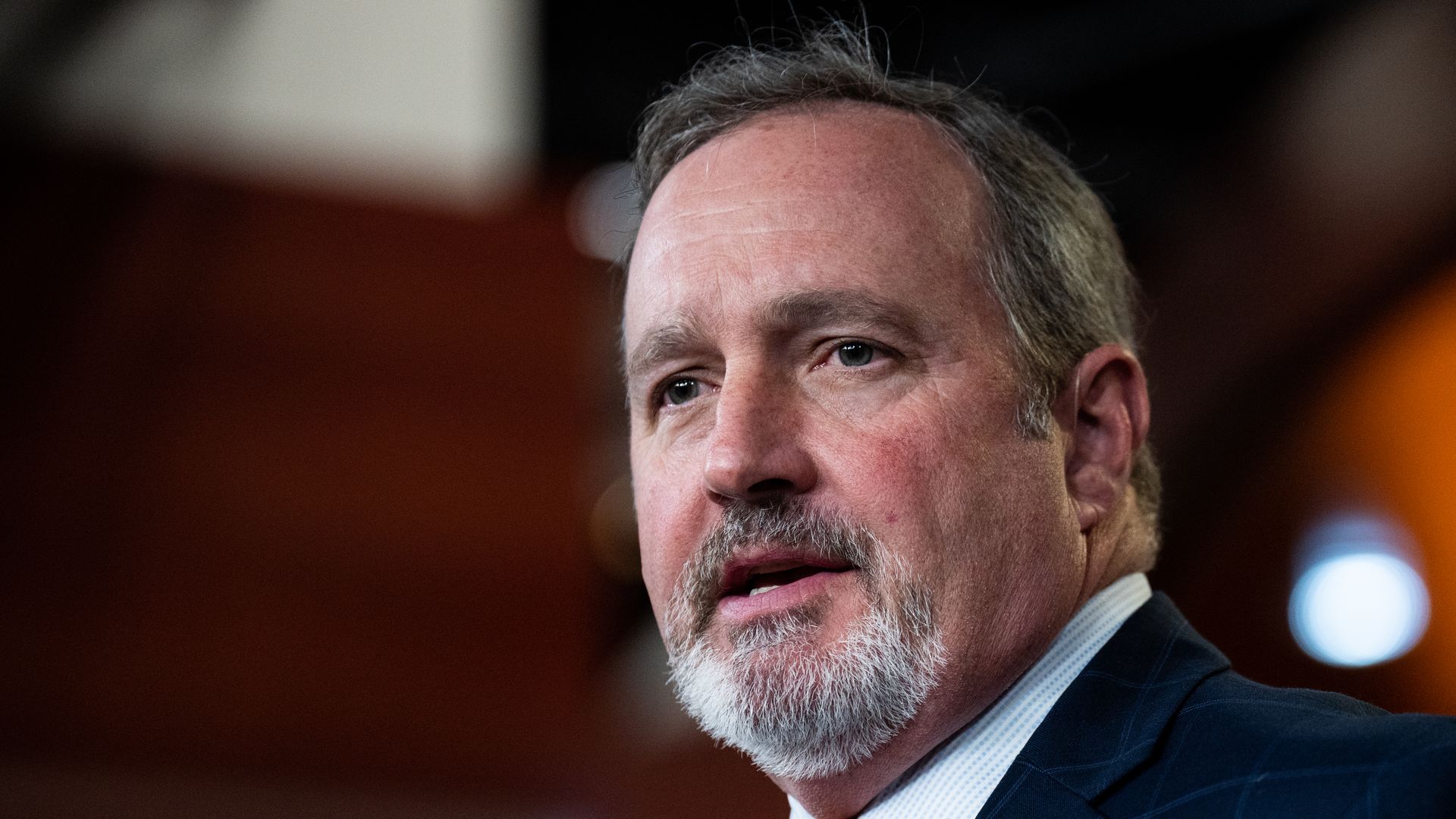
Photo: Bill Clark/CQ-Roll Call Inc. via Getty Images
House E&C energy subcommittee Chair Jeff Duncan has high hopes for more permitting action, Jael writes.
- Why it matters: Duncan's helping shepherd bills to make nuclear and pipeline approvals easier for developers. He sees a big window to get it done this Congress.
Jael got Duncan's takes on a host of topics right before recess ...
☢️ Nuclear power time: Duncan says he's vying to move bipartisan nuclear permitting legislation after a successful July hearing on many bills and draft proposals.
- "I'd really love to see a nuclear week where we have a package of nuclear energy bills on the floor and we can vote them over to the Senate."
- He's discussing this effort with Sens. Joe Manchin and John Barrasso.
⛽️ Pipeline potential: He's eyeing a markup in the coming months for his new pipeline permitting package, which he sees as a starting point for reauthorizing safety programs.
- "We've got to do pipeline safety reauthorization. This is the beginning of that."
🗳 Election year deal: There's so much support to get permitting done that Duncan sees an opportunity "even after January of next year as we start to focus on primaries and presidential elections."
- "Maybe we take it all up at the same time — nuclear power reforms, transmission and pipeline permitting."
🐌 Transmitting slowly: He's hesitant to quickly move transmission legislation, though, preferring to wait until a study on the matter commissioned by the debt deal is released.
- "Then we'll probably have some hearings to hear from stakeholders and people that are affected about what's needed and how Congress should approach it, versus this mindset of we ought to do something on transmission right now."
✋🏻 Enough renewables: Although Duncan is pursuing legislation to support specific energy sources — nuclear and gas — he isn't as interested in moving to boost renewables.
- "I don't know that any legislation is needed for solar and wind. You already have so much that's been passed."
🙅🏻 No FERC change: He also disagrees with an idea floated by some conservatives to put FERC underneath the office of the executive branch.
- "They ought to be an independent commission, and once the commissioners are appointed, they need to do their job."
3. The IRA's climbing climate and energy costs
Illustration: Gabriella Turrisi/Axios
The IRA's climate and renewable energy provisions are probably going to cost a lot more than initially expected, Nick writes.
Why it matters: As the law's one-year anniversary approaches, it's increasingly clear that the huge energy tax incentives might mean more domestic manufacturing and renewables deployment than Democrats dreamed of when they passed the law.
Details: The Congressional Budget Office and the Joint Committee on Taxation estimated last year that the climate and energy provisions would cost close to $400 billion.
- But Credit Suisse pegged the federal spending at $800 billion.
- Goldman Sachs says it's more like $1.2 trillion.
What they're saying: "I take the CBO with a grain of salt much of the time," Sen. Martin Heinrich told Nick. "If it comes in substantially higher, I would view that as a positive because we need to turn the ship before it's 110 [degrees] in Washington, D.C., and 115 in Albuquerque."
Republicans argue that the IRA is runaway government spending. But as new project announcements come in every week, it also means a huge flow of private capital into the energy transition.
- Credit Suisse estimated the total public and private spending from the IRA at $1.7 trillion, leaving the U.S. "well positioned to be the premier energy supplier for the world."
- The IRA's tax credits "will attract a lot of private sector capital," Heinrich said. "And that's what we want."
✅ Thank you for reading Axios Pro Policy, and thanks to editors Chuck McCutcheon and David Nather and copy editor Brad Bonhall.
View archive