Axios What's Next

May 06, 2024



Libraries are desperately fighting to make it easier to loan out e-books, Jennifer reports today.
Today's newsletter is 1,101 words ... 4 minutes.
1 big thing: Libraries' e-book battle
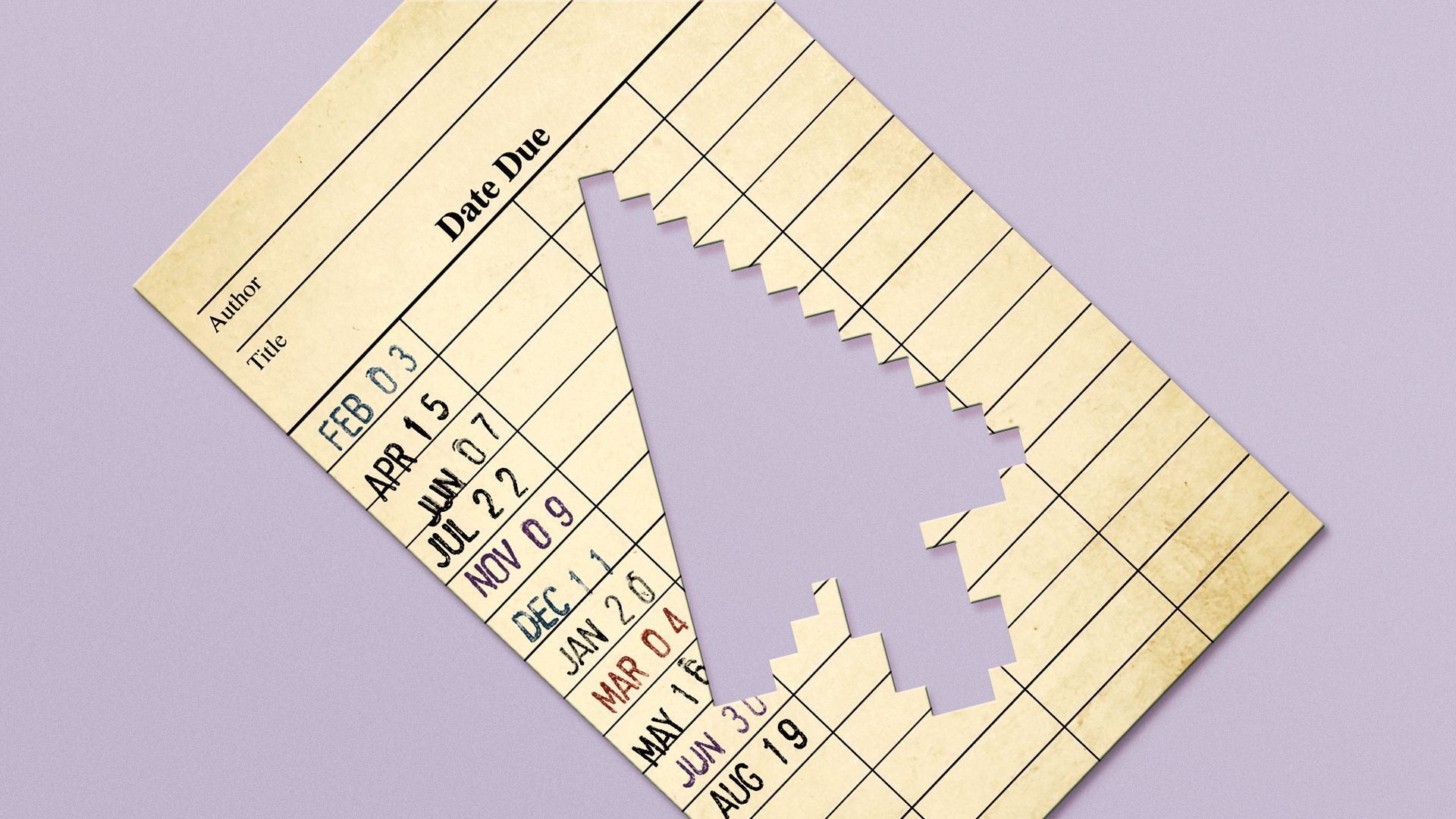
Librarians are mounting a fierce state-by-state battle against the high prices they pay to provide patrons with e-books.
Why it matters: The ongoing dispute threatens library patrons' access to digital reads.
Where it stands: Publishers typically require libraries to renew the license to each e-book every two years, or after 26 loans — policies that libraries call prohibitively expensive.
- This restricts the number of e-books that they can lend out to patrons, who are angry and baffled by the limitations.
- Readers love the free (to them) apps that allow them to borrow countless e-books and audiobooks: Libby (the dominant one, run by OverDrive) and hoopla.
- But some libraries say that the cost of renewing their contracts with OverDrive and hoopla are prohibitive, so they're dropping the apps — hoopla in particular.
The other side: The Association of American Publishers argues that it must protect the rights of copyright owners — that is, authors — to be fairly compensated for their work.
- hoopla and Libby say they're just the middlemen.
- "It's really not up to us, to be honest," Ann Ford, a vice president at hoopla, tells Axios. "It's the publishers that make the rules."
Driving the news: A Connecticut bill to boost libraries' bargaining power in e-book negotiations was tabled last week after a three-hour debate.
- Similar bills are under consideration in Massachusetts and Rhode Island.
- Seven states took up the issue this year, with about a dozen interested in doing so next year, says Kyle Courtney, a lawyer and Harvard librarian who drafted model e-book legislation for states.
What they're saying: Libraries have a "unique and determinative public mission" that should entitle them to more favorable e-book purchasing terms when using public funds, Courtney tells Axios.
- "These are nonnegotiable contracts, and the libraries have been trying to get a deal for years," says Courtney, co-founder of Library Futures, a nonprofit advocating for libraries' digital rights.
- "We need the coercive power of the state sitting behind us at the table saying, 'We need a special slice of the pie.'"
How it works: Each publisher sets its own financial terms for each e-book title, with "the big five" publishing houses largely able to call their own shots.
- From there, OverDrive and hoopla take their markup.
Follow the money: "For popular trade e-books, libraries often pay $55 for one copy that expires after two years (or $550 for one copy for 20 years)," per the American Library Association.
- "Meanwhile, a consumer will pay about $15 for perpetual use."
- "By comparison, libraries can purchase hardcover books for around $18-$20."
- Each e-book can only be lent out to one person at a time, leading to long wait times for patrons.
Reality check: Only a small number of libraries have canceled access because of the expense.
- OverDrive is trying to help libraries slice and dice their collections to provide the maximum number of e-book titles at the lowest cost.
- hoopla offers an analytics program to helps libraries stretch their e-book dollars, plus new features like BingePass that let people stream copious movies and e-books.
"Yes, there still is more progress for us to make" in terms of library pricing, "but we have delivered," Steve Potash, founder and CEO of OverDrive, tells Axios.
What's next: Librarians are developing open-source alternatives to Libby and hoopla and testing "experiments with publishers that don't involve restrictive licenses," says Jennie Rose Halperin, director of Library Futures.
The bottom line: Librarians are already on the front lines of the nation's social problems — and it's going to be tough for them to simultaneously take on the publishing industry and win.
2. Biden relaxes EV credit rules

Graphite will be temporarily exempt from new battery sourcing requirements tied to consumer electric vehicle credits, the Biden administration has revealed.
Why it matters: The concession should let more EVs qualify for the full $7,500 consumer credit in the new climate law.
Catch up quick: Qualifying cars can't be made with components or minerals sourced from a "foreign entity of concern" — a wonky government term applied to adversaries like China, which dominates today's EV battery supply chain.
Driving the news: The Treasury Department recently released the final rules for the consumer EV credit, including criteria for sourcing battery minerals — i.e. what can't come from China.
- One big surprise: The administration said graphite used in batteries would be considered "impracticable to trace" until 2027.
Between the lines: The move is a big win for car and battery companies, which argue that it would take years to build a supply chain without Chinese components.
Yes, but: We won't know how many vehicles actually qualify for the full credit until 2025, when the new rules take effect.
If you need smart, quick intel on dealmaking in the climate industry for your job, get Axios Pro.
3. Newsrooms split over AI deals

/2024/05/03/1714743295290.gif?w=3840)
Major news outlets are taking opposite approaches toward AI, with some partnering with AI firms and others suing them.
Why it matters: News publishers are struggling to present a unified front in their fight for copyright protection, which could weaken their leverage in content licensing negotiations.
Driving the news: Eight prominent newspapers recently joined the New York Times in suing ChatGPT parent OpenAI and Microsoft for copyright infringement.
Yes, but: Several other large news publishers, including the Financial Times, the Associated Press and Axel Springer, have instead opted to strike million-dollar content licensing deals with AI companies.
The big picture: AI companies want to use news outlets' work to help train their models.
- In most cases, AI developers like ChatGPT maker OpenAI say they are making fair use of "publicly available" data.
- But many news publishers believe AI firms are using automated tools to scrape copyrighted material for which they should be paying.
4. Walk or bike — don't drive — to this coffee shop

I would walk many miles for a cup of coffee if times were tough.
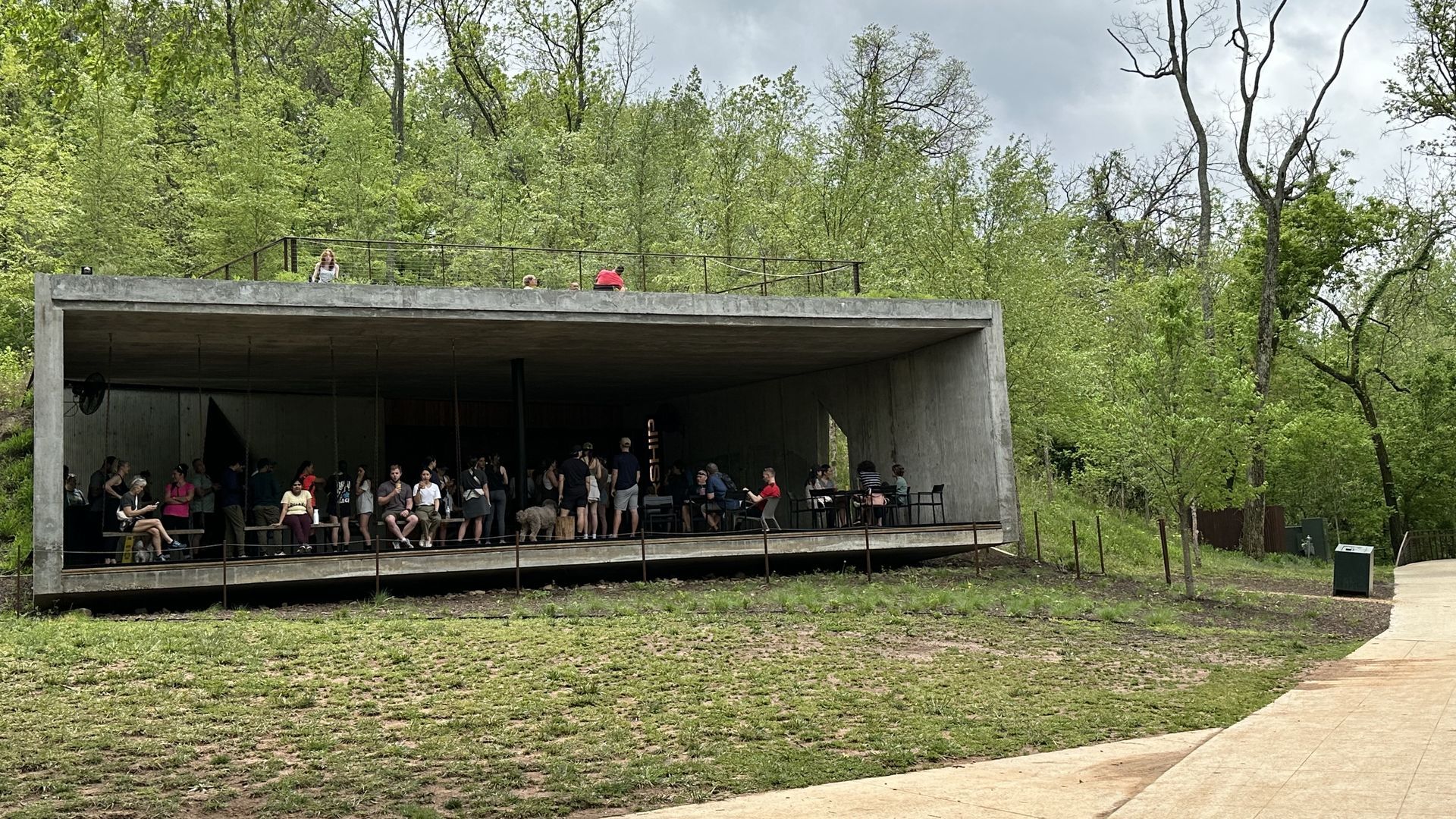
- The situation with Airship's coffee shop off a trail in Bentonville, Arkansas, isn't quite that dramatic — but you do have to walk or bike a bit to get there.
While it's no big deal to park at a nearby trailhead and walk a leisurely 15 minutes, it's unusual in our car-centric world for a business to purposefully force its customers to do a little extra work to get there.
- Oh no, you just have to stop and smell the roses on your way to coffee.
- 🚲 You can also bike right up.
☕️ The vibe: It's an open-air concrete pitstop beside a trail, with plenty of outdoor seats and a little rooftop seating — plus some swings.
- It's super casual, kid-friendly, and an all-around way to push coffee addicts out into nature.
Big thanks to What's Next copy editor Amy Stern.
Was this email forwarded to you? Get your daily dose of What's Next by signing up here for our free newsletter.
Sign up for Axios What's Next
