
Axios What's Next

July 19, 2024
Ford's decision to transform a would-be EV hub into a pickup plant says a lot about the state of electric car demand, Joann writes today.
Today's newsletter is 911 words ... a 3Β½-minute read.
1 big thing: Ford's electric switch
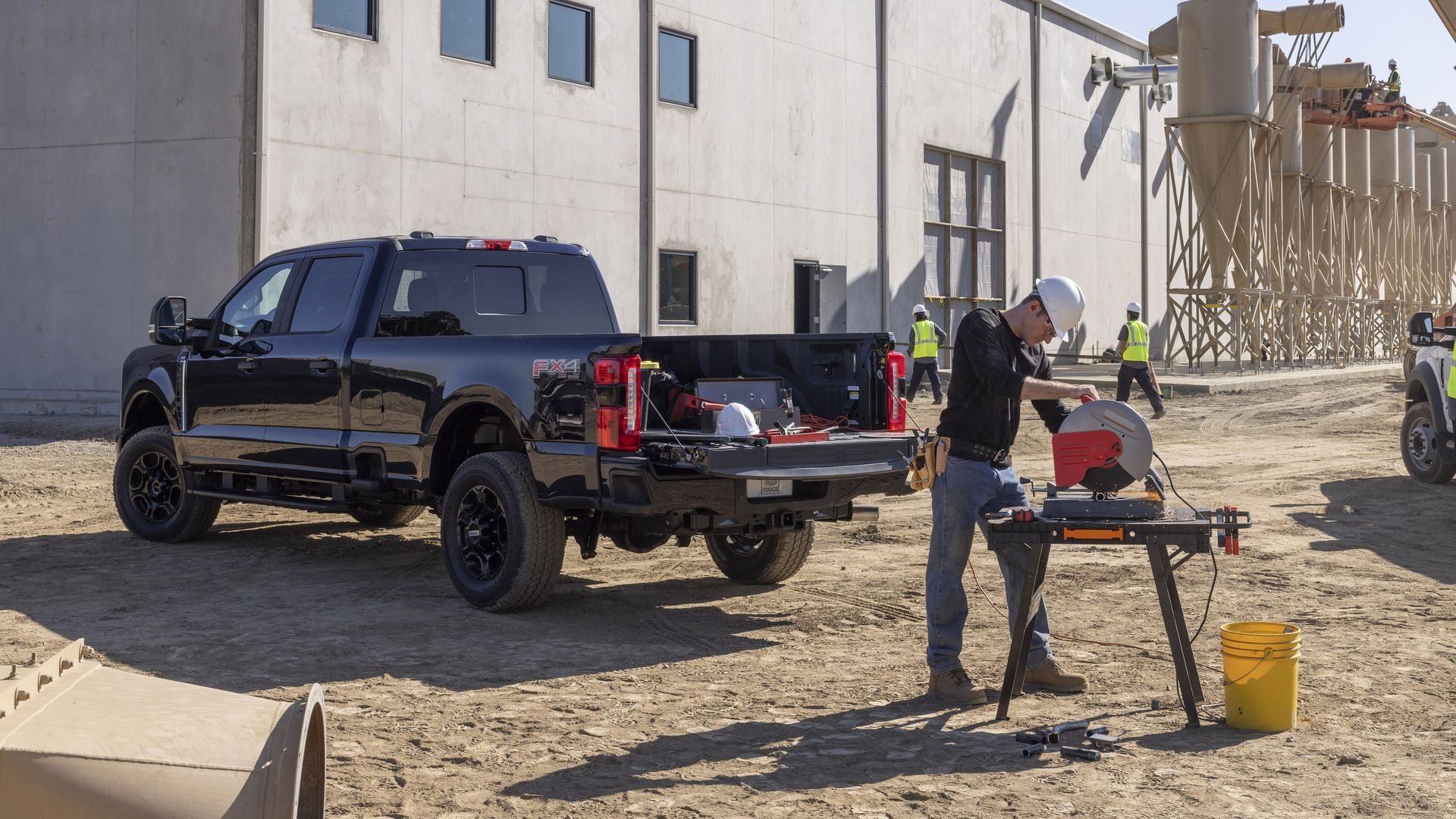
Ford Motor Co.'s decision to scrap plans for an electric vehicle hub in Canada so it can produce more gas-powered heavy-duty pickups instead says a lot about the state of today's auto market and the pressure to deliver profitable growth.
Why it matters: Trucks are hot, EVs are not.
- While automakers say they're committed to electrification, they only make money on products customers want to buy.
Driving the news: Ford announced yesterday that it's investing $3 billion to boost output of the Super Duty, the F-150's larger sibling that's popular with tradespeople and commercial customers.
- $2.3 billion of that will be spent to overhaul a factory in Oakville, Ontario, that was previously set to become an EV manufacturing hub.
- A three-row electric SUV that Ford had planned to build in Oakville is getting shelved until 2027, as the automaker announced back in April.
- About 1,800 Canadian jobs will be secured β 400 more than would have been needed to produce the three-row EV, Ford said.
Between the lines: The pivot helped Ford solve two problems.
- The automaker needs the extra truck capacity to keep up with soaring demand; the two factories where it currently builds Super Duty trucks in Ohio and Kentucky are "running flat out," Ford said.
- There aren't enough customers for a three-row EV. Delaying the launch until 2027 will allow the market to mature and buy time for Ford to improve the product and take advantage of emerging battery technology, the company said.
Follow the money: While Ford's EV unit lost $4.7 billion in 2023 (and is on track to lose even more this year), its Ford Pro commercial business earned $7.2 billion in 2023.
- With an estimated $20,000 per vehicle profit on the Super Duty, it doesn't take a genius to figure out why Ford is leaning into trucks for now.
The big picture: Like General Motors and other rivals, Ford has been backing off EV commitments as it becomes clear that the early adopter era is over.
- CEO Jim Farley is increasingly bullish on hybrids as a bridge technology β a strategy that has proven successful for Toyota β and Ford aims to offer hybrids across its entire lineup by 2030.
The intrigue: Ford is moving ahead with plans to erect a new "Blue Oval City" EV manufacturing campus in Tennessee, while its rivals are converting older factories to EV production β with help from the Biden administration.
- GM and Stellantis scooped up a combined $1.1 billion in federal grants for such projects, while Ford didn't apply.
- Ford plans to begin customer deliveries of a new electric pickup truck built at Blue Oval City in 2026, a few months later than originally scheduled.
What's next: Ford says it has other EV efforts simmering.
- The automaker said it's going to "electrify" the next generation of Super Duty trucks, without providing details.
- And a "skunkworks" team in California is developing a smaller, low-cost EV platform capable of underpinning multiple models.
2. Exclusive: Nuclear startup aims big
The Nuclear Company, a new startup, is aiming to spur the construction of nuclear power plants nationwide, the company tells Axios exclusively.
- The company plans to serve as a project developer for multiple series of nuclear plants, working as a matchmaker of sorts among utilities, manufacturers and funders.
Zoom in: The firm intends to use proven nuclear technology, chief development officer Juliann Edwards tells Axios.
- It will pursue a "design-once, build many" approach using sites that the Nuclear Regulatory Commission has already evaluated and approved for reactor deployment.
- This would potentially avoid lengthy regulatory hurdles that can stymie new reactor projects for years.
What's next: The startup hopes to be delivering electricity by the mid-2030s.
3. π Developer demand drops


Demand for software developers has plunged from the boom times of 2021 and 2022.
Why it matters: Even though the overall labor market remains strong, the supply of higher-paying white-collar jobs is pretty meh.
Catch up fast: Software developers benefited from a pandemic hiring frenzy, fielding multiple calls a day from recruiters and naming their own salaries.
- Now, companies are slower to hire and less willing to expand headcount.
Between the lines: The decline in demand is likely not an AI thing β the drop-off started before the introduction of ChatGPT.
Reality check: These are still among the best, highest-paying jobs around.
- The lowest-paid software developers, located in the Cleveland metro area, earn a median salary of more than $100,000 per year, according to a recent ADP study.
- The highest-paid developers work in Silicon Valley and earn a median salary of $163,000.
4. ποΈ One fun thing: Fire tower camping
If you want a million-dollar view for less than $100 a night, one option rises above the rest: camping in a wildfire lookout tower.
The big picture: The U.S. Forest Service rents dozens of its old, remote fire lookouts now that infrared tools and aircraft have replaced many human spotters.
- The "cabins" are like mountain lighthouses, designed for 360Β° views from high peaks.
By the numbers: As of 2019, about 300 fire towers were still staffed β mostly by volunteers.
- Now about 75 "retired" lookouts are available for tourists to rent in California, Colorado, Idaho, Montana, Oregon and Washington.
The fine print: Check each tower's page to learn about parking, guest capacity, cell service, electricity and water βΒ and how you get up there.
Big thanksΒ to What's Next copy editor Amy Stern.
Was this email forwarded to you? Get your daily dose of What's Next by signing up here for our free newsletter.
Sign up for Axios What's Next