
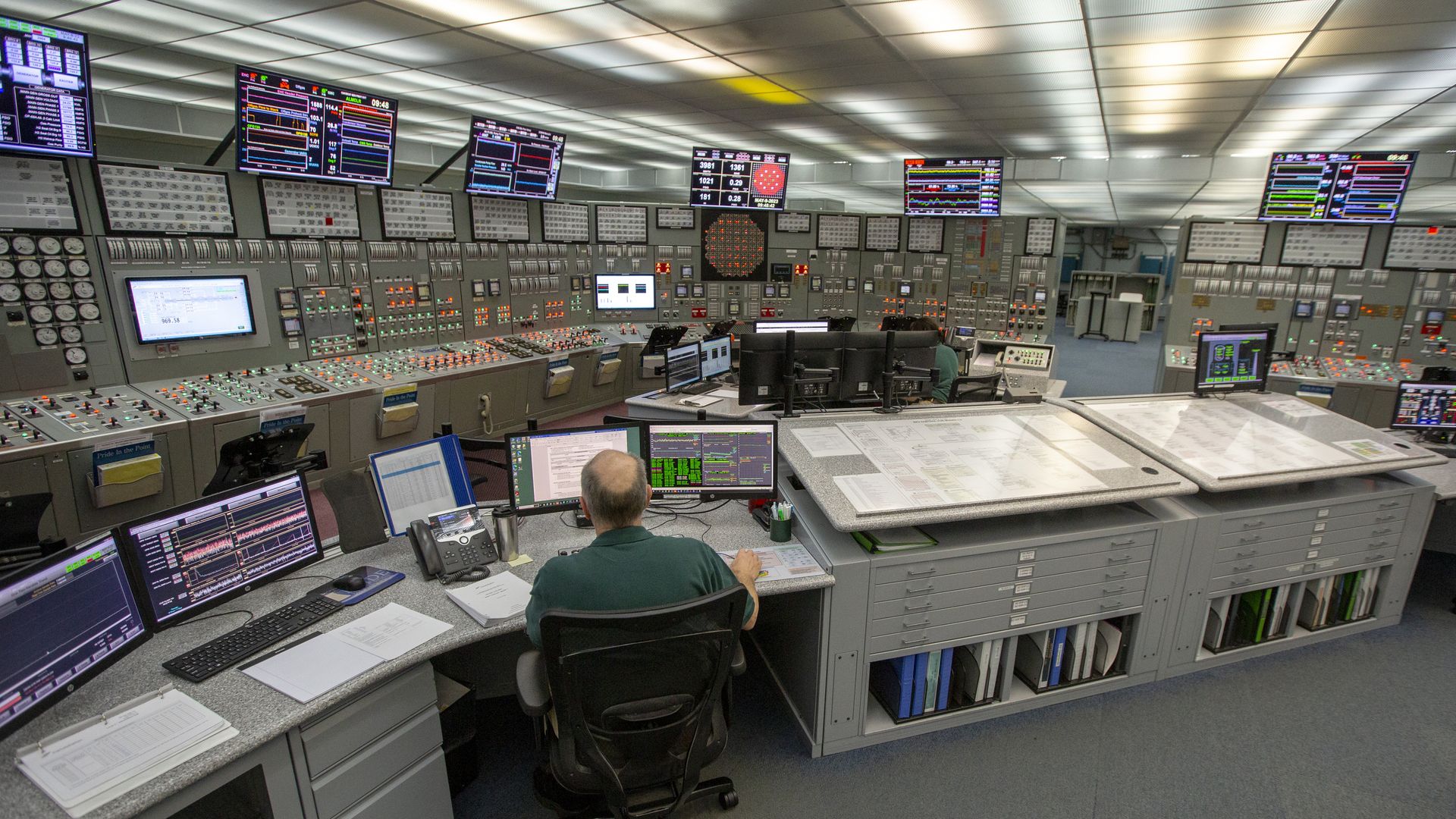
The control room at the Constellation Nine Mile Point Nuclear Station in Scriba, N.Y. Photo: Lauren Petracca/Bloomberg via Getty Images
The Senate is on the brink of passing the ADVANCE Act, but it's not the last word on the nuclear industry's long-sought renaissance.
Why it matters: The bill won't solve all of nuclear's problems. It's also likely to inflame the industry's most vocal critics.
- "It takes some manageable-sized bites out of some near-term problems, while also laying down the foundation for some long-term challenges that the [Nuclear Regulatory Commission] is going to face," said Ryan Norman, a senior policy adviser at Third Way.
Driving the news: As of right now, ADVANCE isn't formally on the schedule, but a Senate vote could happen as soon as Tuesday.
Zoom in: Perhaps its biggest — and most controversial — change is a requirement that the NRC update its mission statement so that it does not "unnecessarily limit" nuclear power deployment and its benefits.
- "When we look on back on this thing five years from now … no one will remember anything else that happened in this piece of legislation, except for the change in the statutory mission," said Ted Nordhaus, executive director of the Breakthrough Institute.
- Other important policies in ADVANCE include a reduction of licensing fees and provisions to cut down review times for previously licensed designs and trim timelines for nuclear NEPA reviews.
Yes, but: Industry is still going to have to convince people that nuclear can work, given the implosion of the NuScale project and the gargantuan cost overruns that plagued the expansion at Georgia's Vogtle Electric Generating Plant.
- Building one project as a demonstration, a monumental task in itself, is arguably easier than creating a commercial market for a nascent energy technology.
- That's why we're seeing a push for more federal money to commercialize advanced reactors, and possibly cost overrun insurance for large-scale ones.
What we're watching: As companies begin the licensing process, much depends on the NRC's ongoing Part 53 rulemaking.
- The mission statement change "could have a material impact on how that plays out," said Edwin Lyman, a longtime nuclear critic with the Union of Concerned Scientists.
- Lyman argues that ADVANCE would weaken the NRC's safety focus and called the mission shift a "radical undermining of the NRC's independence."
- It's worth watching how those safety concerns play out among Democrats as ADVANCE is implemented and new reactor designs begin licensing in earnest.
The big picture: ADVANCE is part of a five-year legislative spree that vastly changes how the federal government looks at nuclear power.
- It bolsters the alterations to NRC processes that Congress made with the 2019 Nuclear Energy Innovation and Modernization Act and to tax policy in the IRA, which opened energy credits up for nuclear plants.
