Axios What's Next

January 11, 2022
Not surprising, but still sobering: The more populous the city or suburb, the more likely it is that it'll be cheaper for you to rent your home than to own it, Jennifer A. Kingson writes.
- A fun thing: Ever wonder why there seem to be more "Jeopardy" champions with long winning streaks? The New York Times offers some possible explanations.
Today's Smart Brevity count: 1,214 words ... 4½ minutes.
1 big thing: Owning is cheaper than renting in much of the U.S.
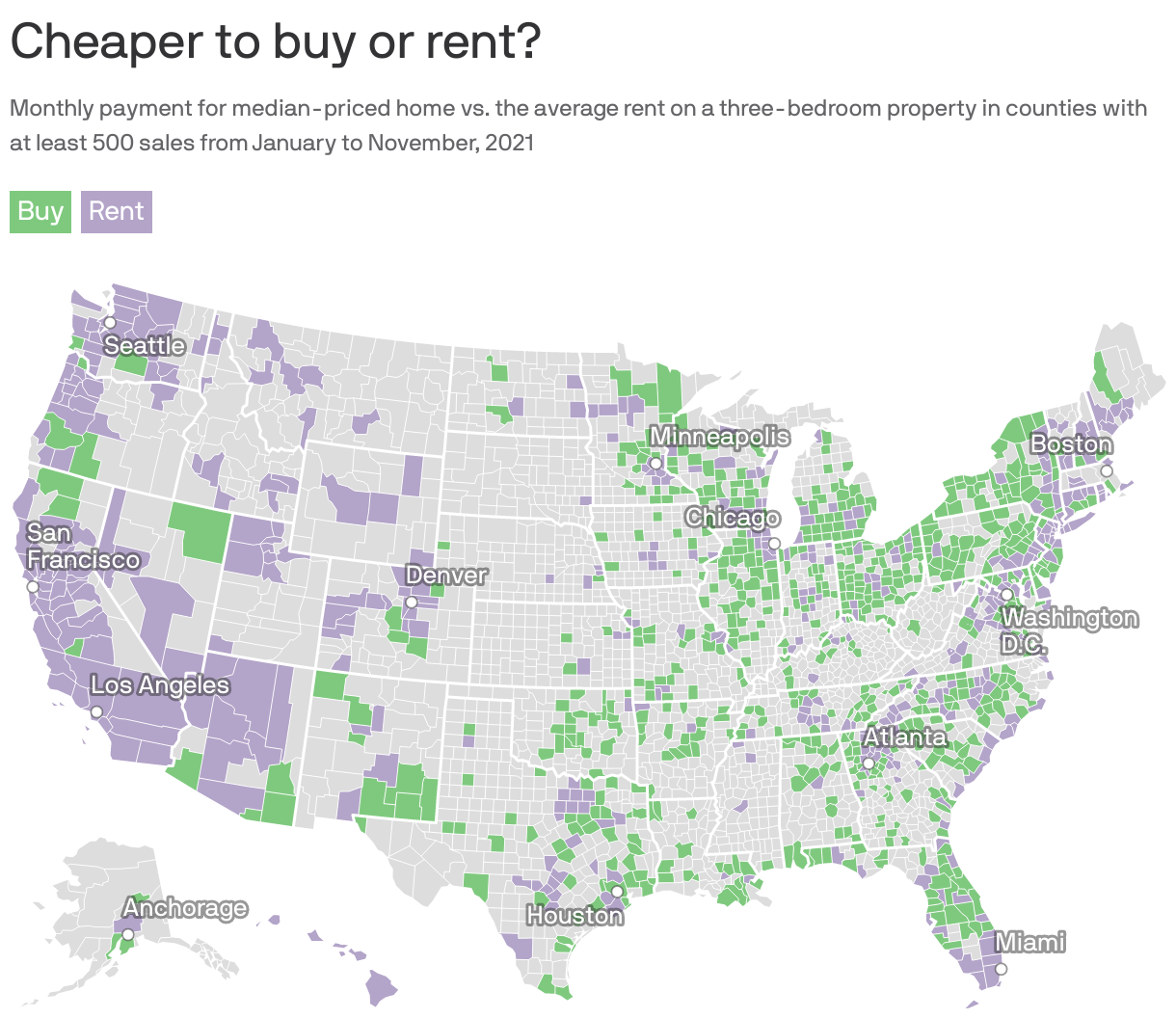
Owning a median-priced home is more affordable than the average rent on a three-bedroom property in 58% of the U.S., Jennifer writes, citing a new report.
- There's a big city/suburban divide, though: Renting makes more sense in big metropolitan areas, while homeownership wins out in rural areas and suburbs, where property prices are lower.
Why it matters: Even with home prices continuing to climb, the affordability gap is narrowing, which may signal the imminent end to what's been a steady run-up in home prices.
Driving the news: A new report by ATTOM, the big real estate database company, shows that the more populous a county, the more likely it is that renting will be cheaper than owning, and vice versa.
- The most affordable homeownership markets are in the South and Midwest, and the least are in the West and Northeast.
- The results were similar to 2021, with "the benefits of rising wages and super-low mortgage rates counteract[ing] the effects of home prices spiking," ATTOM said.
But: In nearly 90% of the nation, home prices are rising faster than wages.
- And homeownership remains elusive for average workers: In about half the country, buying a house would consume at least a third of their paycheck — more than mortgage lenders like to see.
What they're saying: "The good news is that for average wage earners who can afford a down payment, owning in a majority of the country takes a smaller percentage of their income and offers a chance to build equity and wealth," says Todd Teta, chief product officer at ATTOM.
- "That's also good for owners looking to sell because it widens the pool of potential buyers."
- As for surging housing prices: "The combination of rising wages, increasing employment and mortgage rates hovering around 3% are cushioning the blow," Teta says.
2. Fake fried chicken hits KFC
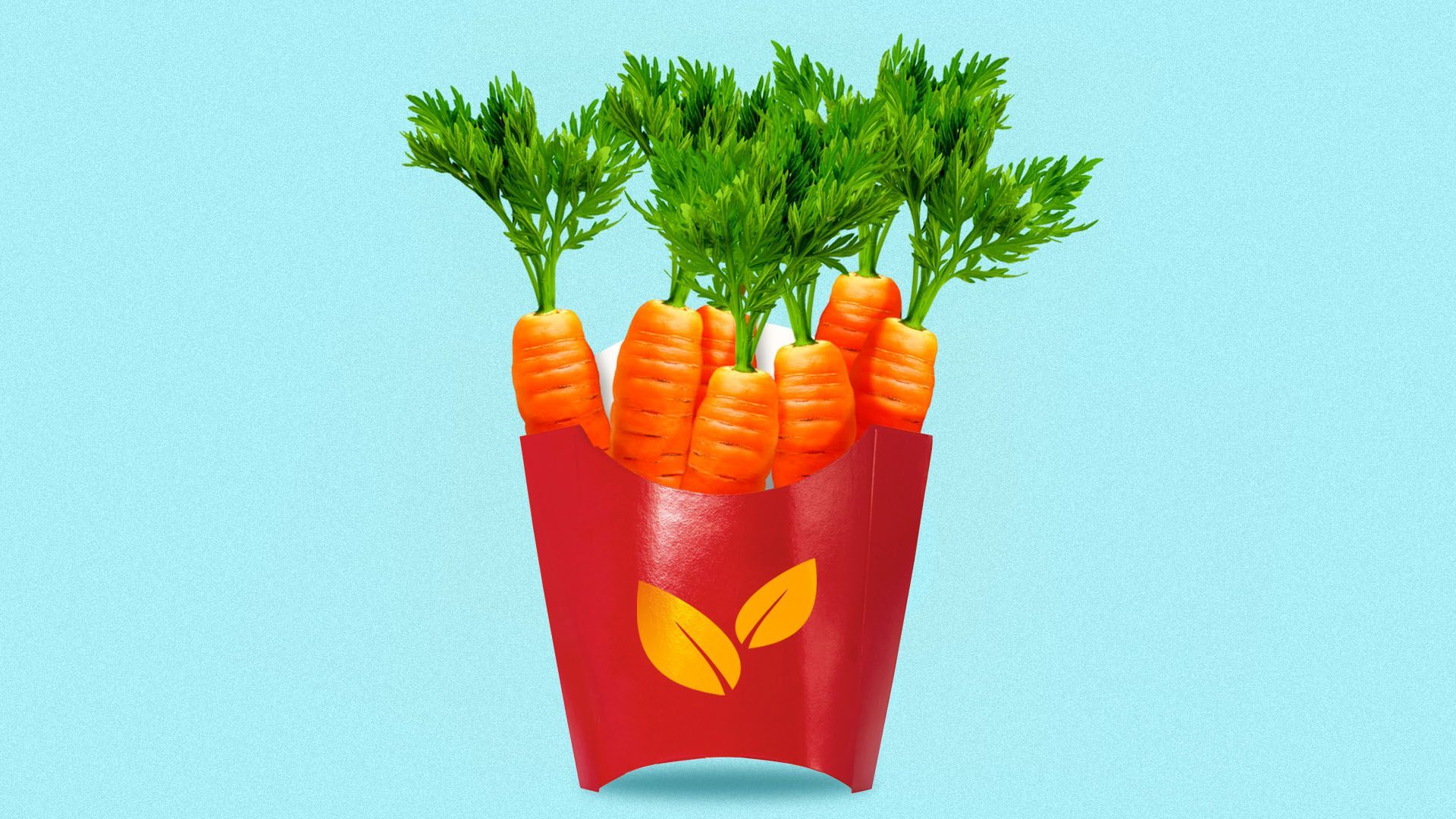
Illustration: Sarah Grillo/Axios
This week, KFC debuted vegan fried chicken, through Beyond Meat, at its nearly 4,000 U.S. locations, Vox reports.
Why it matters: It’s one of the biggest rollouts of meatless fast food we’ve ever seen, Erica Pandey writes.
The big picture: As we’ve reported, plant-based meat companies aren’t just chasing vegetarians and vegans — they’re going after the market for real meat.
That pursuit has brought them to fast food chains.
- A lot of the meat products sold by fast food giants — ground meat, patties, nuggets — have textures that can be closely mimicked with plant-based products.
- Impossible Foods has put out chicken nuggets at Fuku, Momofuku’s fast food sister restaurant. And they have a vegan sausage, egg and cheese sandwich at Starbucks.
- Beyond Meat is also working on a plant-based carne asada for Taco Bell, Vox notes.
Reality check: More than 90% of Americans regularly eat meat, per Vox.
And while the popularity of plant-based options is growing, those who watch the market say it may be an early-stage curiosity bump.
- One hiccup — at least when it comes to plant-based meat sales at the grocery store — could be price. Fake meat made up 2.7% of U.S. packaged meat sales in 2020, but that share would be around 20% if plant-based meat and real meat cost the same, Food Dive reports.
3. Your Tesla could drive like a jerk
Illustration: Aïda Amer/Axios
Tesla's latest assisted-driving software lets car owners decide how aggressively they want their car to behave in traffic — even to the point of bending rules, Joann Muller writes.
What's happening: The latest release of Tesla's "Full Self-Driving" (FSD) beta software lets owners choose among three driving profiles — Chill, Average or Assertive — that dictate how the car will behave in different scenarios, The Verge reports.
Why it matters: Assertive Teslas are programmed to allow rolling stops, follow other cars more closely and swap lanes more frequently — behaviors that tend to be more dangerous no matter who's driving.
- The vehicle will also "not exit passing lanes" — meaning it'll just cruise in the left lane even though that's prohibited on most highways.
Critics say it's another example of Tesla's "irresponsible" approach to automated driving.
- The National Highway Traffic Safety Administration is investigating a series of crashes involving Tesla's Autopilot feature.
- In December, Tesla agreed to modify its cars' software to prevent drivers from playing video games on the dashboard screen while the vehicle is in motion, after a New York Times report prompted a federal safety investigation.
- Tesla did not respond to a request for comment.
4. Vending machines dispense free drug overdose kits
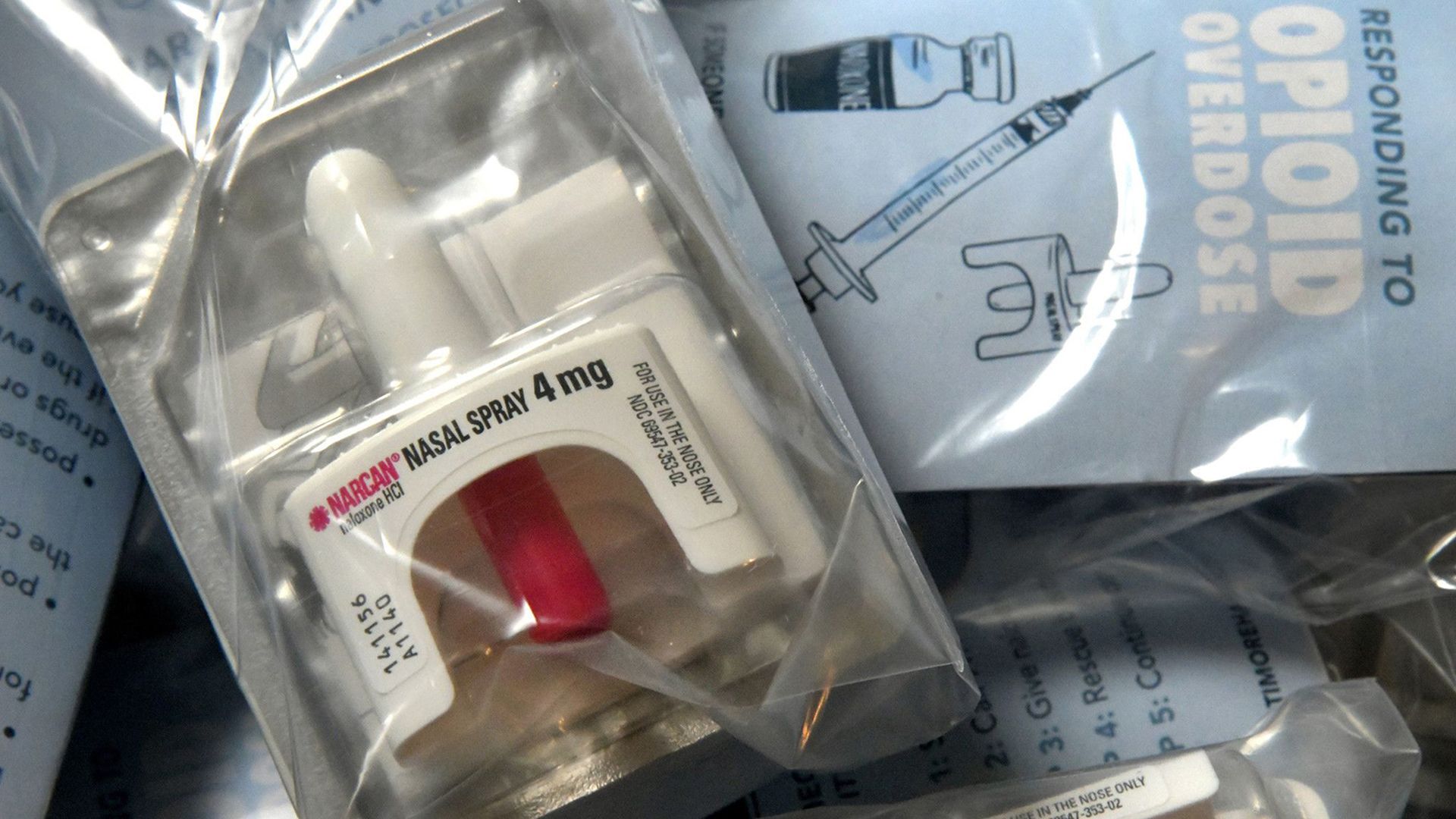
Narcan nasal spray can reverse opioid overdoses. Amy Davis/Baltimore Sun/Tribune News Service via Getty Images
Free vending machines are popping up around the country to dispense doses of Narcan, or naloxone, a drug that can quickly reverse the effects of an opioid overdose, Joann writes.
Why it matters: Overdose deaths have soared during the COVID pandemic, creating a second public health crisis. More than 87,000 Americans died of opioid overdoses over the 12-months that ended in September, according to preliminary federal data.
- That's more than any year since the opioid epidemic began in the 1990s, the New York Times reports.
Driving the news: New York City plans to install 10 vending machines with free Narcan and other "harm reduction" supplies in neighborhoods that have been hit hard by drug overdoses, according to the Times.
- The machines will carry sterile syringes, safe-sex kits and toiletries too, city health officials say.
The vending machines are turning up in other places as well — including prisons — under government-funded pilot programs.
- Last year, Los Angeles County began offering Narcan to people leaving jail, and has since distributed more than 34,000 doses through free vending machines set up at exits.
- In Michigan, Narcan vending machines were installed in 15 communities, mostly at drug rehab agencies and county jails.
- Other states, including Indiana and Kentucky, have deployed Narcan vending machines as well.
How it works: Narcan, which can be inhaled or injected, works by blocking the effects of opiates on the brain to restore breathing.
- When administered early, it can save lives, which is why police officers and first responders regularly carry it.
Yes, but: Critics say access to syringes and Narcan doesn't address the underlying issues that cause addiction.
5. 1 💰 thing: Maya Angelou quarters
The U.S. Mint announced Monday that it had begun shipping quarters honoring the late writer and activist Maya Angelou, Axios' Shawna Chen writes.
The big picture: It's part of an effort — dubbed the American Women Quarters Program — to commemorate the centennial of the 19th Amendment, which guaranteed women the right to vote.
- The first coin depicts Angelou on its reverse side with her arms uplifted.
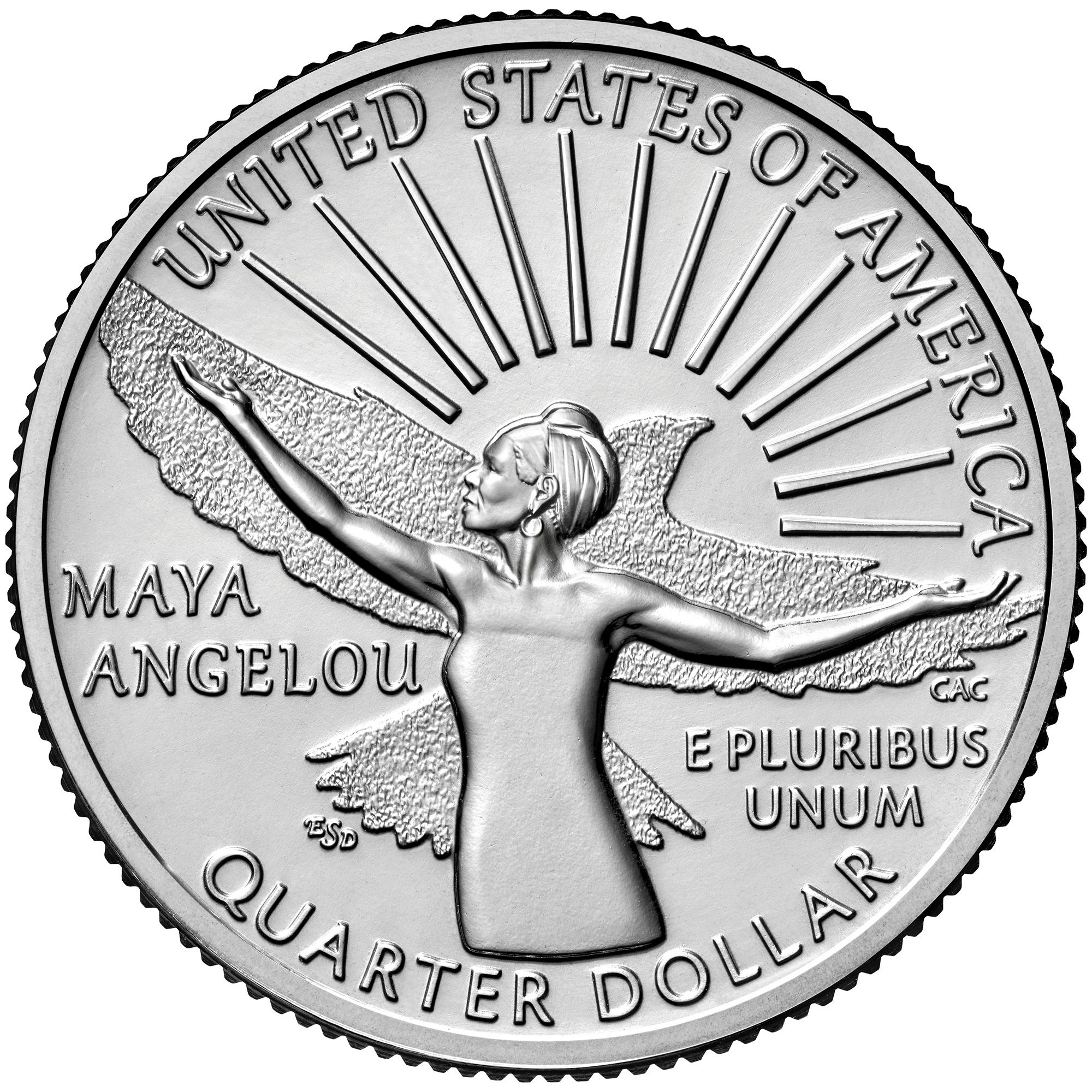
Angelou is the first Black woman to appear on a U.S. quarter, according to Rep. Barbara Lee (D-Calif.), who sponsored the bill for the program.
- Angelou rose to prominence with the publication of her autobiography, "I Know Why the Caged Bird Sings," and published more than 30 bestselling titles during her lifetime.
- Appearing at President Clinton's inauguration in 1992, she became the first Black woman to write and present a poem at a presidential inauguration.
- She was awarded the Presidential Medal of Freedom in 2010.
The other women to be honored on quarters in 2022:
- Sally Ride, a physicist and the first woman astronaut.
- Wilma Mankiller, an activist and the first woman elected as principal chief of the Cherokee Nation.
- Nina Otero-Warren, a suffragist and the first woman superintendent of public schools in Santa Fe, New Mexico.
- Anna May Wong, the first Chinese American film star in Hollywood.
Was this email forwarded to you? Get your daily dose of What's Next magic by signing up for our free newsletter here.
Sign up for Axios What's Next

The next decade of big, sweeping changes will unfold in cities and communities where new technologies like 5G, AI and drones are transforming how we work, live and play together. What’s Next will guide you through the revolution.